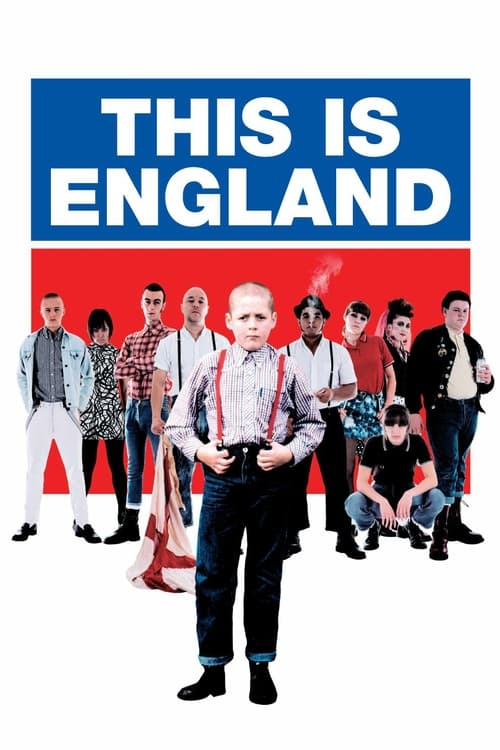
This Is England
Oi! Shaun is 11 and he's about to go from shaggy haired ruffian grieving the loss of his father to confused skinhead thug.
Despite its limited budget of $2.4M, This Is England became a box office success, earning $8.2M worldwide—a 244% return. The film's bold vision attracted moviegoers, demonstrating that strong storytelling can transcend budget limitations.


Plot Structure
Story beats plotted across runtime


Narrative Arc
Emotional journey through the story's key moments
Story Circle
Blueprint 15-beat structure
Arcplot Score Breakdown
Weighted: Precision (70%) + Arc (15%) + Theme (15%)
This Is England (2007) exhibits deliberately positioned dramatic framework, characteristic of Shane Meadows's storytelling approach. This structural analysis examines how the film's 15-point plot structure maps to proven narrative frameworks across 1 hour and 41 minutes. With an Arcplot score of 6.9, the film balances conventional beats with creative variation.
Characters
Cast & narrative archetypes

Shaun
Combo
Woody
Smell
Milky
Lol
Meggy
Pukey
Gadget
Main Cast & Characters
Shaun
Played by Thomas Turgoose
A lonely 12-year-old boy dealing with his father's death who finds belonging in a skinhead group during 1980s England.
Combo
Played by Stephen Graham
A charismatic but violent nationalist skinhead who returns from prison and radicalizes the group with racist ideology.
Woody
Played by Joseph Gilgun
The kind-hearted leader of the original skinhead group who represents the non-racist ska and reggae roots of skinhead culture.
Smell
Played by Rosamund Hanson
Woody's girlfriend, a warm and nurturing figure who tries to provide stability and care for the younger members of the group.
Milky
Played by Andrew Shim
A gentle Jamaican-British skinhead who embodies the multiracial origins of skinhead culture and becomes a target of Combo's rage.
Lol
Played by Vicky McClure
A tough, independent young woman in the skinhead group who has complicated history with Combo and serves as a voice of reason.
Meggy
Played by Jo Hartley
A loyal follower in the skinhead group who gravitates toward Combo's nationalist rhetoric.
Pukey
Played by George Newton
A young member of the group known for his nervous disposition and tendency to follow stronger personalities.
Gadget
Played by Andrew Ellis
A quirky, eccentric young skinhead who brings comic relief and stays loyal to Woody's group.
Structural Analysis
The Status Quo at 1 minutes (1% through the runtime) establishes Shaun is bullied at school for his dead father and flared trousers, walks home alone through the estate, isolated and grieving in Thatcher's England.. Significantly, this early placement immediately immerses viewers in the story world.
The inciting incident occurs at 13 minutes when Woody and the skinheads befriend Shaun in the tunnel, offering him acceptance and a sense of belonging he's been desperately seeking since his father's death.. At 13% through the film, this Disruption is delayed, allowing extended setup of the story world. This beat shifts the emotional landscape, launching the protagonist into the central conflict.
The First Threshold at 25 minutes marks the transition into Act II, occurring at 25% of the runtime. This illustrates the protagonist's commitment to Shaun fully embraces his new skinhead identity, wearing his boots and braces proudly, actively participating in group activities, and choosing this new family over his old isolated life., moving from reaction to action.
At 51 minutes, the Midpoint arrives at 50% of the runtime—precisely centered, creating perfect narrative symmetry. Structural examination shows that this crucial beat Combo returns from prison and delivers a nationalist speech about "England for the English," introducing violent racism and splitting the group. False defeat: the innocent world shatters as ideology invades friendship., fundamentally raising what's at risk. The emotional intensity shifts, dividing the narrative into clear before-and-after phases.
The Collapse moment at 76 minutes (75% through) represents the emotional nadir. Here, Combo brutally beats Milky in front of Shaun after a conversation about family triggers Combo's rage and self-hatred. Shaun witnesses shocking violence against an innocent friend, shattering his illusions about Combo and nationalism. Whiff of death: uncertain if Milky survives., illustrates the protagonist at their lowest point. This beat's placement in the final quarter sets up the climactic reversal.
The Second Threshold at 81 minutes initiates the final act resolution at 80% of the runtime. Shaun, alone in his room, confronts the St. George flag Combo gave him - the symbol of the nationalist ideology that led to horror. He must choose who he will become., demonstrating the transformation achieved throughout the journey.
Emotional Journey
This Is England's emotional architecture traces a deliberate progression across 15 carefully calibrated beats.
Narrative Framework
This structural analysis employs a 15-point narrative structure framework that maps key story moments. By mapping This Is England against these established plot points, we can identify how Shane Meadows utilizes or subverts traditional narrative conventions. The plot point approach reveals not only adherence to structural principles but also creative choices that distinguish This Is England within the documentary genre.
Comparative Analysis
Additional documentary films include Black Butterflies, Bambi: A Tale of Life in the Woods and Eternal You.
Plot Points by Act
Act I
SetupStatus Quo
Shaun is bullied at school for his dead father and flared trousers, walks home alone through the estate, isolated and grieving in Thatcher's England.
Theme
Woody tells Shaun "We look after our own" when inviting him to join the skinhead group, establishing the theme of belonging versus exclusion, tribalism, and what it means to be English.
Worldbuilding
Introduction to Shaun's lonely world: his grief over his father's Falklands death, conflict with his mother, the cultural landscape of 1983 England, and the skinhead subculture through archival footage and Shaun's encounters.
Disruption
Woody and the skinheads befriend Shaun in the tunnel, offering him acceptance and a sense of belonging he's been desperately seeking since his father's death.
Resistance
Shaun is welcomed into the skinhead group, gets his head shaved, receives new clothes and boots, bonds with Woody, Smell, Gadget, and others. He experiences joy, friendship, and purpose for the first time since his father died.
Act II
ConfrontationFirst Threshold
Shaun fully embraces his new skinhead identity, wearing his boots and braces proudly, actively participating in group activities, and choosing this new family over his old isolated life.
Mirror World
Shaun connects with Smell (Smell develops romantic feelings), representing innocent friendship and the possibility of belonging without hatred. She embodies the positive side of community and acceptance.
Premise
Shaun experiences the "fun" of skinhead culture: parties, camaraderie, pranks, beach trips, music, and genuine friendship. The promise of belonging and family fulfilled in its innocent form before darkness arrives.
Midpoint
Combo returns from prison and delivers a nationalist speech about "England for the English," introducing violent racism and splitting the group. False defeat: the innocent world shatters as ideology invades friendship.
Opposition
Shaun chooses Combo's nationalist faction over Woody's group. Escalating tension and violence: buying weapons, racist confrontations, the shop robbery, and Combo's volatile unpredictability. Shaun witnesses brutality and gets deeper into dangerous ideology.
Collapse
Combo brutally beats Milky in front of Shaun after a conversation about family triggers Combo's rage and self-hatred. Shaun witnesses shocking violence against an innocent friend, shattering his illusions about Combo and nationalism. Whiff of death: uncertain if Milky survives.
Crisis
Shaun sits in traumatized silence in the car as Combo drives. The weight of what he's witnessed and participated in crushes him. He returns home in shock, unable to process the violence and his complicity.
Act III
ResolutionSecond Threshold
Shaun, alone in his room, confronts the St. George flag Combo gave him - the symbol of the nationalist ideology that led to horror. He must choose who he will become.
Synthesis
Shaun walks to the beach alone, carrying the flag and all the pain of his father's death, his lost innocence, and the violence he witnessed. He throws the flag into the sea, rejecting the hatred and false belonging it represented.
Transformation
Shaun cries on the beach as the flag sinks into the ocean. No longer the innocent boy from the opening, but not consumed by hatred either - transformed by trauma, grief, and the painful lesson about tribalism and violence. The tears represent both loss and potential redemption.