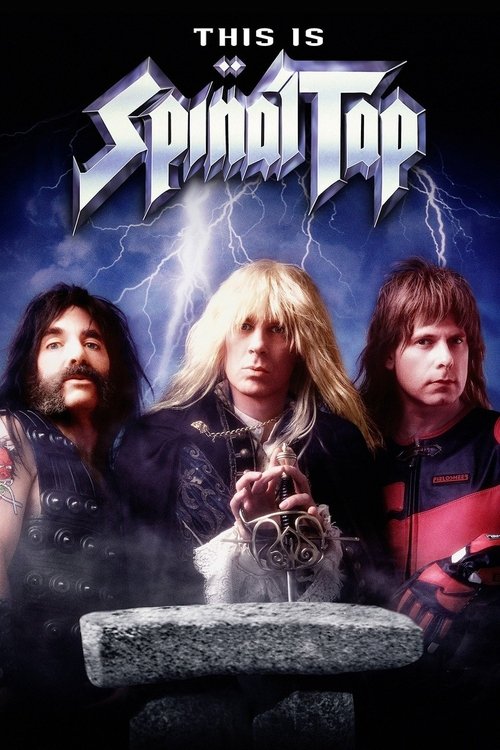
This Is Spinal Tap
"This Is Spinal Tap" shines a light on the self-contained universe of a metal band struggling to get back on the charts, including everything from its complicated history of ups and downs, gold albums, name changes and undersold concert dates, along with the full host of requisite groupies, promoters, hangers-on and historians, sessions, release events and those special behind-the-scenes moments that keep it all real.
Despite its limited budget of $2.5M, This Is Spinal Tap became a financial success, earning $5.8M worldwide—a 133% return.
3 wins & 2 nominations


Plot Structure
Story beats plotted across runtime


Narrative Arc
Emotional journey through the story's key moments
Story Circle
Blueprint 15-beat structure
Arcplot Score Breakdown
Weighted: Precision (70%) + Arc (15%) + Theme (15%)
This Is Spinal Tap (1984) reveals precise story structure, characteristic of Rob Reiner's storytelling approach. This structural analysis examines how the film's 15-point plot structure maps to proven narrative frameworks across 1 hour and 22 minutes. With an Arcplot score of 7.4, the film balances conventional beats with creative variation.
Characters
Cast & narrative archetypes

David St. Hubbins
Nigel Tufnel
Derek Smalls
Marty DiBergi
Jeanine Pettibone
Ian Faith
Main Cast & Characters
David St. Hubbins
Played by Michael McKean
Lead vocalist and rhythm guitarist of Spinal Tap, insecure frontman struggling with the band's declining popularity and his controlling girlfriend's influence.
Nigel Tufnel
Played by Christopher Guest
Lead guitarist of Spinal Tap, passionate about his guitars and amps, creatively sensitive and prone to walking out when his artistic vision is challenged.
Derek Smalls
Played by Harry Shearer
Bass guitarist who serves as mediator between David and Nigel, practical and grounded member trying to keep the band together amid chaos.
Marty DiBergi
Played by Rob Reiner
Documentary filmmaker following Spinal Tap on their American tour, observing and questioning the band's mishaps with deadpan curiosity.
Jeanine Pettibone
Played by June Chadwick
David's girlfriend and aspiring manager who interferes with the band's dynamics, creating tension and contributing to their professional decline.
Ian Faith
Played by Tony Hendra
Spinal Tap's long-suffering manager who quits after Jeanine undermines his authority, loyal but ultimately unable to control the chaos.
Structural Analysis
The Status Quo at 1 minutes (1% through the runtime) establishes Marty DiBergi introduces himself and explains his passion for documenting Spinal Tap, establishing the mockumentary format and the band's legacy as "one of England's loudest bands.".. Notably, this early placement immediately immerses viewers in the story world.
The inciting incident occurs at 10 minutes when The band arrives in America for their tour and immediately faces problems: the record label refuses to release "Smell the Glove" due to the sexist album cover, forcing a last-minute change to an all-black cover. The tour is already compromised before it begins.. At 13% through the film, this Disruption is delayed, allowing extended setup of the story world. This beat shifts the emotional landscape, launching the protagonist into the central conflict.
The First Threshold at 20 minutes marks the transition into Act II, occurring at 24% of the runtime. This indicates the protagonist's commitment to The band commits fully to the tour despite mounting evidence of decline when they perform at a half-empty venue and the infamous Stonehenge prop disaster occurs - the monument is revealed to be 18 inches tall instead of 18 feet. Rather than cancel, they soldier on, crossing into their descent., moving from reaction to action.
At 40 minutes, the Midpoint arrives at 49% of the runtime—precisely centered, creating perfect narrative symmetry. The analysis reveals that this crucial beat Ian Faith quits as manager after a confrontation about Jeanine's interference. This is a false defeat that raises the stakes dramatically - without professional management, Jeanine takes over, and the band's internal conflicts can no longer be mediated by an outside party., fundamentally raising what's at risk. The emotional intensity shifts, dividing the narrative into clear before-and-after phases.
The Collapse moment at 61 minutes (75% through) represents the emotional nadir. Here, Nigel quits the band after a final confrontation with David about Jeanine. The creative heart of Spinal Tap is ripped out - the partnership that defined the band for decades dies. They're forced to play their final dates as a diminished unit, the "whiff of death" made literal through the band's dissolution., shows the protagonist at their lowest point. This beat's placement in the final quarter sets up the climactic reversal.
The Second Threshold at 65 minutes initiates the final act resolution at 80% of the runtime. Ian Faith calls with unexpected news: "Sex Farm" has become a massive hit in Japan. The band has a chance at redemption in a market that still values them. This new information provides the synthesis - success doesn't have to mean American validation., demonstrating the transformation achieved throughout the journey.
Emotional Journey
This Is Spinal Tap's emotional architecture traces a deliberate progression across 15 carefully calibrated beats.
Narrative Framework
This structural analysis employs structural analysis methodology used to understand storytelling architecture. By mapping This Is Spinal Tap against these established plot points, we can identify how Rob Reiner utilizes or subverts traditional narrative conventions. The plot point approach reveals not only adherence to structural principles but also creative choices that distinguish This Is Spinal Tap within the comedy genre.
Rob Reiner's Structural Approach
Among the 17 Rob Reiner films analyzed on Arcplot, the average structural score is 6.9, demonstrating varied approaches to story architecture. This Is Spinal Tap represents one of the director's most structurally precise works. For comparative analysis, explore the complete Rob Reiner filmography.
Comparative Analysis
Additional comedy films include The Bad Guys, Ella Enchanted and The Evening Star. For more Rob Reiner analyses, see The Sure Thing, The American President and The Story of Us.
Plot Points by Act
Act I
SetupStatus Quo
Marty DiBergi introduces himself and explains his passion for documenting Spinal Tap, establishing the mockumentary format and the band's legacy as "one of England's loudest bands."
Theme
During the archival footage montage, we see the band's evolution through decades of changing styles, with David noting "We're very lucky in the sense that we've got two visionaries in the band" - the theme of self-delusion and diminishing relevance is established through the gap between their perception and reality.
Worldbuilding
The documentary establishes Spinal Tap's history through archival footage and interviews, showing their flower-power origins, the revolving door of drummers who died in bizarre circumstances, and their current status as aging rockers about to embark on a US tour to promote "Smell the Glove."
Disruption
The band arrives in America for their tour and immediately faces problems: the record label refuses to release "Smell the Glove" due to the sexist album cover, forcing a last-minute change to an all-black cover. The tour is already compromised before it begins.
Resistance
Manager Ian Faith attempts to guide the band through early tour setbacks while maintaining optimism. The band performs but faces indignities: venues are being downgraded, a radio station interview goes poorly, and tensions simmer beneath the surface about the direction of the tour.
Act II
ConfrontationFirst Threshold
The band commits fully to the tour despite mounting evidence of decline when they perform at a half-empty venue and the infamous Stonehenge prop disaster occurs - the monument is revealed to be 18 inches tall instead of 18 feet. Rather than cancel, they soldier on, crossing into their descent.
Mirror World
David's girlfriend Jeanine Pettibone arrives and begins inserting herself into band decisions. Her presence introduces the thematic mirror: the conflict between personal relationships and professional loyalty, foreshadowing the rift that will tear the band apart.
Premise
The "promise of the premise" delivers the mockumentary's comedic heart: the band gets lost backstage in Cleveland, argues about the volume going to eleven, visits Elvis's grave, deals with cold cuts and tiny bread at catering, and performs increasingly to diminishing crowds while maintaining their delusion of greatness.
Midpoint
Ian Faith quits as manager after a confrontation about Jeanine's interference. This is a false defeat that raises the stakes dramatically - without professional management, Jeanine takes over, and the band's internal conflicts can no longer be mediated by an outside party.
Opposition
Everything accelerates toward disaster: more dates are cancelled, the band is reduced to playing an Air Force base and a puppet show, Nigel and David's creative partnership fractures over Jeanine's influence, and the gap between their self-image and reality becomes unbridgeable.
Collapse
Nigel quits the band after a final confrontation with David about Jeanine. The creative heart of Spinal Tap is ripped out - the partnership that defined the band for decades dies. They're forced to play their final dates as a diminished unit, the "whiff of death" made literal through the band's dissolution.
Crisis
The remaining members struggle through a disastrous gig at Themeland Amusement Park, playing second fiddle to a puppet show. Derek reflects on the band's legacy while David and Jeanine's relationship strains under the pressure. The band appears finished.
Act III
ResolutionSecond Threshold
Ian Faith calls with unexpected news: "Sex Farm" has become a massive hit in Japan. The band has a chance at redemption in a market that still values them. This new information provides the synthesis - success doesn't have to mean American validation.
Synthesis
Nigel rejoins the band for the Japanese tour. The original trio reconciles, with Jeanine's influence diminished. They perform "Big Bottom" together in Japan to an enthusiastic crowd, the band functioning as a unit again - not through growth exactly, but through accepting success where they can find it.
Transformation
The reunited Spinal Tap performs triumphantly in Japan, the crowd cheering wildly. The final image mirrors the opening's archival footage of past glory - but now there's a bittersweet awareness. They haven't changed, but they've survived. The loudest band in England plays on.