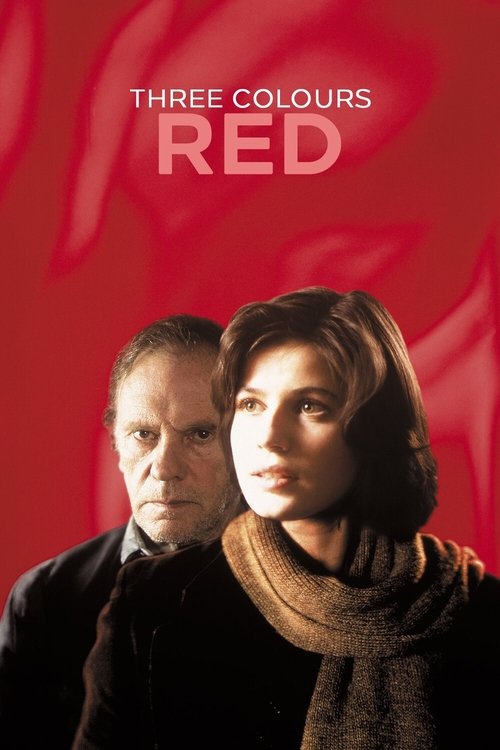
Three Colours: Red
The film earned $4.1M at the global box office.


Plot Structure
Story beats plotted across runtime


Narrative Arc
Emotional journey through the story's key moments
Story Circle
Blueprint 15-beat structure
Arcplot Score Breakdown
Weighted: Precision (70%) + Arc (15%) + Theme (15%)
Three Colours: Red (1994) reveals meticulously timed plot construction, characteristic of Krzysztof Kieślowski's storytelling approach. This structural analysis examines how the film's 15-point plot structure maps to proven narrative frameworks across 1 hour and 40 minutes. With an Arcplot score of 6.8, the film balances conventional beats with creative variation.
Characters
Cast & narrative archetypes

Valentine Dussaut
Joseph Kern
Auguste Bruder
Karin
Main Cast & Characters
Valentine Dussaut
Played by Irène Jacob
A young model struggling with a troubled long-distance relationship while discovering unexpected connections.
Joseph Kern
Played by Jean-Louis Trintignant
A retired judge who eavesdrops on his neighbors' phone calls, bitter and isolated after being betrayed.
Auguste Bruder
Played by Jean-Pierre Lorit
A law student preparing for his judicial exams while unknowingly paralleling the judge's past life.
Karin
Played by Frederique Feder
Auguste's girlfriend, a hairdresser who becomes unfaithful, mirroring the judge's past betrayal.
Structural Analysis
The Status Quo at 1 minutes (1% through the runtime) establishes Valentine, a young model in Geneva, lives her daily life—attending photo shoots and speaking on the phone with her jealous, absent boyfriend Michel. Her world is orderly but emotionally unfulfilled, marked by distance and missed connections.. Significantly, this early placement immediately immerses viewers in the story world.
The inciting incident occurs at 12 minutes when Valentine accidentally strikes a dog named Rita with her car. This violent disruption to her routine forces her to seek out the dog's owner, setting in motion the chain of events that will transform her understanding of human connection.. At 12% through the film, this Disruption aligns precisely with traditional story structure. This beat shifts the emotional landscape, launching the protagonist into the central conflict.
The First Threshold at 25 minutes marks the transition into Act II, occurring at 25% of the runtime. This shows the protagonist's commitment to Valentine chooses to return to Joseph's house despite her moral objections to his eavesdropping. Rather than turning away, she decides to engage with this cynical, isolated man—a choice that marks her active commitment to understanding rather than judging., moving from reaction to action.
At 50 minutes, the Midpoint arrives at 50% of the runtime—precisely centered, creating perfect narrative symmetry. Of particular interest, this crucial beat Joseph reveals the depth of his pain: the woman he loved left him for another man, and he has spent decades in bitter isolation. He confesses that his eavesdropping was an attempt to feel connected to humanity without risking further pain. This false defeat shows Valentine the cost of emotional withdrawal—and what she might become if she follows a similar path with Michel., fundamentally raising what's at risk. The emotional intensity shifts, dividing the narrative into clear before-and-after phases.
The Collapse moment at 75 minutes (75% through) represents the emotional nadir. Here, Valentine's relationship with Michel effectively ends—he refuses to see her, consumed by jealousy and suspicion about her visits to Joseph. She faces the prospect of becoming like Joseph: betrayed, isolated, and unable to trust. The "whiff of death" is the death of her hope for conventional love and connection., demonstrates the protagonist at their lowest point. This beat's placement in the final quarter sets up the climactic reversal.
The Second Threshold at 80 minutes initiates the final act resolution at 80% of the runtime. Valentine decides to take the ferry to England for a modeling job, despite Joseph's strange premonition. She synthesizes what she's learned from him—that connection is worth the risk of pain—and steps into an uncertain future with open-hearted courage rather than cynical withdrawal., demonstrating the transformation achieved throughout the journey.
Emotional Journey
Three Colours: Red's emotional architecture traces a deliberate progression across 15 carefully calibrated beats.
Narrative Framework
This structural analysis employs a 15-point narrative structure framework that maps key story moments. By mapping Three Colours: Red against these established plot points, we can identify how Krzysztof Kieślowski utilizes or subverts traditional narrative conventions. The plot point approach reveals not only adherence to structural principles but also creative choices that distinguish Three Colours: Red within its genre.
Plot Points by Act
Act I
SetupStatus Quo
Valentine, a young model in Geneva, lives her daily life—attending photo shoots and speaking on the phone with her jealous, absent boyfriend Michel. Her world is orderly but emotionally unfulfilled, marked by distance and missed connections.
Theme
The retired judge Joseph Kern will later articulate the film's theme: the question of whether we can truly know another person, and whether human connection across fate and circumstance is possible. The opening imagery of phone lines crossing continents foreshadows this meditation on interconnection.
Worldbuilding
Valentine's life in Geneva is established: her modeling career, her strained long-distance relationship with Michel, her brother's drug problems, and her kind but isolated nature. Parallel storylines hint at Auguste, a young law student living nearby, whose life eerily mirrors the judge's past.
Disruption
Valentine accidentally strikes a dog named Rita with her car. This violent disruption to her routine forces her to seek out the dog's owner, setting in motion the chain of events that will transform her understanding of human connection.
Resistance
Valentine brings the injured dog to the address on its collar and discovers Joseph Kern, a retired judge who seems indifferent to the animal's fate. She is disturbed to learn he spends his days eavesdropping on his neighbors' phone calls. Valentine struggles with whether to report him or understand him.
Act II
ConfrontationFirst Threshold
Valentine chooses to return to Joseph's house despite her moral objections to his eavesdropping. Rather than turning away, she decides to engage with this cynical, isolated man—a choice that marks her active commitment to understanding rather than judging.
Mirror World
The relationship between Valentine and Joseph Kern becomes the film's thematic mirror. He represents what she could become—embittered and withdrawn—while she represents the compassion he abandoned. Their conversations will teach her about judgment, forgiveness, and the possibility of connection across seemingly impossible distances.
Premise
Valentine and Joseph develop an unlikely friendship through their philosophical conversations. She learns about his past—a woman he loved who betrayed him, his subsequent retreat from humanity. Meanwhile, Auguste's parallel story unfolds: his relationship, his law career, his unknowing proximity to Valentine. The promise of the premise—exploring whether souls can connect across time and circumstance—deepens.
Midpoint
Joseph reveals the depth of his pain: the woman he loved left him for another man, and he has spent decades in bitter isolation. He confesses that his eavesdropping was an attempt to feel connected to humanity without risking further pain. This false defeat shows Valentine the cost of emotional withdrawal—and what she might become if she follows a similar path with Michel.
Opposition
Valentine's relationship with Michel deteriorates further through their phone calls—jealousy, distance, and mistrust. Joseph turns himself in for illegal eavesdropping, facing public humiliation. Auguste discovers his girlfriend's betrayal, mirroring Joseph's past trauma. The forces of isolation, betrayal, and disconnection close in on all characters.
Collapse
Valentine's relationship with Michel effectively ends—he refuses to see her, consumed by jealousy and suspicion about her visits to Joseph. She faces the prospect of becoming like Joseph: betrayed, isolated, and unable to trust. The "whiff of death" is the death of her hope for conventional love and connection.
Crisis
Valentine processes the loss of her relationship and confronts her loneliness. She visits Joseph, now publicly shamed, and they share a moment of profound understanding. She realizes that connection doesn't require romantic love—it requires the courage to see and be seen by another person.
Act III
ResolutionSecond Threshold
Valentine decides to take the ferry to England for a modeling job, despite Joseph's strange premonition. She synthesizes what she's learned from him—that connection is worth the risk of pain—and steps into an uncertain future with open-hearted courage rather than cynical withdrawal.
Synthesis
Valentine boards the ferry. Joseph watches news coverage of a terrible storm in the English Channel. The ferry sinks in a catastrophe that kills over a thousand passengers. Yet in the synthesis of fate and connection that Kieślowski orchestrates, only seven survivors emerge—including Valentine and Auguste, finally brought together by tragedy, along with the protagonists from Blue and White.
Transformation
The final image shows Valentine's face through the rescued survivors' window, mirroring the giant billboard photograph of her that opened the film. Joseph watches her survival on television, weeping. She has been transformed from someone seeking connection through absence (phone calls, distant boyfriend) to someone who has experienced true human communion—and who now, perhaps, will find it with Auguste. The trilogy's characters survive together, united by mysterious fate.