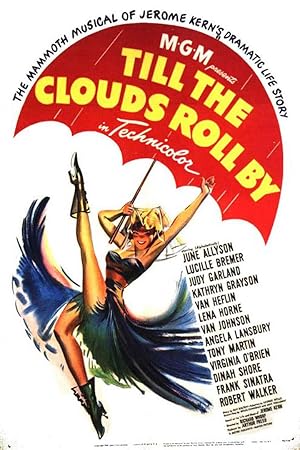
Till the Clouds Roll By
Light bio-pic of American Broadway pioneer Jerome Kern, featuring renditions of the famous songs from his musical plays by contemporary stage artists, including a condensed production of his most famous: 'Showboat'.
Despite its tight budget of $3.3M, Till the Clouds Roll By became a solid performer, earning $6.7M worldwide—a 103% return.


Plot Structure
Story beats plotted across runtime


Narrative Arc
Emotional journey through the story's key moments
Story Circle
Blueprint 15-beat structure
Arcplot Score Breakdown
Weighted: Precision (70%) + Arc (15%) + Theme (15%)
Till the Clouds Roll By (1946) exemplifies precise plot construction, characteristic of Richard Whorf's storytelling approach. This structural analysis examines how the film's 15-point plot structure maps to proven narrative frameworks across 2 hours and 16 minutes. With an Arcplot score of 6.5, the film balances conventional beats with creative variation.
Structural Analysis
The Status Quo at 1 minutes (1% through the runtime) establishes Opening frame: James Hessler visits a hospitalized Jerome Kern, who is unconscious after collapsing. Establishes Kern as celebrated but fragile, at the end of his career. The "before" state is Kern's established success before we learn his origin story.. Of particular interest, this early placement immediately immerses viewers in the story world.
The inciting incident occurs at 16 minutes when Kern's song is interpolated into a Broadway show and becomes a hit. This unexpected success disrupts his life as an unknown - producers now seek him out. His ordinary life as a struggling composer ends; he enters the professional world of Broadway.. At 12% through the film, this Disruption aligns precisely with traditional story structure. This beat shifts the emotional landscape, launching the protagonist into the central conflict.
The First Threshold at 31 minutes marks the transition into Act II, occurring at 23% of the runtime. This indicates the protagonist's commitment to Kern makes the active choice to commit fully to Broadway and to marry Eva, accepting both the professional world of musical theater and personal domestic life. He crosses from aspiring composer into established professional, choosing this path over European classical tradition., moving from reaction to action.
At 84 minutes, the Midpoint arrives at 62% of the runtime—notably delayed, an unconventional structural choice. The analysis reveals that this crucial beat False victory: Kern conceives of "Show Boat" - his masterpiece that will revolutionize American musical theater by integrating story and song. He's at the height of his powers and commercial success. Stakes raise: can he achieve his ultimate artistic vision? The "fun and games" of musical revue now focuses toward dramatic purpose., fundamentally raising what's at risk. The emotional intensity shifts, dividing the narrative into clear before-and-after phases.
The Collapse moment at 105 minutes (77% through) represents the emotional nadir. Here, Return to frame story: Kern remains unconscious, dying. The "whiff of death" is literal - doctors doubt he'll recover. All his success, all his music, and yet he lies here fragile. Mortality confronts legacy. Will his work survive him?., illustrates the protagonist at their lowest point. This beat's placement in the final quarter sets up the climactic reversal.
The Second Threshold at 115 minutes initiates the final act resolution at 85% of the runtime. Synthesis: The realization that Kern's legacy IS his music - the songs themselves are immortal regardless of his physical fate. The frame story is abandoned; the focus shifts entirely to celebrating the music. The breakthrough: the artist transcends mortality through art., demonstrating the transformation achieved throughout the journey.
Emotional Journey
Till the Clouds Roll By's emotional architecture traces a deliberate progression across 15 carefully calibrated beats.
Narrative Framework
This structural analysis employs proven narrative structure principles that track dramatic progression. By mapping Till the Clouds Roll By against these established plot points, we can identify how Richard Whorf utilizes or subverts traditional narrative conventions. The plot point approach reveals not only adherence to structural principles but also creative choices that distinguish Till the Clouds Roll By within the biography genre.
Comparative Analysis
Additional biography films include After Thomas, Taking Woodstock and The Fire Inside.
Plot Points by Act
Act I
SetupStatus Quo
Opening frame: James Hessler visits a hospitalized Jerome Kern, who is unconscious after collapsing. Establishes Kern as celebrated but fragile, at the end of his career. The "before" state is Kern's established success before we learn his origin story.
Theme
Hessler begins narrating Kern's story to Sally, stating that Kern was "a composer who changed the face of American music" and that his legacy is in the songs that will live forever. Theme: Art transcends the artist; music is immortal legacy.
Worldbuilding
Flashback begins: Young Jerome Kern returns from Europe determined to revolutionize American musical theater. Establishes his world - turn-of-century New York, his family's expectations, the theatrical community, and his artistic ambitions. Introduction of key relationships and the musical theater landscape.
Disruption
Kern's song is interpolated into a Broadway show and becomes a hit. This unexpected success disrupts his life as an unknown - producers now seek him out. His ordinary life as a struggling composer ends; he enters the professional world of Broadway.
Resistance
Kern navigates early Broadway success, learning the business through relationships with producers, performers, and collaborators including James Hessler. Period of exploration and education in theatrical production. Romance with Eva begins. Kern debates whether commercial success means compromising his artistic vision.
Act II
ConfrontationFirst Threshold
Kern makes the active choice to commit fully to Broadway and to marry Eva, accepting both the professional world of musical theater and personal domestic life. He crosses from aspiring composer into established professional, choosing this path over European classical tradition.
Mirror World
Marriage to Eva and deepening friendship with Hessler. Eva represents personal fulfillment and emotional support that mirrors his professional creative partnerships. She embodies the theme - she loves the music, not the fame, showing what endures.
Premise
The "promise of the premise" - a lavish showcase of Kern's hit songs performed by MGM stars. Extended musical numbers featuring his catalog: "Look for the Silver Lining" (Judy Garland), "Sunny" (June Allyson), "Who?" (various performers). This is what audiences came for - the music itself. Biographical through-line shows mounting success.
Midpoint
False victory: Kern conceives of "Show Boat" - his masterpiece that will revolutionize American musical theater by integrating story and song. He's at the height of his powers and commercial success. Stakes raise: can he achieve his ultimate artistic vision? The "fun and games" of musical revue now focuses toward dramatic purpose.
Opposition
Mounting "Show Boat" presents challenges - convincing producers, finding the right performers, integrating serious dramatic themes into musical theater. Resistance from the theatrical establishment. The ambitious scope tests Kern's resolve. Extended "Show Boat" production numbers showcase the work but also the difficulty of the achievement.
Collapse
Return to frame story: Kern remains unconscious, dying. The "whiff of death" is literal - doctors doubt he'll recover. All his success, all his music, and yet he lies here fragile. Mortality confronts legacy. Will his work survive him?
Crisis
Hessler and Sally reflect on Kern's legacy while he fights for life. Dark night: what does it matter if the artist dies? Is fame enough? The weight of mortality hangs over the narrative as they wait for news.
Act III
ResolutionSecond Threshold
Synthesis: The realization that Kern's legacy IS his music - the songs themselves are immortal regardless of his physical fate. The frame story is abandoned; the focus shifts entirely to celebrating the music. The breakthrough: the artist transcends mortality through art.
Synthesis
Grand finale: An extended, spectacular production of songs from "Show Boat" performed by Frank Sinatra, Kathryn Grayson, and others. "Ol' Man River" becomes the emotional climax. The synthesis of Kern's artistic vision and popular success. The music is the answer to mortality.
Transformation
Final image: The camera pulls back from the grand "Show Boat" finale, the music swelling. The transformation is clear - from the fragile dying man in the hospital to the immortal legacy of his music filling theaters. Art defeats death. Kern's songs will roll by like clouds, eternal and ever-changing.