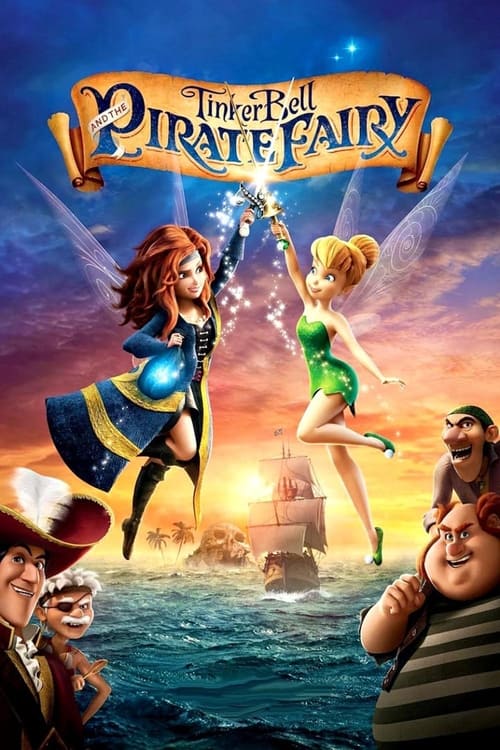
Tinker Bell and the Pirate Fairy
Zarina, a smart and ambitious dust-keeper fairy who’s captivated by Blue Pixie Dust and its endless possibilities, flees Pixie Hollow and joins forces with the scheming pirates of Skull Rock, who make her captain of their ship. Tinker Bell and her friends must embark on an epic adventure to find Zarina, and together they go sword-to-sword with the band of pirates led by a cabin boy named James, who’ll soon be known as Captain Hook himself.
The film earned $64.0M at the global box office.






Plot Structure
Story beats plotted across runtime


Narrative Arc
Emotional journey through the story's key moments
Story Circle
Blueprint 15-beat structure
Arcplot Score Breakdown
Weighted: Precision (70%) + Arc (15%) + Theme (15%)
Tinker Bell and the Pirate Fairy (2014) demonstrates precise dramatic framework, characteristic of Peggy Holmes's storytelling approach. This structural analysis examines how the film's 15-point plot structure maps to proven narrative frameworks across 1 hour and 18 minutes. With an Arcplot score of 7.4, the film balances conventional beats with creative variation.
Structural Analysis
The Status Quo at 1 minutes (1% through the runtime) establishes Pixie Hollow in harmony. Zarina, a dust-keeper fairy, is content but curious about blue pixie dust and its properties. She works diligently at her assigned role in the dust depot.. Of particular interest, this early placement immediately immerses viewers in the story world.
The inciting incident occurs at 9 minutes when Zarina's experiment goes catastrophically wrong at the Four Seasons Festival, creating chaos with giant plants and destroying the event. She is publicly humiliated and shamed by the community.. At 12% through the film, this Disruption aligns precisely with traditional story structure. This beat shifts the emotional landscape, launching the protagonist into the central conflict.
The First Threshold at 17 minutes marks the transition into Act II, occurring at 21% of the runtime. This illustrates the protagonist's commitment to Zarina returns as a pirate and steals the blue pixie dust during the festival, putting all the fairies to sleep. Tinker Bell and friends actively choose to pursue her and recover the dust., moving from reaction to action.
At 40 minutes, the Midpoint arrives at 51% of the runtime—precisely centered, creating perfect narrative symmetry. The analysis reveals that this crucial beat False victory: The fairies successfully steal back the blue pixie dust and the dust tree sapling. They believe they've won and can return home, having thwarted Zarina's plan., fundamentally raising what's at risk. The emotional intensity shifts, dividing the narrative into clear before-and-after phases.
The Collapse moment at 57 minutes (73% through) represents the emotional nadir. Here, The pirates fly away with the ship using the pixie dust, leaving the fairies trapped in a bag on a distant island. Zarina's dreams have been corrupted, and all seems lost., indicates the protagonist at their lowest point. This beat's placement in the final quarter sets up the climactic reversal.
The Second Threshold at 61 minutes initiates the final act resolution at 79% of the runtime. Zarina teaches the fairies how to use their switched talents properly, combining her alchemical knowledge with their determination. They work together as a unified team for the first time., demonstrating the transformation achieved throughout the journey.
Emotional Journey
Tinker Bell and the Pirate Fairy's emotional architecture traces a deliberate progression across 15 carefully calibrated beats.
Narrative Framework
This structural analysis employs proven narrative structure principles that track dramatic progression. By mapping Tinker Bell and the Pirate Fairy against these established plot points, we can identify how Peggy Holmes utilizes or subverts traditional narrative conventions. The plot point approach reveals not only adherence to structural principles but also creative choices that distinguish Tinker Bell and the Pirate Fairy within the animation genre.
Peggy Holmes's Structural Approach
Among the 2 Peggy Holmes films analyzed on Arcplot, the average structural score is 7.3, reflecting strong command of classical structure. Tinker Bell and the Pirate Fairy represents one of the director's most structurally precise works. For comparative analysis, explore the complete Peggy Holmes filmography.
Comparative Analysis
Additional animation films include The Bad Guys, The Quintessential Quintuplets Movie and Fate/stay night: Heaven's Feel I. Presage Flower. For more Peggy Holmes analyses, see Luck.
Plot Points by Act
Act I
SetupStatus Quo
Pixie Hollow in harmony. Zarina, a dust-keeper fairy, is content but curious about blue pixie dust and its properties. She works diligently at her assigned role in the dust depot.
Theme
Fairy Gary warns Zarina: "We don't tamper with pixie dust. It's simply too powerful." The theme of respecting natural order vs. dangerous experimentation is stated.
Worldbuilding
Establishment of Pixie Hollow society, the sacred role of pixie dust, Zarina's friendship with Tinker Bell and other fairies, and Zarina's secret experiments with dust alchemy in her home.
Disruption
Zarina's experiment goes catastrophically wrong at the Four Seasons Festival, creating chaos with giant plants and destroying the event. She is publicly humiliated and shamed by the community.
Resistance
Tinker Bell tries to comfort Zarina, but Zarina feels rejected and leaves Pixie Hollow. One year passes. The fairies prepare for the next Four Seasons Festival, unaware of coming danger.
Act II
ConfrontationFirst Threshold
Zarina returns as a pirate and steals the blue pixie dust during the festival, putting all the fairies to sleep. Tinker Bell and friends actively choose to pursue her and recover the dust.
Mirror World
The fairies discover their talents have been switched by Zarina's alchemy dust. Tinker Bell becomes a water fairy, Silvermist a fast-flying fairy, etc. They must learn to work with unfamiliar abilities.
Premise
The fairies track Zarina to a pirate ship where she serves as captain. They infiltrate the ship, struggle with their switched talents, and discover Zarina is helping James (future Captain Hook) grow a dust tree.
Midpoint
False victory: The fairies successfully steal back the blue pixie dust and the dust tree sapling. They believe they've won and can return home, having thwarted Zarina's plan.
Opposition
The pirates recapture them. James betrays and imprisons Zarina, revealing he manipulated her all along. The pirates use her knowledge to create pixie dust. Tinker Bell realizes Zarina was lonely and used.
Collapse
The pirates fly away with the ship using the pixie dust, leaving the fairies trapped in a bag on a distant island. Zarina's dreams have been corrupted, and all seems lost.
Crisis
Imprisoned together, Tinker Bell and Zarina reconcile. Tinker Bell acknowledges Zarina's unique gifts. Zarina realizes her mistake and that true belonging comes from acceptance, not proving herself.
Act III
ResolutionSecond Threshold
Zarina teaches the fairies how to use their switched talents properly, combining her alchemical knowledge with their determination. They work together as a unified team for the first time.
Synthesis
Epic aerial battle with the pirates. The fairies use their new talents masterfully. Zarina reclaims the blue dust and returns everyone's talents. They defeat James, who falls into the water with a crocodile.
Transformation
Zarina is welcomed back to Pixie Hollow and reinstated as a dust-keeper, now celebrated for her unique perspective. The community has learned to value different approaches. She belongs.