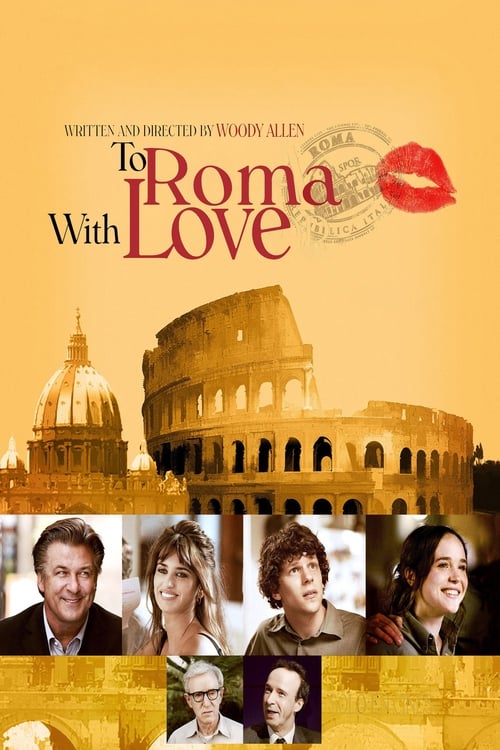
To Rome with Love
Four tales unfold in the Eternal City: While vacationing in Rome, architect John encounters a young man whose romantic woes remind him of a painful incident from his own youth; retired opera director Jerry discovers a mortician with an amazing voice, and he seizes the opportunity to rejuvenate his own flagging career; a young couple have separate romantic interludes; a spotlight shines on an ordinary man.
Despite a moderate budget of $17.0M, To Rome with Love became a commercial success, earning $73.3M worldwide—a 331% return.
2 wins & 5 nominations


Plot Structure
Story beats plotted across runtime


Narrative Arc
Emotional journey through the story's key moments
Story Circle
Blueprint 15-beat structure
Arcplot Score Breakdown
Weighted: Precision (70%) + Arc (15%) + Theme (15%)
To Rome with Love (2012) exemplifies strategically placed story structure, characteristic of Woody Allen's storytelling approach. This structural analysis examines how the film's 15-point plot structure maps to proven narrative frameworks across 1 hour and 51 minutes. With an Arcplot score of 7.2, the film balances conventional beats with creative variation.
Characters
Cast & narrative archetypes

Jack
Jerry
John
Leopoldo
Giancarlo
Antonio
Milly
Anna
Sally
Main Cast & Characters
Jack
Played by Woody Allen
A retired opera director vacationing in Rome who discovers his son-in-law's father has an extraordinary singing voice.
Jerry
Played by Woody Allen
A recently retired music executive who becomes obsessed with producing an opera featuring a mortician who can only sing in the shower.
John
Played by Alec Baldwin
An American architect revisiting Rome who encounters a young architecture student and his girlfriend, leading to romantic temptation.
Leopoldo
Played by Roberto Benigni
A middle-class Roman clerk who suddenly and inexplicably becomes famous for no reason at all.
Giancarlo
Played by Fabio Armiliato
The mortician father of Michelangelo who has a beautiful operatic voice but can only sing in the shower.
Antonio
Played by Alessandro Tiberi
A young provincial newlywed who comes to Rome and becomes entangled in a farcical case of mistaken identity involving a prostitute.
Milly
Played by Alessandra Mastronardi
Antonio's innocent newlywed bride who gets lost in Rome and has an unexpected encounter with a famous actor.
Anna
Played by Penélope Cruz
A provocative and free-spirited actress friend who tempts the young architecture student away from his girlfriend.
Sally
Played by Greta Gerwig
A bohemian actress and the girlfriend of the young architecture student, embodying artistic pretension.
Structural Analysis
The Status Quo at 1 minutes (1% through the runtime) establishes Traffic cop Leopoldo directs traffic at a Rome intersection in his ordinary life. The four storylines' protagonists are shown in their normal Roman lives before disruption, establishing the city as a character itself.. Significantly, this early placement immediately immerses viewers in the story world.
The inciting incident occurs at 13 minutes when Multiple disruptions across storylines: Milly gets lost in Rome separated from Antonio; Jerry discovers Giancarlo (Michelangelo's mortician father) has an extraordinary operatic voice but only sings in the shower; Leopoldo is suddenly swarmed by paparazzi and reporters declaring him famous; John meets Sally's seductive friend Monica.. At 12% through the film, this Disruption aligns precisely with traditional story structure. This beat shifts the emotional landscape, launching the protagonist into the central conflict.
The First Threshold at 27 minutes marks the transition into Act II, occurring at 25% of the runtime. This illustrates the protagonist's commitment to Characters make active choices into new worlds: Jerry commits to staging Giancarlo as opera singer (in shower); Antonio decides to present Anna as his wife when relatives arrive; Leopoldo accepts his fame and begins appearing on TV; John chooses to spend time alone with Monica, betraying Sally., moving from reaction to action.
At 56 minutes, the Midpoint arrives at 50% of the runtime—precisely centered, creating perfect narrative symmetry. Of particular interest, this crucial beat False defeat: Jerry's opera performance with Giancarlo in portable shower stall begins, appears ridiculous; Antonio's relatives grow suspicious of Anna; Leopoldo's fame becomes invasive and exhausting; John sleeps with Monica, crossing point of no return. The fun curdles - consequences loom. Stakes raise dramatically., fundamentally raising what's at risk. The emotional intensity shifts, dividing the narrative into clear before-and-after phases.
The Collapse moment at 82 minutes (74% through) represents the emotional nadir. Here, All storylines reach lowest point: The opera's absurdity peaks (death of the dream of conventional success); Antonio's real wife Milly returns, threatening to expose everything; Leopoldo recognizes the emptiness of fame; John realizes Monica is destructive and Sally knows about the betrayal. Metaphorical death of illusions., reveals the protagonist at their lowest point. This beat's placement in the final quarter sets up the climactic reversal.
The Second Threshold at 90 minutes initiates the final act resolution at 81% of the runtime. Synthesis and revelation: Opera audience suddenly embraces the shower concept as brilliant avant-garde art; Antonio and Milly reconcile, accepting they both had adventures; Leopoldo's fame vanishes as suddenly as it came; John/Jack achieves understanding about the past. Acceptance replaces resistance., demonstrating the transformation achieved throughout the journey.
Emotional Journey
To Rome with Love's emotional architecture traces a deliberate progression across 15 carefully calibrated beats.
Narrative Framework
This structural analysis employs systematic plot point analysis that identifies crucial turning points. By mapping To Rome with Love against these established plot points, we can identify how Woody Allen utilizes or subverts traditional narrative conventions. The plot point approach reveals not only adherence to structural principles but also creative choices that distinguish To Rome with Love within the comedy genre.
Woody Allen's Structural Approach
Among the 42 Woody Allen films analyzed on Arcplot, the average structural score is 7.0, demonstrating varied approaches to story architecture. To Rome with Love represents one of the director's most structurally precise works. For comparative analysis, explore the complete Woody Allen filmography.
Comparative Analysis
Additional comedy films include The Bad Guys, Ella Enchanted and The Evening Star. For more Woody Allen analyses, see Everyone Says I Love You, Celebrity and Interiors.
Plot Points by Act
Act I
SetupStatus Quo
Traffic cop Leopoldo directs traffic at a Rome intersection in his ordinary life. The four storylines' protagonists are shown in their normal Roman lives before disruption, establishing the city as a character itself.
Theme
Jack (Alec Baldwin) speaks directly to camera as omniscient narrator: "If you have the opportunity to be in Rome, by all means, you should." Theme of seizing opportunities and the transformative power of Rome's romantic chaos is established.
Worldbuilding
Four storylines introduced: Jerry and Phyllis travel to Rome to meet daughter Hayley's fiancé Michelangelo; newlyweds Antonio and Milly arrive in Rome; Leopoldo lives his ordinary middle-class life; Jack returns to Rome as famous architect and observes young John.
Disruption
Multiple disruptions across storylines: Milly gets lost in Rome separated from Antonio; Jerry discovers Giancarlo (Michelangelo's mortician father) has an extraordinary operatic voice but only sings in the shower; Leopoldo is suddenly swarmed by paparazzi and reporters declaring him famous; John meets Sally's seductive friend Monica.
Resistance
Characters debate their new situations: Jerry schemes to exploit Giancarlo's talent despite protests; Antonio debates what to do when prostitute Anna arrives claiming to be his wife; Leopoldo questions why he's suddenly famous; John (younger Jack) debates whether to pursue Monica despite dating Sally. Jack appears as ghostly guide/conscience.
Act II
ConfrontationFirst Threshold
Characters make active choices into new worlds: Jerry commits to staging Giancarlo as opera singer (in shower); Antonio decides to present Anna as his wife when relatives arrive; Leopoldo accepts his fame and begins appearing on TV; John chooses to spend time alone with Monica, betraying Sally.
Mirror World
Jack (older self) serves as thematic mirror to John, having lived this exact mistake. Anna becomes Antonio's mirror, showing him the excitement he fears missing. Milly's encounter with film star Luca Salta mirrors her fantasies. The storylines begin exploring how Rome enables fantasy and folly.
Premise
The "promise of the premise" - romantic chaos in Rome: Jerry stages elaborate opera production around shower; Antonio navigates farcical situations with Anna while relatives visit; Leopoldo enjoys absurd celebrity perks (people watching him eat, sleep, use toilet); Milly lives movie-star fantasy with Luca; Monica seduces John while Jack warns him.
Midpoint
False defeat: Jerry's opera performance with Giancarlo in portable shower stall begins, appears ridiculous; Antonio's relatives grow suspicious of Anna; Leopoldo's fame becomes invasive and exhausting; John sleeps with Monica, crossing point of no return. The fun curdles - consequences loom. Stakes raise dramatically.
Opposition
Complications intensify: Opera audience initially mocks shower concept; Antonio's charade with Anna grows more complex and dangerous; Leopoldo's every private moment is invaded by fame; Sally returns and John must hide his betrayal while Monica escalates. Each character's flaws (vanity, lust, opportunism) create mounting pressure.
Collapse
All storylines reach lowest point: The opera's absurdity peaks (death of the dream of conventional success); Antonio's real wife Milly returns, threatening to expose everything; Leopoldo recognizes the emptiness of fame; John realizes Monica is destructive and Sally knows about the betrayal. Metaphorical death of illusions.
Crisis
Dark reflection period: Characters process consequences of their choices. Jerry watches his vision potentially crumble; Antonio faces his wife and the truth; Leopoldo exhausted by meaningless attention; John confronts the damage he's done to Sally. Each sits with the cost of their Roman fantasy.
Act III
ResolutionSecond Threshold
Synthesis and revelation: Opera audience suddenly embraces the shower concept as brilliant avant-garde art; Antonio and Milly reconcile, accepting they both had adventures; Leopoldo's fame vanishes as suddenly as it came; John/Jack achieves understanding about the past. Acceptance replaces resistance.
Synthesis
Finale resolutions: Jerry's opera becomes unexpected triumph despite absurdity; Antonio and Milly leave Rome together, transformed by their separate adventures; Leopoldo returns to directing traffic, content; John says goodbye to Sally and Monica, Jack disappears. Each character completes their Roman transformation.
Transformation
Leopoldo directs traffic again at the same intersection from the opening, but now with wisdom and contentment about his ordinary life. Rome continues its eternal chaos. The transformation is internal - acceptance of life's absurdity and the ephemeral nature of fame, love, and dreams.