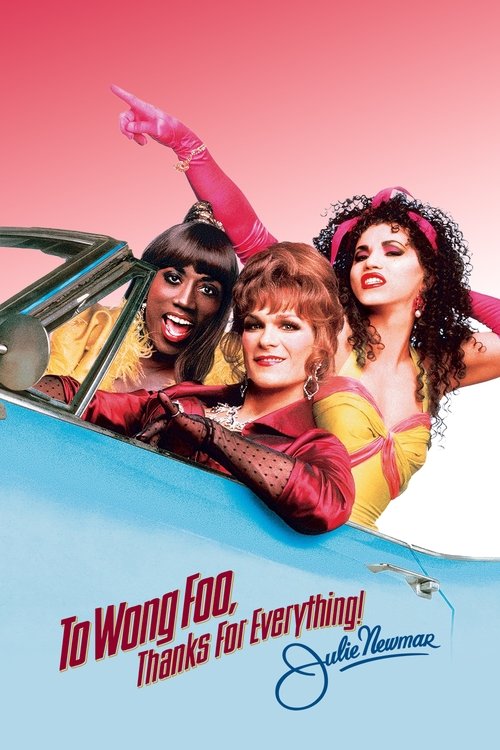
To Wong Foo, Thanks for Everything! Julie Newmar
Manhattan drag queens Vida Boheme and Noxeema Jackson impress regional judges in competition, securing berths in the Nationals in Los Angeles. When the two meet pathetic drag novice Chi-Chi Rodriguez — one of the losers that evening — the charmed Vida and Noxeema agree to take the hopeless youngster under their joined wing. Soon the three set off on a madcap road trip across America and struggle to make it to Los Angeles in time.
The film earned $47.8M at the global box office.


Plot Structure
Story beats plotted across runtime


Narrative Arc
Emotional journey through the story's key moments
Story Circle
Blueprint 15-beat structure
Arcplot Score Breakdown
Weighted: Precision (70%) + Arc (15%) + Theme (15%)
To Wong Foo, Thanks for Everything! Julie Newmar (1995) demonstrates deliberately positioned narrative architecture, characteristic of Beeban Kidron's storytelling approach. This structural analysis examines how the film's 15-point plot structure maps to proven narrative frameworks across 1 hour and 48 minutes. With an Arcplot score of 7.4, the film balances conventional beats with creative variation.
Characters
Cast & narrative archetypes

Vida Boheme
Noxeema Jackson
Chi-Chi Rodriguez
Carol Ann
Bobby Lee
Virgil
Main Cast & Characters
Vida Boheme
Played by Patrick Swayze
An elegant, sophisticated drag queen from New York who wins the Drag Queen of the Year competition. She is poised, cultured, and serves as the de facto leader of the trio.
Noxeema Jackson
Played by Wesley Snipes
A confident, outspoken drag queen with a strong personality and sharp wit. She is practical, protective, and often serves as the voice of reason.
Chi-Chi Rodriguez
Played by John Leguizamo
A young, hopeful drag queen from New York who dreams of Hollywood stardom. She is naive, sweet-natured, and learning the ropes of drag performance.
Carol Ann
Played by Stockard Channing
A sheltered small-town woman in an abusive marriage who finds friendship and empowerment through the drag queens. She undergoes a significant personal transformation.
Bobby Lee
Played by Jason London
A kind-hearted local mechanic in Snydersville who befriends the drag queens and stands up for them. He represents acceptance and open-mindedness in a conservative town.
Virgil
Played by Arliss Howard
An abusive, bigoted husband who terrorizes his wife Carol Ann and represents the toxic masculinity and prejudice the drag queens face in small-town America.
Structural Analysis
The Status Quo at 1 minutes (1% through the runtime) establishes The glamorous world of New York drag culture is established. Vida Boheme prepares for the national Drag Queen of America pageant, embodying elegance and perfection in the competitive drag scene.. The analysis reveals that this early placement immediately immerses viewers in the story world.
The inciting incident occurs at 12 minutes when Chi-Chi steals Vida's car to join them on the road trip to Hollywood. Despite initial resistance, Vida and Noxeema reluctantly accept Chi-Chi as their traveling companion. The journey that will change everything begins.. At 12% through the film, this Disruption aligns precisely with traditional story structure. This beat shifts the emotional landscape, launching the protagonist into the central conflict.
The First Threshold at 26 minutes marks the transition into Act II, occurring at 24% of the runtime. This shows the protagonist's commitment to The car breaks down in the tiny town of Snydersville. After an encounter with aggressive local Sheriff Dollard, the queens make the active choice to stay and help the town while waiting for car repairs, entering a world completely foreign to their New York experience., moving from reaction to action.
At 53 minutes, the Midpoint arrives at 49% of the runtime—precisely centered, creating perfect narrative symmetry. Of particular interest, this crucial beat False victory: The town hosts a celebratory social gathering where the queens are embraced as heroes. The women of Snydersville have been transformed, and even some men are coming around. It seems the queens have achieved acceptance, but danger lurks with Sheriff Dollard's growing suspicion and resentment., fundamentally raising what's at risk. The emotional intensity shifts, dividing the narrative into clear before-and-after phases.
The Collapse moment at 78 minutes (72% through) represents the emotional nadir. Here, Sheriff Dollard violently attacks and nearly kills one of the queens in a brutal hate crime. The "whiff of death" is literal - the physical assault represents the ultimate rejection and danger they face. The dream of acceptance collapses as raw hatred is revealed., reveals the protagonist at their lowest point. This beat's placement in the final quarter sets up the climactic reversal.
The Second Threshold at 84 minutes initiates the final act resolution at 78% of the runtime. The townspeople rally around the queens, revealing they knew the truth all along and don't care. Carol Ann finds the courage to stand up to her abuser. The queens realize that true acceptance comes from being authentic, and that they've taught the town - and learned themselves - about courage and self-worth., demonstrating the transformation achieved throughout the journey.
Emotional Journey
To Wong Foo, Thanks for Everything! Julie Newmar's emotional architecture traces a deliberate progression across 15 carefully calibrated beats.
Narrative Framework
This structural analysis employs structural analysis methodology used to understand storytelling architecture. By mapping To Wong Foo, Thanks for Everything! Julie Newmar against these established plot points, we can identify how Beeban Kidron utilizes or subverts traditional narrative conventions. The plot point approach reveals not only adherence to structural principles but also creative choices that distinguish To Wong Foo, Thanks for Everything! Julie Newmar within the comedy genre.
Beeban Kidron's Structural Approach
Among the 2 Beeban Kidron films analyzed on Arcplot, the average structural score is 7.4, reflecting strong command of classical structure. To Wong Foo, Thanks for Everything! Julie Newmar exemplifies the director's characteristic narrative technique. For comparative analysis, explore the complete Beeban Kidron filmography.
Comparative Analysis
Additional comedy films include The Bad Guys, Ella Enchanted and The Evening Star. For more Beeban Kidron analyses, see Bridget Jones: The Edge of Reason.
Plot Points by Act
Act I
SetupStatus Quo
The glamorous world of New York drag culture is established. Vida Boheme prepares for the national Drag Queen of America pageant, embodying elegance and perfection in the competitive drag scene.
Theme
During backstage preparation, a character remarks about authenticity and acceptance: "It's not about what you look like on the outside, it's who you are on the inside." This establishes the film's core theme about identity, acceptance, and finding oneself beyond surface appearances.
Worldbuilding
Introduction to the three main characters: elegant Vida Boheme, spirited Noxeema Jackson, and young Chi-Chi Rodriguez. The pageant establishes their different personalities, dreams, and the competitive world they inhabit. Vida and Noxeema win the pageant and earn a trip to Hollywood.
Disruption
Chi-Chi steals Vida's car to join them on the road trip to Hollywood. Despite initial resistance, Vida and Noxeema reluctantly accept Chi-Chi as their traveling companion. The journey that will change everything begins.
Resistance
The three queens hit the road in Vida's vintage Cadillac. Tensions arise between the refined Vida and the brash Chi-Chi. They debate whether to take the journey seriously and discuss what Hollywood means to each of them. The road itself becomes a teacher.
Act II
ConfrontationFirst Threshold
The car breaks down in the tiny town of Snydersville. After an encounter with aggressive local Sheriff Dollard, the queens make the active choice to stay and help the town while waiting for car repairs, entering a world completely foreign to their New York experience.
Mirror World
The queens meet Carol Ann, a lonely housewife trapped in an abusive marriage. She represents the thematic mirror: someone hiding her true self and living in fear. Her friendship with the queens becomes the emotional B-story that carries the theme of self-acceptance.
Premise
The "fish out of water" fun the audience came for. The queens transform the dowdy townswomen with makeup, fashion, and confidence. They teach the women to embrace their femininity and inner strength. The town slowly transforms from suspicious to enchanted.
Midpoint
False victory: The town hosts a celebratory social gathering where the queens are embraced as heroes. The women of Snydersville have been transformed, and even some men are coming around. It seems the queens have achieved acceptance, but danger lurks with Sheriff Dollard's growing suspicion and resentment.
Opposition
Sheriff Dollard investigates the queens' true identities and discovers they are drag queens. His homophobia intensifies. Carol Ann's abusive husband Virgil becomes increasingly violent. The town's acceptance is threatened as prejudice resurfaces. The stakes rise as the queens' secret is at risk of exposure.
Collapse
Sheriff Dollard violently attacks and nearly kills one of the queens in a brutal hate crime. The "whiff of death" is literal - the physical assault represents the ultimate rejection and danger they face. The dream of acceptance collapses as raw hatred is revealed.
Crisis
The queens and townspeople grapple with the darkness of the attack. They must decide whether to flee or stand their ground. Carol Ann faces her own crisis about her abusive marriage. This is the dark night where everyone questions if acceptance is possible in a world full of hate.
Act III
ResolutionSecond Threshold
The townspeople rally around the queens, revealing they knew the truth all along and don't care. Carol Ann finds the courage to stand up to her abuser. The queens realize that true acceptance comes from being authentic, and that they've taught the town - and learned themselves - about courage and self-worth.
Synthesis
The finale confrontation: The town protects the queens from the sheriff. Carol Ann leaves her abusive husband with the town's support. Justice is served as Dollard faces consequences. The queens prepare to continue to Hollywood, but they're changed - they've found something more valuable than fame.
Transformation
The closing image mirrors the opening but transformed: The queens depart Snydersville in their repaired Cadillac, but they're no longer just seeking external validation in Hollywood. They've found authentic acceptance and given it to others. The town waves goodbye to friends, not strangers. Inner beauty has triumphed.