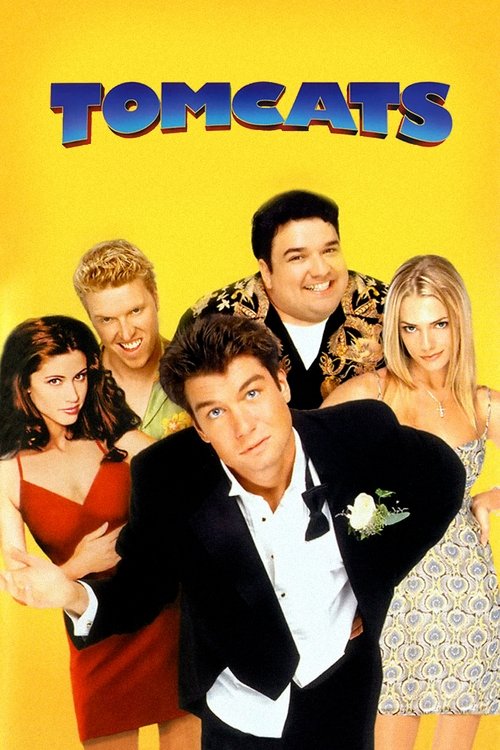
Tomcats
College buddies chip in and promise that the group's last unmarried man will collect a cash pot. Seven years later, the kitty is worth $500,000 -- money Michael needs to pay a gambling debt. Problem is, the only other single guy is a hopeless womanizer!
Despite its tight budget of $11.0M, Tomcats became a solid performer, earning $23.4M worldwide—a 113% return.


Plot Structure
Story beats plotted across runtime


Narrative Arc
Emotional journey through the story's key moments
Story Circle
Blueprint 15-beat structure
Arcplot Score Breakdown
Weighted: Precision (70%) + Arc (15%) + Theme (15%)
Tomcats (2001) showcases precise plot construction, characteristic of Gregory Poirier's storytelling approach. This structural analysis examines how the film's 15-point plot structure maps to proven narrative frameworks across 1 hour and 35 minutes. With an Arcplot score of 7.6, the film showcases strong structural fundamentals.
Characters
Cast & narrative archetypes

Michael Delaney
Kyle Brenner
Natalie Parker
Jill
Main Cast & Characters
Michael Delaney
Played by Jerry O'Connell
A cartoonist who needs to find a wife for his womanizing best friend to win $29,000 from a bachelor party pot.
Kyle Brenner
Played by Jake Busey
A serial bachelor who must get married within a year or forfeit the pot of money from their bachelor party fund.
Natalie Parker
Played by Shannon Elizabeth
A Las Vegas cop who Kyle owes $51,000 to after a disastrous night of gambling; becomes Michael's love interest.
Jill
Played by Jaime Pressly
Kyle's initial love interest who becomes engaged to him as part of the scheme to get him married.
Structural Analysis
The Status Quo at 1 minutes (1% through the runtime) establishes Michael and his friends at a bachelor party seven years ago, living the carefree single life, making a pact that the last man to marry wins the pot. Michael is the epitome of commitment-phobic male.. Significantly, this early placement immediately immerses viewers in the story world.
The inciting incident occurs at 10 minutes when The mob threatens Michael with serious bodily harm if he doesn't pay his gambling debt. He realizes he needs the bachelor pot money desperately and must get Kyle married to win it.. At 11% through the film, this Disruption aligns precisely with traditional story structure. This beat shifts the emotional landscape, launching the protagonist into the central conflict.
The First Threshold at 23 minutes marks the transition into Act II, occurring at 24% of the runtime. This indicates the protagonist's commitment to Michael actively chooses to track down Natalie and recruit her to help seduce Kyle into marriage. He commits to the scheme and enters the world of deception and manipulation., moving from reaction to action.
At 48 minutes, the Midpoint arrives at 50% of the runtime—precisely centered, creating perfect narrative symmetry. Of particular interest, this crucial beat False victory: Kyle proposes to Natalie! The plan seems to be working perfectly. Michael should be thrilled but realizes he has feelings for Natalie. Stakes are raised as he now faces an internal conflict., fundamentally raising what's at risk. The emotional intensity shifts, dividing the narrative into clear before-and-after phases.
The Collapse moment at 70 minutes (74% through) represents the emotional nadir. Here, Natalie discovers the truth about Michael's manipulation - that he was only using her to win money. She is devastated and feels betrayed. Michael loses both the girl and potentially the money. His old shallow life "dies" as he realizes what he's lost., shows the protagonist at their lowest point. This beat's placement in the final quarter sets up the climactic reversal.
The Second Threshold at 75 minutes initiates the final act resolution at 79% of the runtime. Michael has an epiphany: he doesn't care about the money anymore. He needs to win Natalie back by being genuine and honest for the first time. He synthesizes his old charm with newfound sincerity., demonstrating the transformation achieved throughout the journey.
Emotional Journey
Tomcats's emotional architecture traces a deliberate progression across 15 carefully calibrated beats.
Narrative Framework
This structural analysis employs a 15-point narrative structure framework that maps key story moments. By mapping Tomcats against these established plot points, we can identify how Gregory Poirier utilizes or subverts traditional narrative conventions. The plot point approach reveals not only adherence to structural principles but also creative choices that distinguish Tomcats within the comedy genre.
Comparative Analysis
Additional comedy films include The Bad Guys, Ella Enchanted and The Evening Star.
Plot Points by Act
Act I
SetupStatus Quo
Michael and his friends at a bachelor party seven years ago, living the carefree single life, making a pact that the last man to marry wins the pot. Michael is the epitome of commitment-phobic male.
Theme
One of Michael's friends or Natalie makes a comment about how men need to grow up eventually and that running from commitment is just fear. The theme of maturity versus perpetual adolescence is introduced.
Worldbuilding
Present day: Michael is in deep debt to mobsters from gambling. His friends have all gotten married except for Kyle, the ultimate player. The bachelor pot is now worth $500,000. We see Michael's shallow dating life and his desperate financial situation.
Disruption
The mob threatens Michael with serious bodily harm if he doesn't pay his gambling debt. He realizes he needs the bachelor pot money desperately and must get Kyle married to win it.
Resistance
Michael debates how to get the impossible task done - getting a commitment-phobe like Kyle married. He researches Kyle's past relationships and discovers Natalie, Kyle's ex-girlfriend who got away. Michael debates whether to manipulate the situation.
Act II
ConfrontationFirst Threshold
Michael actively chooses to track down Natalie and recruit her to help seduce Kyle into marriage. He commits to the scheme and enters the world of deception and manipulation.
Mirror World
Natalie is introduced as Michael's partner in the scheme. She represents everything Michael lacks: honesty, emotional maturity, and the ability to commit. Their relationship will teach him what he really needs.
Premise
The fun romantic comedy premise plays out: Michael and Natalie execute increasingly elaborate schemes to throw Kyle and Natalie together. Montages of dates, near-misses, and comic setups. Meanwhile, Michael and Natalie spend time together and develop chemistry.
Midpoint
False victory: Kyle proposes to Natalie! The plan seems to be working perfectly. Michael should be thrilled but realizes he has feelings for Natalie. Stakes are raised as he now faces an internal conflict.
Opposition
Michael's feelings for Natalie grow stronger even as the wedding approaches. The mob pressure intensifies. Kyle starts to suspect something is wrong. Michael's lies become harder to maintain. His internal conflict between money/survival and genuine love intensifies.
Collapse
Natalie discovers the truth about Michael's manipulation - that he was only using her to win money. She is devastated and feels betrayed. Michael loses both the girl and potentially the money. His old shallow life "dies" as he realizes what he's lost.
Crisis
Michael wallows in self-pity and regret. His friends confront him about his selfishness. He has a moment of dark reflection, realizing he's been running from real connection his whole life and has finally destroyed something genuine.
Act III
ResolutionSecond Threshold
Michael has an epiphany: he doesn't care about the money anymore. He needs to win Natalie back by being genuine and honest for the first time. He synthesizes his old charm with newfound sincerity.
Synthesis
Michael races to stop the wedding and make a grand romantic gesture. He publicly confesses his deception and his genuine feelings. He faces the mob consequences but prioritizes love over money. The finale resolves both the external plot and internal transformation.
Transformation
Michael and Natalie together, showing he's now capable of real commitment. This mirrors the opening bachelor party image but shows complete transformation - from commitment-phobe to someone who chooses love over money and freedom.