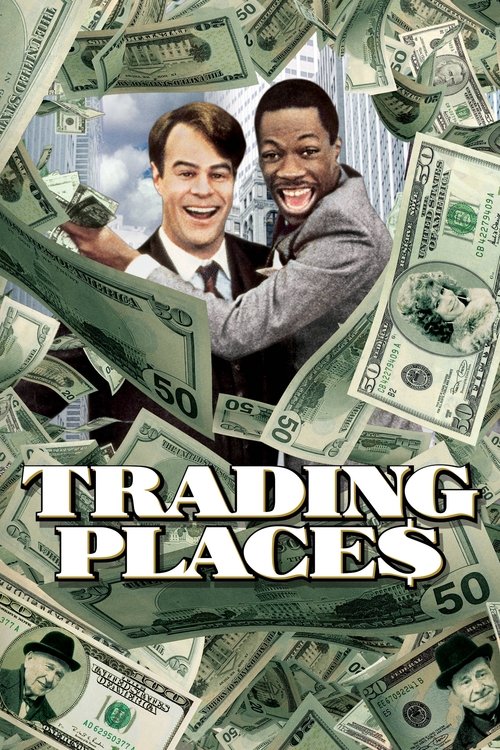
Trading Places
A snobbish investor and a wily street con-artist find their positions reversed as part of a bet by two callous millionaires.
Despite a moderate budget of $15.0M, Trading Places became a box office phenomenon, earning $90.4M worldwide—a remarkable 503% return.
Nominated for 1 Oscar. 3 wins & 8 nominations


Plot Structure
Story beats plotted across runtime


Narrative Arc
Emotional journey through the story's key moments
Story Circle
Blueprint 15-beat structure
Arcplot Score Breakdown
Weighted: Precision (70%) + Arc (15%) + Theme (15%)
Trading Places (1983) demonstrates meticulously timed narrative design, characteristic of John Landis's storytelling approach. This structural analysis examines how the film's 15-point plot structure maps to proven narrative frameworks across 1 hour and 56 minutes. With an Arcplot score of 6.9, the film balances conventional beats with creative variation.
Characters
Cast & narrative archetypes

Louis Winthorpe III
Billy Ray Valentine
Ophelia
Randolph Duke
Mortimer Duke
Coleman
Main Cast & Characters
Louis Winthorpe III
Played by Dan Aykroyd
Wealthy, privileged commodities broker whose life is destroyed as part of a social experiment by the Duke brothers.
Billy Ray Valentine
Played by Eddie Murphy
Street-smart hustler plucked from poverty and given Winthorpe's life as part of the Dukes' nature vs. nurture bet.
Ophelia
Played by Jamie Lee Curtis
Kind-hearted sex worker who takes in the destitute Winthorpe and becomes his ally in the revenge scheme.
Randolph Duke
Played by Ralph Bellamy
Elderly millionaire who initiates a cruel bet to test whether environment or heredity determines success.
Mortimer Duke
Played by Don Ameche
Randolph's brother and business partner, equally callous in treating people as pawns in their social experiment.
Coleman
Played by Denholm Elliott
Winthorpe's loyal butler who sides with his former employer and helps orchestrate the revenge against the Dukes.
Structural Analysis
The Status Quo at 1 minutes (1% through the runtime) establishes Split screen establishing two worlds: Louis Winthorpe III wakes in his pristine Philadelphia mansion, served by his butler Coleman, while Billy Ray Valentine wakes on the street as a homeless con artist. The visual contrast establishes the extreme class divide that will be reversed.. Structural examination shows that this early placement immediately immerses viewers in the story world.
The inciting incident occurs at 13 minutes when Billy Ray accidentally collides with Louis outside the Heritage Club. When Louis shouts for police, Billy Ray is arrested and beaten. The Duke brothers witness this and see their opportunity for the experiment. Louis's life begins to unravel through forces beyond his control.. At 11% through the film, this Disruption aligns precisely with traditional story structure. This beat shifts the emotional landscape, launching the protagonist into the central conflict.
The First Threshold at 28 minutes marks the transition into Act II, occurring at 25% of the runtime. This demonstrates the protagonist's commitment to Billy Ray chooses to accept the Dukes' offer and moves into Louis's mansion. Simultaneously, Louis hits rock bottom on the street. Both protagonists cross into their reversed worlds: Billy Ray enters high society while Louis becomes homeless. The experiment officially begins., moving from reaction to action.
At 57 minutes, the Midpoint arrives at 49% of the runtime—precisely centered, creating perfect narrative symmetry. Of particular interest, this crucial beat Billy Ray discovers the truth: he overhears the Duke brothers discussing their bet and learns he's just an experiment. False victory becomes crushing revelation. He realizes his success was manufactured, and the Dukes see him as subhuman. The stakes transform from personal success to revenge and justice., fundamentally raising what's at risk. The emotional intensity shifts, dividing the narrative into clear before-and-after phases.
The Collapse moment at 84 minutes (73% through) represents the emotional nadir. Here, The group realizes they need inside information to beat the Dukes and have no way to get it. Their revenge plan seems impossible—they're broke outcasts against billionaires. Louis nearly gives up in despair. This represents the "death" of their old identities and the seeming impossibility of justice., indicates the protagonist at their lowest point. This beat's placement in the final quarter sets up the climactic reversal.
The Second Threshold at 90 minutes initiates the final act resolution at 77% of the runtime. The team successfully steals the crop report from the train through an elaborate con involving disguises and misdirection. They now possess the information that will let them destroy the Dukes. The synthesis of Billy Ray's street smarts and Louis's financial knowledge makes victory possible., demonstrating the transformation achieved throughout the journey.
Emotional Journey
Trading Places's emotional architecture traces a deliberate progression across 15 carefully calibrated beats.
Narrative Framework
This structural analysis employs systematic plot point analysis that identifies crucial turning points. By mapping Trading Places against these established plot points, we can identify how John Landis utilizes or subverts traditional narrative conventions. The plot point approach reveals not only adherence to structural principles but also creative choices that distinguish Trading Places within the comedy genre.
John Landis's Structural Approach
Among the 13 John Landis films analyzed on Arcplot, the average structural score is 7.1, reflecting strong command of classical structure. Trading Places takes a more unconventional approach compared to the director's typical style. For comparative analysis, explore the complete John Landis filmography.
Comparative Analysis
Additional comedy films include The Bad Guys, Ella Enchanted and The Evening Star. For more John Landis analyses, see Spies Like Us, The Blues Brothers and ¡Three Amigos!.
Plot Points by Act
Act I
SetupStatus Quo
Split screen establishing two worlds: Louis Winthorpe III wakes in his pristine Philadelphia mansion, served by his butler Coleman, while Billy Ray Valentine wakes on the street as a homeless con artist. The visual contrast establishes the extreme class divide that will be reversed.
Theme
The Duke brothers argue their nature vs. nurture bet: "With my breeding and background, I'd have been a success at anything." Mortimer counters that environment, not heredity, determines success. This one-dollar bet will drive the entire plot and frames the film's central thematic question.
Worldbuilding
Louis's privileged life as Managing Director at Duke & Duke commodity brokers is established. He's engaged to Penelope, confidently manages pork belly futures, and lives in luxury. Meanwhile, Billy Ray works the streets with his con. Their worlds seem permanently separated by class and circumstance.
Disruption
Billy Ray accidentally collides with Louis outside the Heritage Club. When Louis shouts for police, Billy Ray is arrested and beaten. The Duke brothers witness this and see their opportunity for the experiment. Louis's life begins to unravel through forces beyond his control.
Resistance
The Dukes frame Louis for theft and drug dealing while simultaneously bailing out Billy Ray. Louis is fired, arrested, and abandoned by Penelope. He protests his innocence but is powerless against the conspiracy. Billy Ray is offered Louis's job and mansion, initially suspicious but increasingly tempted by the opportunity.
Act II
ConfrontationFirst Threshold
Billy Ray chooses to accept the Dukes' offer and moves into Louis's mansion. Simultaneously, Louis hits rock bottom on the street. Both protagonists cross into their reversed worlds: Billy Ray enters high society while Louis becomes homeless. The experiment officially begins.
Mirror World
Ophelia, a prostitute with a heart of gold, encounters the desperate Louis and takes pity on him. She represents authentic human compassion that transcends social class. Her generosity toward Louis (despite having little herself) embodies the film's theme that character, not circumstance, defines a person.
Premise
The "fun and games" of the role reversal: Billy Ray learns commodities trading and thrives, impressing the Dukes with natural intelligence. Louis, now living with Ophelia, disguises himself to break into the Duke building seeking revenge. Coleman (the butler) secretly helps Louis. We see both men adapting to their new circumstances.
Midpoint
Billy Ray discovers the truth: he overhears the Duke brothers discussing their bet and learns he's just an experiment. False victory becomes crushing revelation. He realizes his success was manufactured, and the Dukes see him as subhuman. The stakes transform from personal success to revenge and justice.
Opposition
Billy Ray and Louis meet and team up after Coleman reveals the full truth of the experiment. They unite with Ophelia and Coleman to plan revenge against the Dukes. The opposition intensifies as they must figure out how to beat wealthy, powerful men at their own game while having no resources.
Collapse
The group realizes they need inside information to beat the Dukes and have no way to get it. Their revenge plan seems impossible—they're broke outcasts against billionaires. Louis nearly gives up in despair. This represents the "death" of their old identities and the seeming impossibility of justice.
Crisis
In the darkness after the collapse, the team processes their situation. They realize they must take a massive risk: stealing the advance crop report to manipulate the commodity market. They transform desperation into determined action, pooling their unique skills from both high and low society.
Act III
ResolutionSecond Threshold
The team successfully steals the crop report from the train through an elaborate con involving disguises and misdirection. They now possess the information that will let them destroy the Dukes. The synthesis of Billy Ray's street smarts and Louis's financial knowledge makes victory possible.
Synthesis
The finale on the commodity exchange floor: Using the stolen crop report, the team executes a perfect market manipulation. They sell high when the Dukes buy (based on false information), then buy low after the real report crashes prices. The Dukes lose everything while our heroes become millionaires.
Transformation
Final image mirrors the opening: Billy Ray, Louis, Ophelia, and Coleman lounge together on a tropical beach, wealthy and free. But unlike the opening's segregated worlds, they're united across former class boundaries. The Dukes are left destitute on the exchange floor—a complete reversal proving character transcends circumstance.