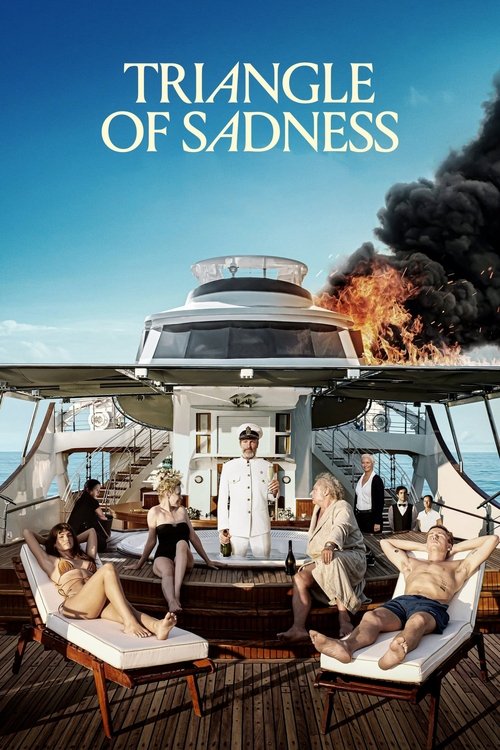
Triangle of Sadness
A celebrity model couple are invited on a luxury cruise for the uber-rich, helmed by an unhinged, alcoholic captain. What first appears Instagrammable ends catastrophically, leaving the survivors stranded on a desert island in a struggle of hierarchy.
Working with a moderate budget of $15.6M, the film achieved a steady performer with $24.7M in global revenue (+59% profit margin).
Nominated for 3 Oscars. 24 wins & 83 nominations


Plot Structure
Story beats plotted across runtime


Narrative Arc
Emotional journey through the story's key moments
Story Circle
Blueprint 15-beat structure
Arcplot Score Breakdown
Weighted: Precision (70%) + Arc (15%) + Theme (15%)
Triangle of Sadness (2022) exemplifies meticulously timed dramatic framework, characteristic of Ruben Östlund's storytelling approach. This structural analysis examines how the film's 15-point plot structure maps to proven narrative frameworks across 2 hours and 27 minutes. With an Arcplot score of 6.8, the film balances conventional beats with creative variation.
Characters
Cast & narrative archetypes

Carl
Yaya
Abigail
Captain Thomas Smith
Dimitry
Paula
Therese
Main Cast & Characters
Carl
Played by Harris Dickinson
A male model navigating relationship dynamics and class anxiety with his influencer girlfriend Yaya.
Yaya
Played by Charlbi Dean
A successful influencer and model whose beauty and status mask deeper insecurities about power and control.
Abigail
Played by Dolly de Leon
A Filipino cleaning lady on the yacht who becomes the island's resourceful leader after the shipwreck.
Captain Thomas Smith
Played by Woody Harrelson
The yacht's alcoholic Marxist captain who engages in drunken philosophical debates about capitalism.
Dimitry
Played by Zlatko Burić
A wealthy Russian oligarch and fertilizer magnate who represents nouveau riche capitalism.
Paula
Played by Vicki Berlin
The yacht's demanding head of staff who enforces rigid hierarchies and guest satisfaction at all costs.
Therese
Played by Iris Berben
An elderly stroke survivor and wealthy passenger with limited mobility who cannot control her bodily functions.
Structural Analysis
The Status Quo at 1 minutes (1% through the runtime) establishes Carl and Yaya at a high-fashion casting call. Carl is a male model struggling with his career while Yaya is ascending as an influencer. Their relationship operates on transactional dynamics and superficial beauty.. Of particular interest, this early placement immediately immerses viewers in the story world.
The inciting incident occurs at 18 minutes when Yaya receives an invitation to a luxury yacht cruise in exchange for social media promotion. This offers an escape from their world and launches them into the ultra-wealthy sphere.. At 13% through the film, this Disruption is delayed, allowing extended setup of the story world. This beat shifts the emotional landscape, launching the protagonist into the central conflict.
The First Threshold at 36 minutes marks the transition into Act II, occurring at 24% of the runtime. This indicates the protagonist's commitment to Carl and Yaya board the luxury yacht. Part Two: "The Yacht" begins. They fully enter the world of the ultra-wealthy, with Russian oligarchs, British arms dealers, and elderly tech millionaires. The crew is instructed that guests are always right., moving from reaction to action.
At 73 minutes, the Midpoint arrives at 50% of the runtime—precisely centered, creating perfect narrative symmetry. Of particular interest, this crucial beat The Captain's Dinner descends into chaos. A violent storm hits, passengers become seasick and vomit everywhere, and Captain Thomas and Dmitry have a drunken political debate over the PA system with competing quotes (Marx vs. Reagan), while the ship literally falls apart. False defeat: the civilized veneer collapses., fundamentally raising what's at risk. The emotional intensity shifts, dividing the narrative into clear before-and-after phases.
The Collapse moment at 109 minutes (74% through) represents the emotional nadir. Here, The yacht sinks. The survivors wash up on a deserted island. This is the "whiff of death" - their old world is literally destroyed, their wealth and status rendered meaningless. All is lost., reveals the protagonist at their lowest point. This beat's placement in the final quarter sets up the climactic reversal.
The Second Threshold at 117 minutes initiates the final act resolution at 80% of the runtime. Abigail fully seizes power through control of resources. She negotiates with the group: she'll provide food if she gets privileges - the lifeboat as her shelter and Carl as her sexual partner. The toilet manager becomes captain. New order established., demonstrating the transformation achieved throughout the journey.
Emotional Journey
Triangle of Sadness's emotional architecture traces a deliberate progression across 15 carefully calibrated beats.
Narrative Framework
This structural analysis employs structural analysis methodology used to understand storytelling architecture. By mapping Triangle of Sadness against these established plot points, we can identify how Ruben Östlund utilizes or subverts traditional narrative conventions. The plot point approach reveals not only adherence to structural principles but also creative choices that distinguish Triangle of Sadness within the comedy genre.
Ruben Östlund's Structural Approach
Among the 2 Ruben Östlund films analyzed on Arcplot, the average structural score is 7.0, reflecting strong command of classical structure. Triangle of Sadness takes a more unconventional approach compared to the director's typical style. For comparative analysis, explore the complete Ruben Östlund filmography.
Comparative Analysis
Additional comedy films include The Bad Guys, Ella Enchanted and The Evening Star. For more Ruben Östlund analyses, see The Square.
Plot Points by Act
Act I
SetupStatus Quo
Carl and Yaya at a high-fashion casting call. Carl is a male model struggling with his career while Yaya is ascending as an influencer. Their relationship operates on transactional dynamics and superficial beauty.
Theme
During the tense restaurant bill argument, the power dynamics of gender, money, and who pays are dissected. Yaya says "You're supposed to be the man" - establishing the film's central theme about capitalism, gender roles, and transactional relationships.
Worldbuilding
Part One: "Carl and Yaya" - The world of fashion models and influencers. Carl's insecurity about money and masculinity, Yaya's influencer currency, their toxic relationship patterns, and the shallow world they inhabit are all established.
Disruption
Yaya receives an invitation to a luxury yacht cruise in exchange for social media promotion. This offers an escape from their world and launches them into the ultra-wealthy sphere.
Resistance
Carl reluctantly agrees to join Yaya on the cruise. They prepare and transition from their modeling world to the luxury yacht environment, uncertain about what awaits them in this new sphere of ultra-wealth.
Act II
ConfrontationFirst Threshold
Carl and Yaya board the luxury yacht. Part Two: "The Yacht" begins. They fully enter the world of the ultra-wealthy, with Russian oligarchs, British arms dealers, and elderly tech millionaires. The crew is instructed that guests are always right.
Mirror World
Abigail, the Filipino toilet manager, is introduced as part of the exploited crew. She represents the inverse of the guests' privilege - the invisible labor that maintains their luxury. Her character will become crucial to the thematic exploration.
Premise
The promise of satirizing ultra-wealth is delivered. Absurd demands from guests, the crew's forced servility, Paula's directive that "the guests are always right," wealthy passengers' obliviousness, and building tension between Captain Thomas (a Marxist drunk) and his passengers.
Midpoint
The Captain's Dinner descends into chaos. A violent storm hits, passengers become seasick and vomit everywhere, and Captain Thomas and Dmitry have a drunken political debate over the PA system with competing quotes (Marx vs. Reagan), while the ship literally falls apart. False defeat: the civilized veneer collapses.
Opposition
The yacht is attacked by pirates. Passengers and crew scramble for survival. The grenade explosion kills most people on board. The established order - wealth, hierarchy, civilization - is violently dismantled. Everything gets worse.
Collapse
The yacht sinks. The survivors wash up on a deserted island. This is the "whiff of death" - their old world is literally destroyed, their wealth and status rendered meaningless. All is lost.
Crisis
Part Three: "The Island" begins. The survivors are helpless on the beach. The wealthy passengers are useless without their money. Abigail alone has survival skills - she builds fire, catches fish, opens food. The power structure begins to invert.
Act III
ResolutionSecond Threshold
Abigail fully seizes power through control of resources. She negotiates with the group: she'll provide food if she gets privileges - the lifeboat as her shelter and Carl as her sexual partner. The toilet manager becomes captain. New order established.
Synthesis
The island operates under Abigail's rule. Former oligarchs beg for food. Carl becomes her consort while Yaya loses relevance. The ultimate inversion: those who had nothing now have everything. But when Yaya and Abigail discover the island is near a resort, Abigail faces losing her power.
Transformation
Abigail and Yaya hike toward the resort. Abigail picks up a rock, walking behind Yaya. The image mirrors the opening's power dynamics but inverted - and suggests violence to maintain power. Cut to black. The system perpetuates itself through whoever holds power.