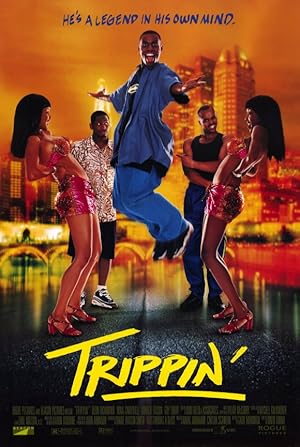
Trippin'
Greg is near the end of his senior year in high school, wanting to go to the prom, eyeing Cinny (the school's beauty with brains) from afar, and regularly trippin', daydreaming about being a big success as a poet, a student, a lover. His mom wants him to apply to colleges, but Greg hasn't a clue. One of his teachers, Mr. Shapic, tries to inspire him, too. He finally figures out he can get close to Cinny if he asks her for help with college applications. But friendship isn't enough, he wants romance and a prom date. So, he tells a few lies and, for awhile, it seems to be working. Then, things fall apart and Greg has to figure out how to put the trippin aside and get real.
The film earned $9.0M at the global box office.


Plot Structure
Story beats plotted across runtime


Narrative Arc
Emotional journey through the story's key moments
Story Circle
Blueprint 15-beat structure
Arcplot Score Breakdown
Weighted: Precision (70%) + Arc (15%) + Theme (15%)
Trippin' (1999) showcases precise story structure, characteristic of David Raynr's storytelling approach. This structural analysis examines how the film's 15-point plot structure maps to proven narrative frameworks across 1 hour and 34 minutes. With an Arcplot score of 7.4, the film balances conventional beats with creative variation.
Characters
Cast & narrative archetypes

Greg Reed
Cinny Hawkins
Fish
June Bug
Dinka
Mr. Reed
Main Cast & Characters
Greg Reed
Played by Deon Richmond
A high school senior daydreaming about his future with his girlfriend while facing academic challenges and college pressures.
Cinny Hawkins
Played by Maia Campbell
Greg's girlfriend and academic achiever heading to UCLA, representing Greg's aspirations and romantic anchor.
Fish
Played by Donald Faison
Greg's best friend and comedic sidekick who provides comic relief and loyalty throughout their senior year adventures.
June Bug
Played by Guy Torry
Another close friend in Greg's crew, adding to the group dynamic and shared experiences of senior year.
Dinka
Played by Countess Vaughn
Greg's younger cousin who looks up to him and adds family dimension to the story.
Mr. Reed
Played by Harold Sylvester
Greg's father who pressures him about college and represents traditional expectations and parental authority.
Structural Analysis
The Status Quo at 1 minutes (1% through the runtime) establishes Greg is introduced as a high school senior who lives in his fantasy world, daydreaming about success and popularity while his real life is ordinary and unremarkable.. The analysis reveals that this early placement immediately immerses viewers in the story world.
The inciting incident occurs at 11 minutes when Greg discovers he doesn't have enough money for the Hawaii trip and/or faces an obstacle that threatens his ability to go, disrupting his fantasy of the perfect senior trip.. At 12% through the film, this Disruption aligns precisely with traditional story structure. This beat shifts the emotional landscape, launching the protagonist into the central conflict.
The First Threshold at 24 minutes marks the transition into Act II, occurring at 25% of the runtime. This indicates the protagonist's commitment to Greg commits to a plan of action - whether getting a job, entering a contest, or pursuing a scheme - actively choosing to pursue the trip and Cinny rather than just dreaming about it., moving from reaction to action.
At 47 minutes, the Midpoint arrives at 50% of the runtime—precisely centered, creating perfect narrative symmetry. Significantly, this crucial beat False victory: Greg appears to have secured the money for the trip and Cinny seems interested in him, making it look like everything is coming together. The stakes raise as the trip approaches., fundamentally raising what's at risk. The emotional intensity shifts, dividing the narrative into clear before-and-after phases.
The Collapse moment at 71 minutes (75% through) represents the emotional nadir. Here, Greg loses everything - the money, his chance with Cinny, possibly the respect of his friends. His fantasy world is shattered and he must face the reality that his avoidance and schemes have failed. The dream of the perfect trip dies., demonstrates the protagonist at their lowest point. This beat's placement in the final quarter sets up the climactic reversal.
The Second Threshold at 76 minutes initiates the final act resolution at 81% of the runtime. Greg has a realization - success isn't about the fantasy, it's about being genuine. He decides to take real action, combining his creativity with authentic effort and honesty., demonstrating the transformation achieved throughout the journey.
Emotional Journey
Trippin''s emotional architecture traces a deliberate progression across 15 carefully calibrated beats.
Narrative Framework
This structural analysis employs proven narrative structure principles that track dramatic progression. By mapping Trippin' against these established plot points, we can identify how David Raynr utilizes or subverts traditional narrative conventions. The plot point approach reveals not only adherence to structural principles but also creative choices that distinguish Trippin' within the comedy genre.
David Raynr's Structural Approach
Among the 2 David Raynr films analyzed on Arcplot, the average structural score is 7.3, reflecting strong command of classical structure. Trippin' represents one of the director's most structurally precise works. For comparative analysis, explore the complete David Raynr filmography.
Comparative Analysis
Additional comedy films include The Bad Guys, Ella Enchanted and The Evening Star. For more David Raynr analyses, see Whatever It Takes.
Plot Points by Act
Act I
SetupStatus Quo
Greg is introduced as a high school senior who lives in his fantasy world, daydreaming about success and popularity while his real life is ordinary and unremarkable.
Theme
Greg's teacher or friend mentions that real life requires actual effort, not just dreams - foreshadowing Greg's need to stop fantasizing and start taking real action.
Worldbuilding
Setup of Greg's world: his unrequited crush on Cinny, his loyal friends, his tendency to escape into elaborate fantasies, and the upcoming senior class trip to Hawaii that everyone is excited about.
Disruption
Greg discovers he doesn't have enough money for the Hawaii trip and/or faces an obstacle that threatens his ability to go, disrupting his fantasy of the perfect senior trip.
Resistance
Greg debates how to solve his problem - should he get a job, ask his parents, scheme his way to money? His friends offer advice while he continues to retreat into fantasies rather than face reality.
Act II
ConfrontationFirst Threshold
Greg commits to a plan of action - whether getting a job, entering a contest, or pursuing a scheme - actively choosing to pursue the trip and Cinny rather than just dreaming about it.
Mirror World
Greg has a meaningful interaction with Cinny or develops a new relationship (possibly with another girl) that represents what real connection looks like versus his fantasies.
Premise
The fun of Greg pursuing his goal - working his job or scheme, having comedic mishaps, small victories with Cinny, bonding with friends, and the contrast between his fantasy sequences and reality.
Midpoint
False victory: Greg appears to have secured the money for the trip and Cinny seems interested in him, making it look like everything is coming together. The stakes raise as the trip approaches.
Opposition
Things get harder - Greg's scheme unravels, the money situation gets worse, Cinny may be interested in someone else, his fantasies increasingly conflict with reality, and his avoidance of real problems catches up to him.
Collapse
Greg loses everything - the money, his chance with Cinny, possibly the respect of his friends. His fantasy world is shattered and he must face the reality that his avoidance and schemes have failed. The dream of the perfect trip dies.
Crisis
Greg wallows in his failure and disappointment. He must confront who he really is versus who he pretends to be in his fantasies. Dark night of accepting reality.
Act III
ResolutionSecond Threshold
Greg has a realization - success isn't about the fantasy, it's about being genuine. He decides to take real action, combining his creativity with authentic effort and honesty.
Synthesis
Greg executes his new plan with authenticity - whether making things right with friends, pursuing Cinny honestly, or finding a real solution to the trip. The finale where he proves his growth by taking real action instead of retreating to fantasy.
Transformation
Final image shows Greg in reality - maybe on the trip or not, but genuinely connected with friends and Cinny, no longer needing to escape into fantasy. He's become someone who lives authentically.