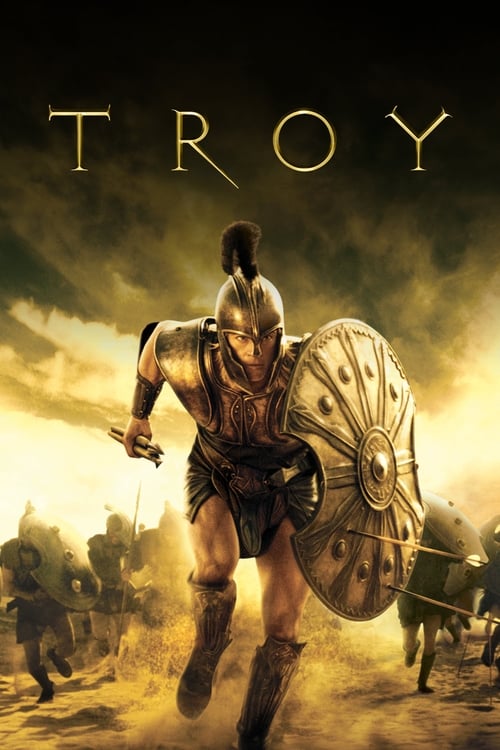
Troy
An adaptation of Homer's great epic, the film follows the assault on Troy by the united Greek forces.
Despite a massive budget of $175.0M, Troy became a commercial success, earning $497.4M worldwide—a 184% return. This commercial performance validated the ambitious narrative scope, confirming that audiences embrace unconventional structure even at blockbuster scale.
Nominated for 1 Oscar. 5 wins & 23 nominations


Plot Structure
Story beats plotted across runtime


Narrative Arc
Emotional journey through the story's key moments
Story Circle
Blueprint 15-beat structure
Characters
Cast & narrative archetypes

Achilles
Hector
Paris
Helen
Odysseus
Agamemnon
Priam
Briseis
Patroclus
Main Cast & Characters
Achilles
Played by Brad Pitt
Greece's greatest warrior, driven by glory and immortality through legend rather than loyalty to kings.
Hector
Played by Eric Bana
Troy's noble prince and greatest defender, fighting to protect his family and city from Greek invasion.
Paris
Played by Orlando Bloom
Trojan prince whose love affair with Helen sparks the war, idealistic but immature in combat.
Helen
Played by Diane Kruger
The face that launched a thousand ships, caught between duty and love as the war's catalyst.
Odysseus
Played by Sean Bean
Ithaca's cunning king and strategist, the voice of wisdom who orchestrates the Trojan Horse.
Agamemnon
Played by Brian Cox
Ambitious Greek king leading the invasion, seeking power and conquest over all else.
Priam
Played by Peter O'Toole
Wise and compassionate king of Troy, father to Hector and Paris, who seeks peace above all.
Briseis
Played by Rose Byrne
Trojan priestess captured by Achilles, whose integrity and courage challenge his worldview.
Patroclus
Played by Garrett Hedlund
Achilles' younger cousin and companion, whose death becomes the catalyst for Achilles' return to battle.
Structural Analysis
The Status Quo at 1 minutes (1% through the runtime) establishes Achilles' tent before battle. The greatest warrior of Greece sleeps alone, separated from his men, establishing his isolation and unmatched prowess before the old world order changes.. The analysis reveals that this early placement immediately immerses viewers in the story world.
The inciting incident occurs at 18 minutes when Paris brings Helen to Troy. Menelaus discovers his wife has been taken. This act of passion disrupts the fragile peace and makes war inevitable, pulling all of Greece toward Troy.. At 11% through the film, this Disruption aligns precisely with traditional story structure. This beat shifts the emotional landscape, launching the protagonist into the central conflict.
The First Threshold at 39 minutes marks the transition into Act II, occurring at 24% of the runtime. This shows the protagonist's commitment to Achilles chooses to sail to Troy. Despite knowing he'll never return home, he actively chooses glory and immortal fame over a long, forgotten life. The Greek fleet launches., moving from reaction to action.
At 82 minutes, the Midpoint arrives at 50% of the runtime—precisely centered, creating perfect narrative symmetry. Structural examination shows that this crucial beat Hector kills Patroclus, mistaking him for Achilles. This false defeat transforms everything—Achilles loses the one person he truly loved, and his rage will now consume both armies. The stakes become personal and fatal., fundamentally raising what's at risk. The emotional intensity shifts, dividing the narrative into clear before-and-after phases.
The Collapse moment at 120 minutes (74% through) represents the emotional nadir. Here, Achilles kills Hector outside Troy's gates. Troy's greatest defender dies. The "whiff of death"—both literal (Hector) and symbolic (Troy's hope, Achilles' humanity). Priam must beg for his son's body., demonstrates the protagonist at their lowest point. This beat's placement in the final quarter sets up the climactic reversal.
The Second Threshold at 130 minutes initiates the final act resolution at 80% of the runtime. Odysseus conceives the Trojan Horse strategy, and the Greeks execute it. Achilles, changed by love for Briseis, plans to abandon glory and escape with her—synthesizing warrior skill with newfound humanity., demonstrating the transformation achieved throughout the journey.
Emotional Journey
Troy's emotional architecture traces a deliberate progression across 15 carefully calibrated beats.
Narrative Framework
This structural analysis employs systematic plot point analysis that identifies crucial turning points. By mapping Troy against these established plot points, we can identify how Wolfgang Petersen utilizes or subverts traditional narrative conventions. The plot point approach reveals not only adherence to structural principles but also creative choices that distinguish Troy within the action genre.
Wolfgang Petersen's Structural Approach
Among the 10 Wolfgang Petersen films analyzed on Arcplot, the average structural score is 6.8, demonstrating varied approaches to story architecture. Troy exemplifies the director's characteristic narrative technique. For comparative analysis, explore the complete Wolfgang Petersen filmography.
Comparative Analysis
Additional action films include The Bad Guys, Puss in Boots and Venom: The Last Dance. For more Wolfgang Petersen analyses, see Outbreak, In the Line of Fire and Shattered.
Plot Points by Act
Act I
SetupStatus Quo
Achilles' tent before battle. The greatest warrior of Greece sleeps alone, separated from his men, establishing his isolation and unmatched prowess before the old world order changes.
Theme
Odysseus tells Achilles: "War is young men dying and old men talking. You know this. Ignore the politics." The central tension between glory in death versus meaningful life is stated.
Worldbuilding
Establishes the Greek political landscape, Achilles' defiance of Agamemnon, Hector and Paris' relationship in Troy, and Paris' fateful love for Helen that will ignite the war.
Disruption
Paris brings Helen to Troy. Menelaus discovers his wife has been taken. This act of passion disrupts the fragile peace and makes war inevitable, pulling all of Greece toward Troy.
Resistance
Agamemnon rallies Greece for war. Achilles debates whether to go, knowing prophecy says he'll die at Troy but win eternal glory. Thetis warns him: glory or a long life, but not both.
Act II
ConfrontationFirst Threshold
Achilles chooses to sail to Troy. Despite knowing he'll never return home, he actively chooses glory and immortal fame over a long, forgotten life. The Greek fleet launches.
Mirror World
Achilles meets Briseis in Apollo's temple after the beach assault. She represents peace, faith, and the possibility of meaning beyond violence—the antithesis of his warrior existence.
Premise
The promise of epic warfare delivered: the beach landing, Achilles vs. Boagrius, the sacking of Apollo's temple, political maneuvering between Agamemnon and Achilles, Hector's honor vs. Paris' folly.
Midpoint
Hector kills Patroclus, mistaking him for Achilles. This false defeat transforms everything—Achilles loses the one person he truly loved, and his rage will now consume both armies. The stakes become personal and fatal.
Opposition
Achilles' grief and fury intensify. He desecrates Hector's body, demanding single combat. Priam must humble himself, the Greeks grow restless, and the path to Troy's destruction accelerates as mercy evaporates.
Collapse
Achilles kills Hector outside Troy's gates. Troy's greatest defender dies. The "whiff of death"—both literal (Hector) and symbolic (Troy's hope, Achilles' humanity). Priam must beg for his son's body.
Crisis
Priam's night visit to Achilles' tent. In shared grief, Achilles rediscovers his humanity and returns Hector's body. Both men face the hollowness of their choices and the approaching end.
Act III
ResolutionSecond Threshold
Odysseus conceives the Trojan Horse strategy, and the Greeks execute it. Achilles, changed by love for Briseis, plans to abandon glory and escape with her—synthesizing warrior skill with newfound humanity.
Synthesis
The Trojan Horse infiltration. Troy burns. Achilles abandons the Greeks to save Briseis, but Paris' arrow finds him—prophecy fulfilled. The finale resolves all threads: Troy falls, Achilles dies for love, not glory.
Transformation
Achilles dies in Briseis' arms, having chosen love over empty glory. His final words concern her safety, not his legend. The warrior who sought immortal fame finds meaning in mortal love—but the cost is everything.