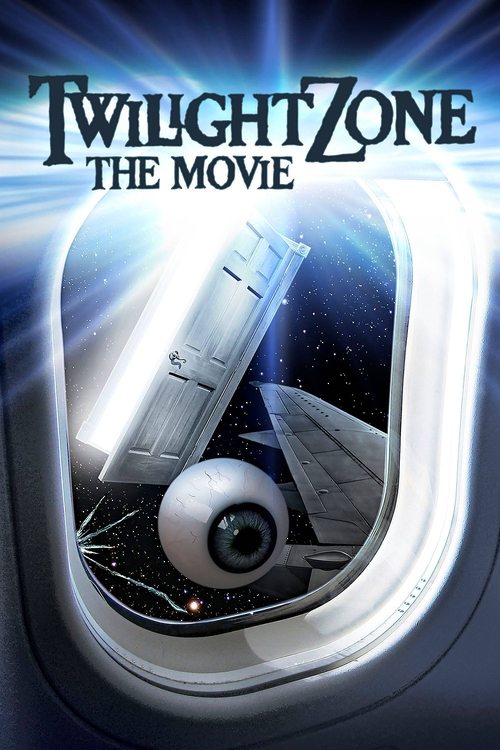
Twilight Zone: The Movie
An anthology film presenting remakes of three episodes from the "Twilight Zone" TV series—"Kick the Can", "It's a Good Life" and "Nightmare at 20,000 Feet"—and one original story, "Time Out."
Despite its limited budget of $10.0M, Twilight Zone: The Movie became a financial success, earning $29.5M worldwide—a 195% return.
1 win & 8 nominations


Plot Structure
Story beats plotted across runtime


Narrative Arc
Emotional journey through the story's key moments
Story Circle
Blueprint 15-beat structure
Arcplot Score Breakdown
Weighted: Precision (70%) + Arc (15%) + Theme (15%)
Twilight Zone: The Movie (1983) reveals deliberately positioned plot construction, characteristic of John Landis's storytelling approach. This structural analysis examines how the film's 15-point plot structure maps to proven narrative frameworks across 1 hour and 41 minutes. With an Arcplot score of 7.4, the film balances conventional beats with creative variation.
Characters
Cast & narrative archetypes

Bill Connor
Mr. Bloom
Helen Foley
Anthony
John Valentine
Passenger (Prologue)
Driver (Prologue)
Main Cast & Characters
Bill Connor
Played by Vic Morrow
A bigot who is transported through time to experience persecution firsthand.
Mr. Bloom
Played by Scatman Crothers
An elderly nursing home resident who magically transforms himself and others into children.
Helen Foley
Played by Kathleen Quinlan
A compassionate teacher who encounters a troubled boy with reality-warping powers.
Anthony
Played by Jeremy Licht
A boy with god-like powers who traps people in his nightmarish cartoon world.
John Valentine
Played by John Lithgow
A fearful airplane passenger who sees a gremlin destroying the plane.
Passenger (Prologue)
Played by Albert Brooks
An unsuspecting driver who encounters something terrifying on a night drive.
Driver (Prologue)
Played by Dan Aykroyd
A mysterious stranger who turns a car game deadly.
Structural Analysis
The Status Quo at 1 minutes (1% through the runtime) establishes Two men driving at night, singing along to music, establishing normalcy and camaraderie before the supernatural intrudes.. Significantly, this early placement immediately immerses viewers in the story world.
The inciting incident occurs at 11 minutes when Bill is transported into a Nazi-occupied French village as a Jewish man being hunted - forced to experience the persecution he casually endorsed.. At 11% through the film, this Disruption aligns precisely with traditional story structure. This beat shifts the emotional landscape, launching the protagonist into the central conflict.
The First Threshold at 25 minutes marks the transition into Act II, occurring at 24% of the runtime. This shows the protagonist's commitment to Mr. Bloom arrives at the rest home, offering the residents a magical chance to reclaim their youth through belief and imagination., moving from reaction to action.
At 49 minutes, the Midpoint arrives at 49% of the runtime—precisely centered, creating perfect narrative symmetry. Structural examination shows that this crucial beat Helen discovers the horrifying truth of Anthony's power when she sees his family transformed into cartoon monsters, trapped in a nightmare ruled by a child's unchecked desires. False victory (she thought she could help him) becomes defeat., fundamentally raising what's at risk. The emotional intensity shifts, dividing the narrative into clear before-and-after phases.
The Collapse moment at 74 minutes (73% through) represents the emotional nadir. Here, The gremlin tears apart the plane's engine mid-flight. Valentine's sanity appears lost; no one believes him, and the aircraft is moments from catastrophic failure - literal death looms., shows the protagonist at their lowest point. This beat's placement in the final quarter sets up the climactic reversal.
The Second Threshold at 80 minutes initiates the final act resolution at 80% of the runtime. Valentine takes decisive action, opening the emergency exit and confronting the gremlin directly, choosing courage over the safety of denial., demonstrating the transformation achieved throughout the journey.
Emotional Journey
Twilight Zone: The Movie's emotional architecture traces a deliberate progression across 15 carefully calibrated beats.
Narrative Framework
This structural analysis employs a 15-point narrative structure framework that maps key story moments. By mapping Twilight Zone: The Movie against these established plot points, we can identify how John Landis utilizes or subverts traditional narrative conventions. The plot point approach reveals not only adherence to structural principles but also creative choices that distinguish Twilight Zone: The Movie within the horror genre.
John Landis's Structural Approach
Among the 13 John Landis films analyzed on Arcplot, the average structural score is 7.1, reflecting strong command of classical structure. Twilight Zone: The Movie represents one of the director's most structurally precise works. For comparative analysis, explore the complete John Landis filmography.
Comparative Analysis
Additional horror films include Thinner, A Nightmare on Elm Street and Mary Reilly. For more John Landis analyses, see Spies Like Us, The Blues Brothers and ¡Three Amigos!.
Plot Points by Act
Act I
SetupStatus Quo
Two men driving at night, singing along to music, establishing normalcy and camaraderie before the supernatural intrudes.
Theme
Driver asks "Do you want to see something really scary?" - establishing the anthology's exploration of fear, transformation, and the price of our darkest impulses.
Worldbuilding
Prologue establishes tone, then Segment 1 introduces Bill (racist bigot) in his ordinary world, showing his prejudice and cruelty toward minorities.
Disruption
Bill is transported into a Nazi-occupied French village as a Jewish man being hunted - forced to experience the persecution he casually endorsed.
Resistance
Bill experiences multiple historical persecutions (Holocaust, KKK terror, Vietnam), learning through torment what his hatred truly means. Transitions into Segment 2: elderly residents at Sunnyvale Rest Home wish for youth.
Act II
ConfrontationFirst Threshold
Mr. Bloom arrives at the rest home, offering the residents a magical chance to reclaim their youth through belief and imagination.
Mirror World
The elderly residents are transformed into children through the magic of "Kick the Can," embodying the theme that wonder and youth are states of mind, not body.
Premise
Exploration of transformation and consequence: residents experience childhood again but choose wisdom; Segment 3 begins with Helen meeting Anthony, a boy with godlike reality-warping powers who traps people in his cartoon world.
Midpoint
Helen discovers the horrifying truth of Anthony's power when she sees his family transformed into cartoon monsters, trapped in a nightmare ruled by a child's unchecked desires. False victory (she thought she could help him) becomes defeat.
Opposition
Helen must navigate Anthony's dangerous reality while the family lives in terror of displeasing him. Segment 4 begins: John Valentine boards a flight despite seeing a creature on the wing, with fear and paranoia escalating.
Collapse
The gremlin tears apart the plane's engine mid-flight. Valentine's sanity appears lost; no one believes him, and the aircraft is moments from catastrophic failure - literal death looms.
Crisis
Valentine struggles with the choice: accept seeming madness or let everyone die. He processes the isolation of seeing truth others cannot perceive.
Act III
ResolutionSecond Threshold
Valentine takes decisive action, opening the emergency exit and confronting the gremlin directly, choosing courage over the safety of denial.
Synthesis
Valentine defeats the creature, saving the plane. The flight lands safely. He is led away by ambulance, his heroism mistaken for madness - the ultimate Twilight Zone irony.
Transformation
The ambulance driver recites the Twilight Zone opening narration, revealing to Valentine (and the audience) that he's still in a supernatural realm. The cycle continues - fear, transformation, and uncertainty are eternal.