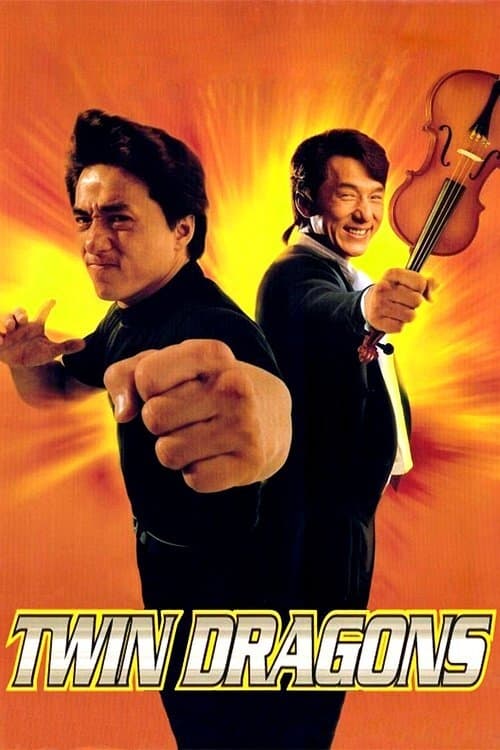
Twin Dragons
Twins, separated at birth, end up as a Hong Kong gangster and a New York concert pianist. When the pianist travels to Hong Kong for a concert, the two inevitably get mistaken for each other.
The film earned $46.9M at the global box office.


Plot Structure
Story beats plotted across runtime


Narrative Arc
Emotional journey through the story's key moments
Story Circle
Blueprint 15-beat structure
Arcplot Score Breakdown
Weighted: Precision (70%) + Arc (15%) + Theme (15%)
Twin Dragons (1992) demonstrates carefully calibrated plot construction, characteristic of Ringo Lam Ling-Tung's storytelling approach. This structural analysis examines how the film's 15-point plot structure maps to proven narrative frameworks across 1 hour and 44 minutes. With an Arcplot score of 6.8, the film balances conventional beats with creative variation.
Characters
Cast & narrative archetypes

John Ma / Boomer
Barbara
Tyson
Tong
Tammy
Main Cast & Characters
John Ma / Boomer
Played by Jackie Chan
Separated twin brothers - one a respected Hong Kong conductor, the other a street-smart mechanic and racer caught up with gangsters.
Barbara
Played by Maggie Cheung
John Ma's girlfriend and manager who gets caught up in the twin confusion.
Tyson
Played by Teddy Robin
The main antagonist, a ruthless crime boss pursuing Boomer over a debt.
Tong
Played by Mabel Cheung
Boomer's loyal friend who tries to help him escape the gangsters.
Tammy
Played by Nina Li Chi
A nightclub singer and Boomer's love interest who gets involved in the chaos.
Structural Analysis
The Status Quo at 1 minutes (1% through the runtime) establishes Hospital birth scene: Twin boys are born to a wealthy couple in Hong Kong. The image of two identical infants establishes the duality that will define the entire narrative—two halves of a whole, soon to be separated.. The analysis reveals that this early placement immediately immerses viewers in the story world.
The inciting incident occurs at 12 minutes when John Ma arrives in Hong Kong for a prestigious concert performance, unknowingly entering the same city as his twin brother. This geographical collision sets the disruption in motion—the separated twins are now in proximity, and fate will force them together.. At 12% through the film, this Disruption aligns precisely with traditional story structure. This beat shifts the emotional landscape, launching the protagonist into the central conflict.
The First Threshold at 26 minutes marks the transition into Act II, occurring at 25% of the runtime. This shows the protagonist's commitment to The twins accidentally encounter each other in a hotel lobby, staring at their mirror image in disbelief. Rather than flee this impossibility, they choose to engage—this active decision to investigate their connection launches both into a new reality where their separate identities will become dangerously entangled., moving from reaction to action.
At 52 minutes, the Midpoint arrives at 50% of the runtime—precisely centered, creating perfect narrative symmetry. Significantly, this crucial beat False victory: The twins finally sit down together and share their histories, marveling at their connection. They agree to help each other—John will handle Boomer's gangster problems diplomatically while Boomer covers for John's rehearsals. The plan seems perfect, but they've underestimated how deeply their worlds will collide., fundamentally raising what's at risk. The emotional intensity shifts, dividing the narrative into clear before-and-after phases.
The Collapse moment at 78 minutes (75% through) represents the emotional nadir. Here, The gangsters kidnap both twins' love interests, holding them hostage in an automobile testing facility. The brothers' attempts to maintain separate lives have endangered everyone they care about. Their scheme has collapsed—the whiff of death hangs over Barbara and Tammy as the crime boss threatens to kill them., indicates the protagonist at their lowest point. This beat's placement in the final quarter sets up the climactic reversal.
The Second Threshold at 83 minutes initiates the final act resolution at 80% of the runtime. The twins make a breakthrough: instead of trying to be each other, they will fight as themselves—together. They realize their supernatural connection isn't a liability but a weapon. By synchronizing their movements and combining their complementary skills, they can become unstoppable. They storm the car factory as one unified force., demonstrating the transformation achieved throughout the journey.
Emotional Journey
Twin Dragons's emotional architecture traces a deliberate progression across 15 carefully calibrated beats.
Narrative Framework
This structural analysis employs systematic plot point analysis that identifies crucial turning points. By mapping Twin Dragons against these established plot points, we can identify how Ringo Lam Ling-Tung utilizes or subverts traditional narrative conventions. The plot point approach reveals not only adherence to structural principles but also creative choices that distinguish Twin Dragons within the action genre.
Ringo Lam Ling-Tung's Structural Approach
Among the 2 Ringo Lam Ling-Tung films analyzed on Arcplot, the average structural score is 6.8, demonstrating varied approaches to story architecture. Twin Dragons represents one of the director's most structurally precise works. For comparative analysis, explore the complete Ringo Lam Ling-Tung filmography.
Comparative Analysis
Additional action films include The Bad Guys, Puss in Boots and Venom: The Last Dance. For more Ringo Lam Ling-Tung analyses, see Maximum Risk.
Plot Points by Act
Act I
SetupStatus Quo
Hospital birth scene: Twin boys are born to a wealthy couple in Hong Kong. The image of two identical infants establishes the duality that will define the entire narrative—two halves of a whole, soon to be separated.
Theme
As gangsters invade the hospital, a nurse declares that the twins share a special bond that cannot be broken regardless of distance. This articulates the theme: identity is not shaped solely by environment—blood connection transcends circumstance.
Worldbuilding
The parallel lives of the twins unfold: John Ma grows into a refined classical music conductor in America, while Boomer becomes a streetwise mechanic in Hong Kong's criminal underworld. Their contrasting worlds—high culture versus street survival—establish the comedic and dramatic potential of their inevitable meeting.
Disruption
John Ma arrives in Hong Kong for a prestigious concert performance, unknowingly entering the same city as his twin brother. This geographical collision sets the disruption in motion—the separated twins are now in proximity, and fate will force them together.
Resistance
Boomer's girlfriend Tammy and his friend Tyson serve as guides through Hong Kong's underworld, while John navigates high society with his manager. Both twins resist forces pulling them toward each other—Boomer avoids gangster trouble, John focuses on his concert—but circumstances conspire against their separate paths.
Act II
ConfrontationFirst Threshold
The twins accidentally encounter each other in a hotel lobby, staring at their mirror image in disbelief. Rather than flee this impossibility, they choose to engage—this active decision to investigate their connection launches both into a new reality where their separate identities will become dangerously entangled.
Mirror World
Barbara, John's sophisticated love interest, and Tammy, Boomer's streetwise girlfriend, represent the thematic mirror world. Their contrasting relationships with the twins they believe they know will teach both brothers about the lives they might have lived—and what truly defines a person beyond circumstance.
Premise
The promise of the premise delivers: mistaken identity comedy erupts as the twins are repeatedly confused for each other. Boomer finds himself conducting an orchestra while John gets dragged into street fights. Their supernatural twin connection causes synchronized reactions—when one gets hurt or aroused, the other feels it across the city.
Midpoint
False victory: The twins finally sit down together and share their histories, marveling at their connection. They agree to help each other—John will handle Boomer's gangster problems diplomatically while Boomer covers for John's rehearsals. The plan seems perfect, but they've underestimated how deeply their worlds will collide.
Opposition
The gangsters, led by the ruthless crime boss, close in on both twins. The identity switches backfire catastrophically—criminals target John thinking he's Boomer, while Boomer's attempts to impersonate a conductor create escalating disasters. The romantic relationships fracture as Barbara and Tammy realize they've been kissing the wrong twin.
Collapse
The gangsters kidnap both twins' love interests, holding them hostage in an automobile testing facility. The brothers' attempts to maintain separate lives have endangered everyone they care about. Their scheme has collapsed—the whiff of death hangs over Barbara and Tammy as the crime boss threatens to kill them.
Crisis
The twins face their dark night: they cannot defeat the gangsters alone, and their individual approaches—John's refinement, Boomer's street skills—have proven insufficient. They must reconcile their divided identity and accept that neither is complete without the other.
Act III
ResolutionSecond Threshold
The twins make a breakthrough: instead of trying to be each other, they will fight as themselves—together. They realize their supernatural connection isn't a liability but a weapon. By synchronizing their movements and combining their complementary skills, they can become unstoppable. They storm the car factory as one unified force.
Synthesis
The spectacular finale unfolds in the automobile testing facility. The twins use their psychic link strategically—when one fights, the other anticipates movements. Cars crash, conveyor belts become weapons, and the brothers systematically dismantle the criminal organization. John discovers his own fighting spirit while Boomer shows unexpected finesse.
Transformation
The final image mirrors the opening: the twins stand together, but now as unified adults who have found each other. John's concert proceeds with Boomer proudly in the audience. The separated infants have become whole—not by becoming the same person, but by embracing both their connection and their individual identities.