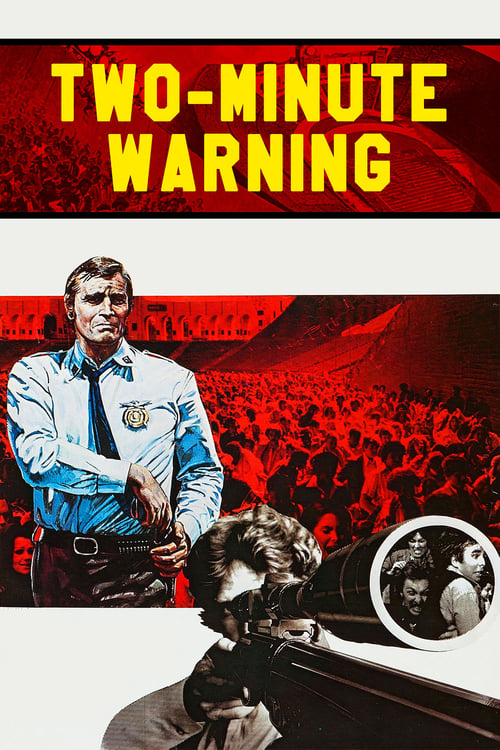
Two-Minute Warning
A psychotic sniper plans a massive killing spree in a Los Angeles football stadium during a major championship game. The police, led by Captain Peter Holly and the SWAT commander, learn of the plot and rush to the scene.
Working with a modest budget of $6.7M, the film achieved a modest success with $6.7M in global revenue (+0% profit margin).
Nominated for 1 Oscar. 1 nomination


Plot Structure
Story beats plotted across runtime


Narrative Arc
Emotional journey through the story's key moments
Story Circle
Blueprint 15-beat structure
Arcplot Score Breakdown
Weighted: Precision (70%) + Arc (15%) + Theme (15%)
Two-Minute Warning (1976) exhibits strategically placed story structure, characteristic of Larry Peerce's storytelling approach. This structural analysis examines how the film's 15-point plot structure maps to proven narrative frameworks across 1 hour and 55 minutes. With an Arcplot score of 6.9, the film balances conventional beats with creative variation.
Characters
Cast & narrative archetypes

Captain Peter Holly
Sergeant Chris Button
The Sniper
Steve
Peggy Ramsay
Paul
Stu Sandman
Sam McKeever
Main Cast & Characters
Captain Peter Holly
Played by Charlton Heston
SWAT team captain leading the response to the sniper threat at the championship game.
Sergeant Chris Button
Played by John Cassavetes
SWAT sergeant and Holly's partner, working to locate and neutralize the sniper.
The Sniper
Played by Warren Miller
A mentally disturbed lone gunman who takes position in the stadium to kill spectators.
Steve
Played by David Janssen
A gambler attending the game with personal problems and mounting debts.
Peggy Ramsay
Played by Gena Rowlands
A woman at the stadium dealing with relationship issues and family dynamics.
Paul
Played by Beau Bridges
A maintenance worker who becomes aware of the sniper's presence in the stadium.
Stu Sandman
Played by Jack Klugman
Stadium manager responsible for operations and coordinating with law enforcement.
Sam McKeever
Played by Martin Balsam
Stadium official working with law enforcement to manage the crisis.
Structural Analysis
The Status Quo at 1 minutes (1% through the runtime) establishes Championship Sunday begins at the Los Angeles Coliseum. Thousands of fans arrive for what should be an ordinary football game, establishing the normalcy before catastrophe.. Notably, this early placement immediately immerses viewers in the story world.
The inciting incident occurs at 14 minutes when The sniper takes position in the tower with a high-powered rifle. A maintenance worker discovers him and is killed - first blood spilled, transforming the game day into a crisis.. At 12% through the film, this Disruption aligns precisely with traditional story structure. This beat shifts the emotional landscape, launching the protagonist into the central conflict.
The First Threshold at 29 minutes marks the transition into Act II, occurring at 25% of the runtime. This indicates the protagonist's commitment to The decision is made: they cannot evacuate without causing a deadly stampede. Holly and Button commit to stopping the sniper before he can strike, entering a deadly cat-and-mouse game with 90,000 lives at stake., moving from reaction to action.
At 58 minutes, the Midpoint arrives at 50% of the runtime—precisely centered, creating perfect narrative symmetry. Of particular interest, this crucial beat The sniper is spotted and pinpointed in the tower. False victory - they know where he is, but realize he has a perfect kill zone covering the entire field. The stakes are raised: one wrong move triggers a massacre., fundamentally raising what's at risk. The emotional intensity shifts, dividing the narrative into clear before-and-after phases.
The Collapse moment at 86 minutes (75% through) represents the emotional nadir. Here, The two-minute warning sounds. The sniper opens fire on the crowd, killing and wounding spectators. Chaos erupts. The worst-case scenario Holly tried to prevent is happening - innocent people are dying., reveals the protagonist at their lowest point. This beat's placement in the final quarter sets up the climactic reversal.
The Second Threshold at 92 minutes initiates the final act resolution at 80% of the runtime. Holly and Button spot their opening in the chaos. They make the decision to take the shot despite risk to bystanders. The synthesis of tactical training and desperate courage - now or never., demonstrating the transformation achieved throughout the journey.
Emotional Journey
Two-Minute Warning's emotional architecture traces a deliberate progression across 15 carefully calibrated beats.
Narrative Framework
This structural analysis employs structural analysis methodology used to understand storytelling architecture. By mapping Two-Minute Warning against these established plot points, we can identify how Larry Peerce utilizes or subverts traditional narrative conventions. The plot point approach reveals not only adherence to structural principles but also creative choices that distinguish Two-Minute Warning within the action genre.
Comparative Analysis
Additional action films include The Bad Guys, Puss in Boots and Venom: The Last Dance.
Plot Points by Act
Act I
SetupStatus Quo
Championship Sunday begins at the Los Angeles Coliseum. Thousands of fans arrive for what should be an ordinary football game, establishing the normalcy before catastrophe.
Theme
A character discusses security and public safety at mass gatherings, stating that "you can't protect everyone all the time" - the thematic question of security vs. freedom in public spaces.
Worldbuilding
Introduction of the ensemble: stadium officials, TV crew, fans, players, and the mysterious sniper arriving with a duffel bag. We see the stadium fill, establishing the scope and vulnerability of the target.
Disruption
The sniper takes position in the tower with a high-powered rifle. A maintenance worker discovers him and is killed - first blood spilled, transforming the game day into a crisis.
Resistance
Police Captain Holly is called in. Debate over how to handle the situation: evacuate and cause panic, or try to neutralize the threat quietly. SWAT is mobilized while attempting to keep the situation contained.
Act II
ConfrontationFirst Threshold
The decision is made: they cannot evacuate without causing a deadly stampede. Holly and Button commit to stopping the sniper before he can strike, entering a deadly cat-and-mouse game with 90,000 lives at stake.
Mirror World
Focus on the innocent civilians in the stadium - families, children, ordinary people enjoying the game, oblivious to danger. They represent what Holly is fighting to protect and reflect the human cost of failure.
Premise
The tactical thriller delivers on its premise: SWAT teams maneuver through the stadium, the sniper adjusts his position, and tension builds as the game continues. Multiple close calls as they try to locate him without alerting the crowd.
Midpoint
The sniper is spotted and pinpointed in the tower. False victory - they know where he is, but realize he has a perfect kill zone covering the entire field. The stakes are raised: one wrong move triggers a massacre.
Opposition
The sniper becomes increasingly unstable and aggressive. SWAT attempts to get into position fail. The game clock ticks down toward the climactic two-minute warning. Every attempt to neutralize him is blocked or too risky.
Collapse
The two-minute warning sounds. The sniper opens fire on the crowd, killing and wounding spectators. Chaos erupts. The worst-case scenario Holly tried to prevent is happening - innocent people are dying.
Crisis
Panic spreads through the stadium. People stampede for exits. Holly and Button witness the carnage they couldn't prevent. The darkest moment as casualties mount and the sniper continues firing.
Act III
ResolutionSecond Threshold
Holly and Button spot their opening in the chaos. They make the decision to take the shot despite risk to bystanders. The synthesis of tactical training and desperate courage - now or never.
Synthesis
The final confrontation. SWAT moves into position while the sniper continues his rampage. Precision coordination under fire. Button takes the critical shot that neutralizes the sniper, ending the massacre.
Transformation
The aftermath: bodies on the field, wounded being carried out, the stadium in ruins. Holly surveys the cost - lives were saved, but many were lost. The price of security revealed. No triumphant celebration, only somber recognition of tragedy.