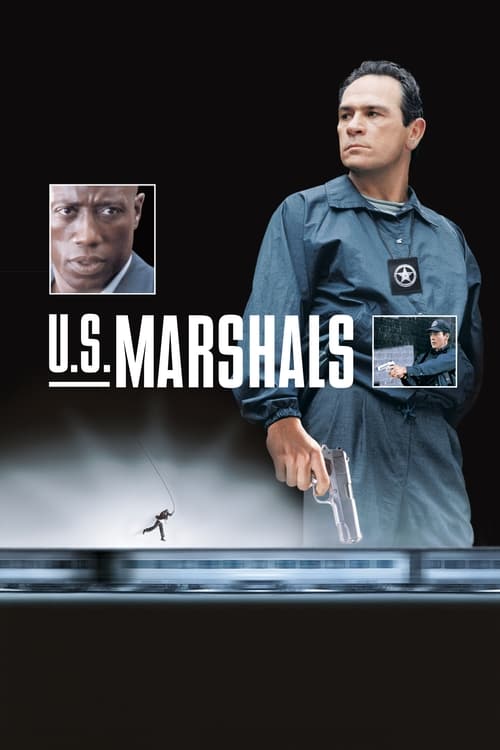
U.S. Marshals
U.S. Marshal Sam Gerard is accompanying a plane load of convicts from Chicago to New York. The plane crashes spectacularly, and Mark Sheridan escapes. But when Diplomatic Security Agent John Royce is assigned to help Gerard recapture Sheridan, it becomes clear that Sheridan is more than just another murderer.
Working with a moderate budget of $60.0M, the film achieved a modest success with $102.4M in global revenue (+71% profit margin).
Plot Structure
Story beats plotted across runtime


Narrative Arc
Emotional journey through the story's key moments
Story Circle
Blueprint 15-beat structure
Arcplot Score Breakdown
Weighted: Precision (70%) + Arc (15%) + Theme (15%)
U.S. Marshals (1998) exhibits meticulously timed narrative architecture, characteristic of Stuart Baird's storytelling approach. This structural analysis examines how the film's 12-point plot structure maps to proven narrative frameworks across 2 hours and 11 minutes. With an Arcplot score of 7.1, the film balances conventional beats with creative variation.
Structural Analysis
The Status Quo at 1 minutes (1% through the runtime) establishes Deputy Marshal Sam Gerard and his team successfully capture a fugitive in New York, demonstrating their efficient, no-nonsense approach to law enforcement. Gerard is at the top of his game, confident and in complete control.. Notably, this early placement immediately immerses viewers in the story world.
The inciting incident occurs at 16 minutes when The prisoner transport plane crashes in a catastrophic sequence. Multiple casualties, chaos, and prisoners escape. Gerard's controlled world is violently disrupted, turning a routine transport into a major manhunt operation.. At 12% through the film, this Disruption aligns precisely with traditional story structure. This beat shifts the emotional landscape, launching the protagonist into the central conflict.
At 65 minutes, the Midpoint arrives at 49% of the runtime—precisely centered, creating perfect narrative symmetry. Structural examination shows that this crucial beat False defeat: Sheridan escapes from the cemetery confrontation despite Gerard's best efforts. Gerard also begins to seriously question the official story about Sheridan's guilt. The stakes raise as evidence suggests a larger conspiracy., fundamentally raising what's at risk. The emotional intensity shifts, dividing the narrative into clear before-and-after phases.
The Collapse moment at 97 minutes (74% through) represents the emotional nadir. Here, Gerard discovers that Royce is the actual villain, part of the conspiracy that framed Sheridan. His trust is shattered - the system he serves has been corrupted. A team member is endangered. Everything Gerard believed about this case was wrong., shows the protagonist at their lowest point. This beat's placement in the final quarter sets up the climactic reversal.
The Synthesis at 104 minutes initiates the final act resolution at 80% of the runtime. Final confrontation at the UN building. Gerard and his team take down Royce and the conspiracy. Action-packed finale where Gerard must use both his tactical skills and his judgment about who to trust. Resolution of the conspiracy plot., demonstrating the transformation achieved throughout the journey.
Emotional Journey
U.S. Marshals's emotional architecture traces a deliberate progression across 12 carefully calibrated beats.
Narrative Framework
This structural analysis employs structural analysis methodology used to understand storytelling architecture. By mapping U.S. Marshals against these established plot points, we can identify how Stuart Baird utilizes or subverts traditional narrative conventions. The plot point approach reveals not only adherence to structural principles but also creative choices that distinguish U.S. Marshals within the thriller genre.
Stuart Baird's Structural Approach
Among the 3 Stuart Baird films analyzed on Arcplot, the average structural score is 7.2, reflecting strong command of classical structure. U.S. Marshals takes a more unconventional approach compared to the director's typical style. For comparative analysis, explore the complete Stuart Baird filmography.
Comparative Analysis
Additional thriller films include Eye for an Eye, Lake Placid and Operation Finale. For more Stuart Baird analyses, see Executive Decision, Star Trek: Nemesis.
Plot Points by Act
Act I
SetupStatus Quo
Deputy Marshal Sam Gerard and his team successfully capture a fugitive in New York, demonstrating their efficient, no-nonsense approach to law enforcement. Gerard is at the top of his game, confident and in complete control.
Theme
During prisoner transport briefing, a character mentions "Everybody's got a story" and questions about guilt versus innocence. The theme: the difference between legal guilt and actual innocence, and whether the system serves justice or just process.
Worldbuilding
Setup of Gerard's world: his team dynamics, their procedures, and their professional competence. Introduction of Mark Sheridan and other prisoners being transported. Establishment of the routine prisoner transfer protocol and Gerard's relationship with his team.
Disruption
The prisoner transport plane crashes in a catastrophic sequence. Multiple casualties, chaos, and prisoners escape. Gerard's controlled world is violently disrupted, turning a routine transport into a major manhunt operation.
Resistance
Gerard and team recover from the crash and begin pursuit of escaped prisoners. Introduction of DSS Agent John Royce who joins the investigation. Initial manhunt begins with Gerard tracking Sheridan. Establishment of the new mission parameters and inter-agency tensions.
Act II
ConfrontationMirror World
Development of the relationship with Royce and deeper interaction with Sheridan's world. Discovery of Sheridan's apparent innocence begins to emerge through investigation. The thematic question of guilt vs. innocence becomes embodied in the pursuit itself.
Premise
The cat-and-mouse chase through Chicago and beyond. Gerard uses his expertise to track Sheridan while Sheridan demonstrates unexpected intelligence and resourcefulness. Multiple close encounters, clever escapes, and growing evidence that Sheridan may not be guilty.
Midpoint
False defeat: Sheridan escapes from the cemetery confrontation despite Gerard's best efforts. Gerard also begins to seriously question the official story about Sheridan's guilt. The stakes raise as evidence suggests a larger conspiracy.
Opposition
Gerard investigates deeper and discovers inconsistencies in the case against Sheridan. Evidence points to a conspiracy involving the DSS. Royce becomes increasingly suspicious and antagonistic. The real bad guys close in on both Gerard and Sheridan.
Collapse
Gerard discovers that Royce is the actual villain, part of the conspiracy that framed Sheridan. His trust is shattered - the system he serves has been corrupted. A team member is endangered. Everything Gerard believed about this case was wrong.
Crisis
Gerard processes the betrayal and must decide whether to follow procedure or pursue actual justice. Dark moment where he questions his role as an enforcer of the law versus seeker of truth. He must reconcile his duty with what's right.
Act III
ResolutionSynthesis
Final confrontation at the UN building. Gerard and his team take down Royce and the conspiracy. Action-packed finale where Gerard must use both his tactical skills and his judgment about who to trust. Resolution of the conspiracy plot.


