Up in the Air
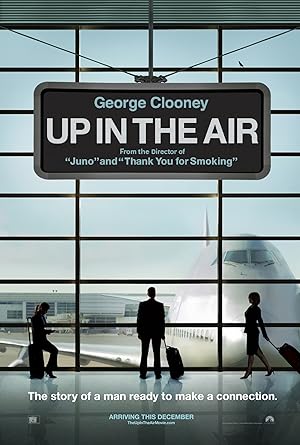
Ryan Bingham is a corporate downsizing expert whose cherished life on the road is threatened just as he is on the cusp of reaching ten million frequent flyer miles, and just after he's met the frequent-traveller woman of his dreams.
Despite a moderate budget of $25.0M, Up in the Air became a box office phenomenon, earning $166.8M worldwide—a remarkable 567% return.
Nominated for 6 Oscars. 75 wins & 171 nominations


Plot Structure
Story beats plotted across runtime


Narrative Arc
Emotional journey through the story's key moments
Story Circle
Blueprint 15-beat structure
Arcplot Score Breakdown
Weighted: Precision (70%) + Arc (15%) + Theme (15%)
Up in the Air (2009) showcases precise story structure, characteristic of Jason Reitman's storytelling approach. This structural analysis examines how the film's 15-point plot structure maps to proven narrative frameworks across 1 hour and 50 minutes. With an Arcplot score of 6.4, the film takes an unconventional approach to traditional narrative frameworks.
Structural Analysis
The Status Quo at 1 minutes (1% through the runtime) establishes Ryan Bingham packs his carry-on with ritualistic precision, narrating his philosophy: "The slower we move, the faster we die." His entire life fits in a backpack. He lives in airports, traveling 322 days a year to fire people for a living, completely detached from human connection.. Significantly, this early placement immediately immerses viewers in the story world.
The inciting incident occurs at 13 minutes when Ryan returns to the Omaha office to discover that ambitious young Natalie Keener has pitched a cost-cutting program: fire people remotely via video conferencing. This threatens to ground Ryan permanently, destroying the isolated, commitment-free life he has carefully constructed.. At 12% through the film, this Disruption aligns precisely with traditional story structure. This beat shifts the emotional landscape, launching the protagonist into the central conflict.
The First Threshold at 27 minutes marks the transition into Act II, occurring at 24% of the runtime. This reveals the protagonist's commitment to Ryan actively chooses to mentor Natalie on the road, deciding to engage rather than dismiss her. He also commits to coordinating schedules with Alex, the first time he's ever tried to maintain a relationship. He's entering a world where human connection matters., moving from reaction to action.
At 54 minutes, the Midpoint arrives at 49% of the runtime—precisely centered, creating perfect narrative symmetry. Notably, this crucial beat False victory: Ryan brings Alex as his date to his sister's wedding. For the first time, he introduces someone to his family and participates in family obligations. He gives genuine advice to his anxious future brother-in-law about commitment. He seems to be embracing connection. But the stakes have now risen., fundamentally raising what's at risk. The emotional intensity shifts, dividing the narrative into clear before-and-after phases.
The Collapse moment at 79 minutes (72% through) represents the emotional nadir. Here, Ryan shows up at Alex's home unannounced and discovers she has a family—a husband and children. He is just her escape, her affair. The woman he thought mirrored his lifestyle was actually living a full life with commitments. His philosophy dies. He's not free; he's alone., reveals the protagonist at their lowest point. This beat's placement in the final quarter sets up the climactic reversal.
The Second Threshold at 87 minutes initiates the final act resolution at 79% of the runtime. Ryan realizes the emptiness of his achievement. He understands what Natalie and Alex represented: the possibility of human connection he's been running from. But it's too late. The realization doesn't lead to redemption, only awareness., demonstrating the transformation achieved throughout the journey.
Emotional Journey
Up in the Air's emotional architecture traces a deliberate progression across 15 carefully calibrated beats.
Narrative Framework
This structural analysis employs systematic plot point analysis that identifies crucial turning points. By mapping Up in the Air against these established plot points, we can identify how Jason Reitman utilizes or subverts traditional narrative conventions. The plot point approach reveals not only adherence to structural principles but also creative choices that distinguish Up in the Air within the comedy genre.
Jason Reitman's Structural Approach
Among the 8 Jason Reitman films analyzed on Arcplot, the average structural score is 7.1, reflecting strong command of classical structure. Up in the Air takes a more unconventional approach compared to the director's typical style. For comparative analysis, explore the complete Jason Reitman filmography.
Comparative Analysis
Additional comedy films include The Bad Guys, Ella Enchanted and The Evening Star. For more Jason Reitman analyses, see Young Adult, Juno and Labor Day.
Plot Points by Act
Act I
SetupStatus Quo
Ryan Bingham packs his carry-on with ritualistic precision, narrating his philosophy: "The slower we move, the faster we die." His entire life fits in a backpack. He lives in airports, traveling 322 days a year to fire people for a living, completely detached from human connection.
Theme
Ryan gives his motivational speech about the empty backpack: "What's in your backpack?" He preaches that relationships, obligations, and commitments are dead weight. The lighter you travel through life, the freer you are. This philosophy will be challenged throughout the film.
Worldbuilding
We see Ryan's isolated existence: firing people with detached efficiency, having casual encounters with Alex, accumulating airline miles toward his goal of 10 million, maintaining zero permanent relationships. His boss Craig Gregory runs a downsizing consultancy. Ryan's only goal is hitting his mileage milestone.
Disruption
Ryan returns to the Omaha office to discover that ambitious young Natalie Keener has pitched a cost-cutting program: fire people remotely via video conferencing. This threatens to ground Ryan permanently, destroying the isolated, commitment-free life he has carefully constructed.
Resistance
Ryan resists the new system, arguing that firing requires human touch. Craig orders Ryan to take Natalie on the road to show her how it's done. Ryan reluctantly agrees, but makes plans to sabotage her approach. He also pursues a relationship with Alex, another frequent flyer who seems to match his lifestyle perfectly.
Act II
ConfrontationFirst Threshold
Ryan actively chooses to mentor Natalie on the road, deciding to engage rather than dismiss her. He also commits to coordinating schedules with Alex, the first time he's ever tried to maintain a relationship. He's entering a world where human connection matters.
Mirror World
Ryan and Alex bond over comparing elite status cards and loyalty programs, finding kinship in their detached, transient lifestyles. Alex represents what Ryan thinks he wants: someone equally commitment-phobic. But she will ultimately reveal the emptiness of his philosophy.
Premise
The road trip delivers on the premise: Ryan shows Natalie the ropes while pursuing his romance with Alex. They fire people across America, with Natalie struggling emotionally while Ryan remains detached. Ryan and Alex meet up in various cities. His mileage goal approaches. The fun of Ryan's lifestyle is on full display.
Midpoint
False victory: Ryan brings Alex as his date to his sister's wedding. For the first time, he introduces someone to his family and participates in family obligations. He gives genuine advice to his anxious future brother-in-law about commitment. He seems to be embracing connection. But the stakes have now risen.
Opposition
Natalie's boyfriend breaks up with her via text, devastating her. She challenges Ryan's empty philosophy. Ryan hits 10 million miles mid-flight, achieving his goal, but the moment feels hollow. He realizes he wants more and decides to surprise Alex at her home in Chicago. The cracks in his worldview widen.
Collapse
Ryan shows up at Alex's home unannounced and discovers she has a family—a husband and children. He is just her escape, her affair. The woman he thought mirrored his lifestyle was actually living a full life with commitments. His philosophy dies. He's not free; he's alone.
Crisis
Ryan learns that one of the people Natalie fired has committed suicide. Natalie quits the company via text. Ryan delivers his backpack speech again, but this time he can't finish it. He sees his own empty apartment, his isolated existence. He's lost everything he thought mattered and gained nothing.
Act III
ResolutionSecond Threshold
Ryan realizes the emptiness of his achievement. He understands what Natalie and Alex represented: the possibility of human connection he's been running from. But it's too late. The realization doesn't lead to redemption, only awareness.
Synthesis
Ryan returns to his life on the road, but now aware of its emptiness. He takes stock of where he's been, literally looking at the departure board. Natalie has moved on to a better job. Alex sends him a message acknowledging their affair is over. The company shelves the remote firing program, but Ryan knows the truth.
Transformation
Ryan stands alone in an airport, looking at the departure board with nowhere he wants to go. The final image mirrors the opening, but now we see the truth: he's not free, he's trapped. His backpack is still empty, but now he knows what's missing. A negative transformation—awareness without redemption.