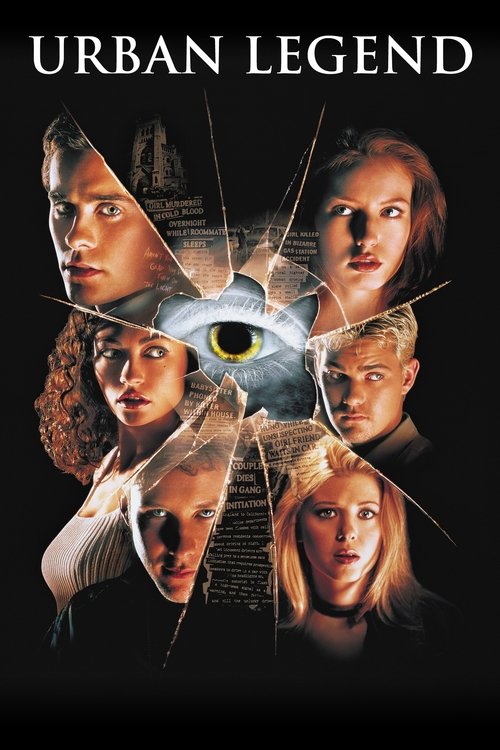
Urban Legend
A college campus is plagued by a vicious serial killer murdering students in ways that correspond to various urban legends.
Despite its small-scale budget of $14.0M, Urban Legend became a solid performer, earning $72.5M worldwide—a 418% return. The film's unconventional structure engaged audiences, proving that strong storytelling can transcend budget limitations.
1 win & 2 nominations


Plot Structure
Story beats plotted across runtime


Narrative Arc
Emotional journey through the story's key moments
Story Circle
Blueprint 15-beat structure
Arcplot Score Breakdown
Weighted: Precision (70%) + Arc (15%) + Theme (15%)
Urban Legend (1998) showcases strategically placed plot construction, characteristic of Jamie Blanks's storytelling approach. This structural analysis examines how the film's 15-point plot structure maps to proven narrative frameworks across 1 hour and 40 minutes. With an Arcplot score of 7.6, the film showcases strong structural fundamentals.
Structural Analysis
The Status Quo at 1 minutes (1% through the runtime) establishes Michelle is alone at a gas station on a dark rainy night, establishing the ordinary college world before terror strikes.. The analysis reveals that this early placement immediately immerses viewers in the story world.
The inciting incident occurs at 13 minutes when Natalie and Brenda discover Michelle's mutilated body in her car at the campus gas station, transforming campus from safe space to crime scene.. At 13% through the film, this Disruption is delayed, allowing extended setup of the story world. This beat shifts the emotional landscape, launching the protagonist into the central conflict.
The First Threshold at 25 minutes marks the transition into Act II, occurring at 25% of the runtime. This indicates the protagonist's commitment to Parker is murdered on the radio station in an urban legend pattern. Natalie actively chooses to investigate the killer's identity despite warnings to stay out of it., moving from reaction to action.
At 50 minutes, the Midpoint arrives at 50% of the runtime—precisely centered, creating perfect narrative symmetry. The analysis reveals that this crucial beat Natalie discovers Professor Wexler dead in the campus building. The killer is no longer just targeting her friends but moving closer to Natalie herself. Stakes raised: she could be next., fundamentally raising what's at risk. The emotional intensity shifts, dividing the narrative into clear before-and-after phases.
The Collapse moment at 75 minutes (75% through) represents the emotional nadir. Here, Brenda kills Paul in front of Natalie and reveals her complete murder plan. Natalie's ally is dead, her best friend is the killer, and she's utterly alone with no one left to trust., reveals the protagonist at their lowest point. This beat's placement in the final quarter sets up the climactic reversal.
The Second Threshold at 80 minutes initiates the final act resolution at 80% of the runtime. Natalie stops running and fights back, using her knowledge of urban legends against Brenda. She chooses to confront both the killer and her guilt rather than remain a victim., demonstrating the transformation achieved throughout the journey.
Emotional Journey
Urban Legend's emotional architecture traces a deliberate progression across 15 carefully calibrated beats.
Narrative Framework
This structural analysis employs proven narrative structure principles that track dramatic progression. By mapping Urban Legend against these established plot points, we can identify how Jamie Blanks utilizes or subverts traditional narrative conventions. The plot point approach reveals not only adherence to structural principles but also creative choices that distinguish Urban Legend within the horror genre.
Comparative Analysis
Additional horror films include Thinner, A Nightmare on Elm Street and Mary Reilly.
Plot Points by Act
Act I
SetupStatus Quo
Michelle is alone at a gas station on a dark rainy night, establishing the ordinary college world before terror strikes.
Theme
Parker tells the legend of the babysitter and the man upstairs: "Aren't you gonna check on the children?" Theme stated: the danger of not questioning what's really happening.
Worldbuilding
Introduction to Pendleton University campus life, establishing Natalie, her friends Brenda and Parker, the urban legend storytelling culture, and the normalcy of college routines.
Disruption
Natalie and Brenda discover Michelle's mutilated body in her car at the campus gas station, transforming campus from safe space to crime scene.
Resistance
Natalie debates whether the murders are real threats or coincidence while Professor Wexler teaches urban legends, campus security dismisses concerns, and Natalie processes her own dark past with Michelle.
Act II
ConfrontationFirst Threshold
Parker is murdered on the radio station in an urban legend pattern. Natalie actively chooses to investigate the killer's identity despite warnings to stay out of it.
Mirror World
Natalie connects with Paul the campus journalist who believes her theories. Their partnership represents trust and investigation versus paranoia and isolation.
Premise
The premise delivers: slasher kills based on urban legends. Students drop one by one (Damon in the car, Sasha at the radio station) as Natalie and Paul investigate the pattern and discover the Pendleton massacre connection.
Midpoint
Natalie discovers Professor Wexler dead in the campus building. The killer is no longer just targeting her friends but moving closer to Natalie herself. Stakes raised: she could be next.
Opposition
Natalie's world collapses as Brenda is revealed as the killer seeking revenge for her boyfriend's death in the Pendleton massacre that Natalie caused. Friends become enemies, trust evaporates, isolation intensifies.
Collapse
Brenda kills Paul in front of Natalie and reveals her complete murder plan. Natalie's ally is dead, her best friend is the killer, and she's utterly alone with no one left to trust.
Crisis
Natalie is hunted through the empty campus building by Brenda, processing the betrayal and her own guilt over the prank that killed Brenda's boyfriend years ago.
Act III
ResolutionSecond Threshold
Natalie stops running and fights back, using her knowledge of urban legends against Brenda. She chooses to confront both the killer and her guilt rather than remain a victim.
Synthesis
Final confrontation where Natalie battles Brenda, saves Reese, and defeats the killer by refusing to be defined by her past mistake. Justice and survival achieved through facing the truth.
Transformation
Natalie leaves campus in an ambulance, alive and no longer hiding from her past. The final scene shows another student telling the story as legend, mirroring the opening but Natalie has transformed from victim to survivor.