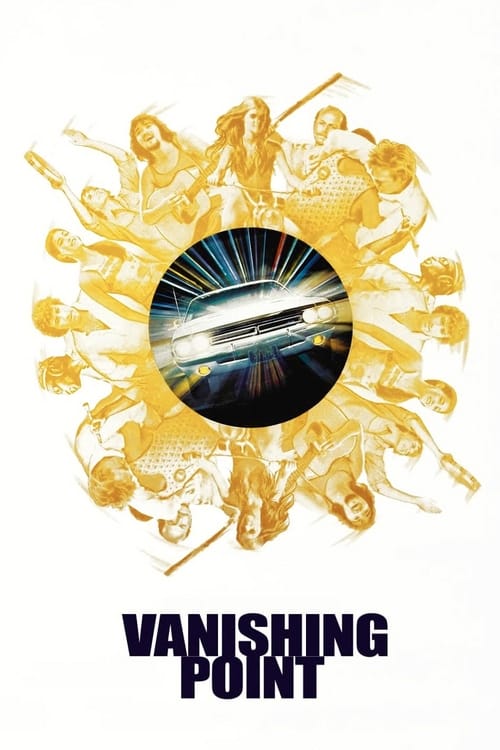
Vanishing Point
Kowalski works for a car delivery service, and takes delivery of a 1970 Dodge Challenger to drive from Colorado to San Francisco. Shortly after pickup, he takes a bet to get the car there in less than 15 hours.
Despite its modest budget of $1.3M, Vanishing Point became a massive hit, earning $72.3M worldwide—a remarkable 5459% return. The film's distinctive approach connected with viewers, confirming that strong storytelling can transcend budget limitations.
1 nomination
Plot Structure
Story beats plotted across runtime


Narrative Arc
Emotional journey through the story's key moments
Story Circle
Blueprint 15-beat structure
Arcplot Score Breakdown
Weighted: Precision (70%) + Arc (15%) + Theme (15%)
Vanishing Point (1971) showcases meticulously timed narrative design, characteristic of Richard C. Sarafian's storytelling approach. This structural analysis examines how the film's 15-point plot structure maps to proven narrative frameworks across 1 hour and 39 minutes. With an Arcplot score of 6.8, the film balances conventional beats with creative variation.
Structural Analysis
The Status Quo at 1 minutes (1% through the runtime) establishes Flash-forward: Bulldozers position at roadblock as police prepare for Kowalski's arrival, establishing the film's fatalistic conclusion before we meet the protagonist.. The analysis reveals that this early placement immediately immerses viewers in the story world.
The inciting incident occurs at 12 minutes when Kowalski makes the bet with the drug dealer to deliver the Challenger to San Francisco by 3 PM the next day. This wager sets the chase in motion and transforms a routine job into an existential quest.. At 12% through the film, this Disruption aligns precisely with traditional story structure. This beat shifts the emotional landscape, launching the protagonist into the central conflict.
The First Threshold at 25 minutes marks the transition into Act II, occurring at 25% of the runtime. This illustrates the protagonist's commitment to Kowalski crosses the state line into Utah, now a fugitive. The chase has become serious; there's no turning back. He commits fully to outrunning the system rather than surrendering., moving from reaction to action.
At 50 minutes, the Midpoint arrives at 50% of the runtime—precisely centered, creating perfect narrative symmetry. Structural examination shows that this crucial beat Super Soul's station is raided and destroyed by racists who beat him. Kowalski loses his only ally and guide. The communication that gave his flight meaning is severed, marking a false defeat., fundamentally raising what's at risk. The emotional intensity shifts, dividing the narrative into clear before-and-after phases.
The Collapse moment at 74 minutes (75% through) represents the emotional nadir. Here, Kowalski's car runs out of fuel in the California desert. Stranded, exhausted, and alone, his quest seems finished. The whiff of death arrives as we sense there is no escape from his fate., illustrates the protagonist at their lowest point. This beat's placement in the final quarter sets up the climactic reversal.
The Second Threshold at 79 minutes initiates the final act resolution at 80% of the runtime. An old prospector with a small plane helps Kowalski refuel and gives him a final gift of fuel. Kowalski accepts his fate with clarity; he will complete his journey on his own terms, knowing what awaits., demonstrating the transformation achieved throughout the journey.
Emotional Journey
Vanishing Point's emotional architecture traces a deliberate progression across 15 carefully calibrated beats.
Narrative Framework
This structural analysis employs a 15-point narrative structure framework that maps key story moments. By mapping Vanishing Point against these established plot points, we can identify how Richard C. Sarafian utilizes or subverts traditional narrative conventions. The plot point approach reveals not only adherence to structural principles but also creative choices that distinguish Vanishing Point within the action genre.
Comparative Analysis
Additional action films include The Bad Guys, Puss in Boots and Venom: The Last Dance.
Plot Points by Act
Act I
SetupStatus Quo
Flash-forward: Bulldozers position at roadblock as police prepare for Kowalski's arrival, establishing the film's fatalistic conclusion before we meet the protagonist.
Theme
The drug dealer tells Kowalski the bet is impossible: "Nobody can make it from Denver to Frisco in fifteen hours." This establishes the theme of defying the system's limitations.
Worldbuilding
Setup establishes Kowalski's world: the car delivery job, amphetamine use, his alienation from society. We see Denver at night, the transactional nature of his existence, and hints of his reckless determination.
Disruption
Kowalski makes the bet with the drug dealer to deliver the Challenger to San Francisco by 3 PM the next day. This wager sets the chase in motion and transforms a routine job into an existential quest.
Resistance
Kowalski speeds through Colorado, evading his first police pursuers. The chase escalates as more law enforcement joins. His driving skills are established as extraordinary, but the consequences of his choice begin to mount.
Act II
ConfrontationFirst Threshold
Kowalski crosses the state line into Utah, now a fugitive. The chase has become serious; there's no turning back. He commits fully to outrunning the system rather than surrendering.
Mirror World
Super Soul, the blind Black radio DJ in Goldfield, Nevada, first broadcasts about Kowalski, dubbing him "the last American hero." Super Soul becomes Kowalski's spiritual connection to the outside world and thematic mirror.
Premise
The chase delivers on the film's promise: high-speed pursuits through desert landscapes, encounters with desert-dwelling eccentrics, prospectors, snake collectors, and a nude woman on a motorcycle. Flashbacks reveal Kowalski's past as a cop, racer, and the trauma of losing his girlfriend.
Midpoint
Super Soul's station is raided and destroyed by racists who beat him. Kowalski loses his only ally and guide. The communication that gave his flight meaning is severed, marking a false defeat.
Opposition
The pursuit intensifies relentlessly. Kowalski encounters a strange religious commune, more flashbacks reveal his dismissal from the police force for stopping a fellow officer's rape, and his girlfriend's drowning death. Every escape route narrows.
Collapse
Kowalski's car runs out of fuel in the California desert. Stranded, exhausted, and alone, his quest seems finished. The whiff of death arrives as we sense there is no escape from his fate.
Crisis
Kowalski sits alone in the desert night. Flashbacks continue, showing the accumulated losses that have led him here. He faces his own emptiness and the impossibility of truly escaping the past.
Act III
ResolutionSecond Threshold
An old prospector with a small plane helps Kowalski refuel and gives him a final gift of fuel. Kowalski accepts his fate with clarity; he will complete his journey on his own terms, knowing what awaits.
Synthesis
Kowalski drives toward the final roadblock at Cisco, California. Police and media gather. The white Challenger speeds down the highway as if flying toward apotheosis. Super Soul, recovered, broadcasts again, acknowledging Kowalski's spiritual victory.
Transformation
Kowalski smiles and accelerates directly into the two bulldozers forming the roadblock, exploding into flames. His death is his ultimate freedom—transcendence through destruction, the only escape from an oppressive system.