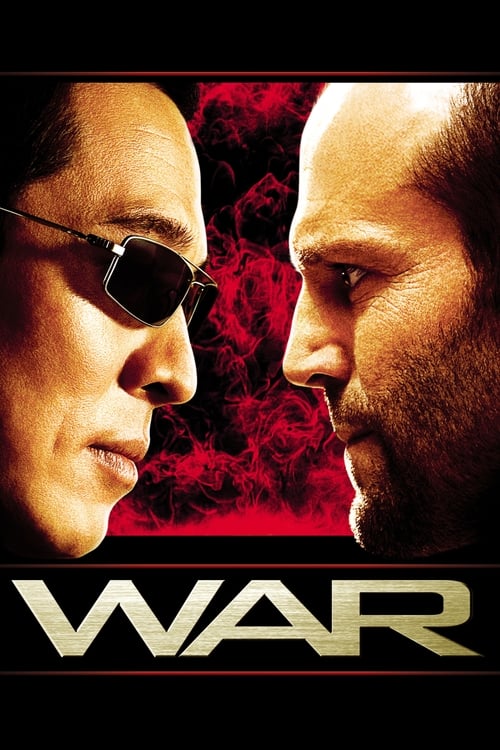
War
FBI agent Jack Crawford is out for revenge when his partner is killed and all clues point to the mysterious assassin Rogue. But when Rogue turns up years later to take care of some unfinished business, he triggers a violent clash of rival gangs. Will the truth come out before it's too late? And when the dust settles, who will remain standing?
Working with a respectable budget of $25.0M, the film achieved a respectable showing with $40.5M in global revenue (+62% profit margin).


Plot Structure
Story beats plotted across runtime


Narrative Arc
Emotional journey through the story's key moments
Story Circle
Blueprint 15-beat structure
Arcplot Score Breakdown
Weighted: Precision (70%) + Arc (15%) + Theme (15%)
War (2007) showcases meticulously timed story structure, characteristic of Philip G. Atwell's storytelling approach. This structural analysis examines how the film's 15-point plot structure maps to proven narrative frameworks across 1 hour and 43 minutes. With an Arcplot score of 7.0, the film balances conventional beats with creative variation.
Structural Analysis
The Status Quo at 1 minutes (1% through the runtime) establishes FBI agents Jack Crawford and Tom Lone work together on a Yakuza case in San Francisco. Jack's life appears stable with his partner and family, representing his normal world before tragedy strikes.. The analysis reveals that this early placement immediately immerses viewers in the story world.
The inciting incident occurs at 12 minutes when Rogue murders Tom Lone and his entire family, burning down their home. This devastating act destroys Jack's world and sets him on a three-year path of obsession and revenge against the assassin.. At 12% through the film, this Disruption aligns precisely with traditional story structure. This beat shifts the emotional landscape, launching the protagonist into the central conflict.
The First Threshold at 26 minutes marks the transition into Act II, occurring at 25% of the runtime. This demonstrates the protagonist's commitment to Jack commits fully to the hunt when Rogue begins actively manipulating the gang war. Jack chooses to pursue Rogue at any cost, even as it further alienates him from normal life and his estranged wife., moving from reaction to action.
At 52 minutes, the Midpoint arrives at 50% of the runtime—precisely centered, creating perfect narrative symmetry. Structural examination shows that this crucial beat Rogue's true agenda begins to emerge as his manipulations escalate the gang war to open conflict. The stakes rise dramatically when Jack realizes Rogue isn't just an assassin for hire—he has a specific, personal mission. False defeat as Jack is always one step behind., fundamentally raising what's at risk. The emotional intensity shifts, dividing the narrative into clear before-and-after phases.
The Collapse moment at 77 minutes (75% through) represents the emotional nadir. Here, Jack discovers devastating truths about the night Tom died. His certainties shatter as evidence suggests nothing is what it seemed. The whiff of death comes as Jack confronts how his obsession has destroyed his own life, making him no better than those he hunts., illustrates the protagonist at their lowest point. This beat's placement in the final quarter sets up the climactic reversal.
The Second Threshold at 82 minutes initiates the final act resolution at 80% of the runtime. Jack discovers the shocking truth: Rogue is actually Tom Lone, who survived and assumed the assassin's identity to avenge his family's murder by the Yakuza. Jack must now confront his former partner and the man he's been hunting., demonstrating the transformation achieved throughout the journey.
Emotional Journey
War's emotional architecture traces a deliberate progression across 15 carefully calibrated beats.
Narrative Framework
This structural analysis employs structural analysis methodology used to understand storytelling architecture. By mapping War against these established plot points, we can identify how Philip G. Atwell utilizes or subverts traditional narrative conventions. The plot point approach reveals not only adherence to structural principles but also creative choices that distinguish War within the action genre.
Comparative Analysis
Additional action films include The Bad Guys, Puss in Boots and Venom: The Last Dance.
Plot Points by Act
Act I
SetupStatus Quo
FBI agents Jack Crawford and Tom Lone work together on a Yakuza case in San Francisco. Jack's life appears stable with his partner and family, representing his normal world before tragedy strikes.
Theme
Tom warns Jack about the dangers of obsession and revenge, foreshadowing the central question: how far will a man go for vengeance, and at what cost to his humanity and relationships?
Worldbuilding
The world of San Francisco's organized crime is established. We see the FBI's pursuit of the Yakuza, the partnership between Jack and Tom, and Jack's happy home life with his family. The legendary assassin Rogue is introduced as a ghost-like figure.
Disruption
Rogue murders Tom Lone and his entire family, burning down their home. This devastating act destroys Jack's world and sets him on a three-year path of obsession and revenge against the assassin.
Resistance
Three years later, Jack has become consumed by his hunt for Rogue. His marriage has fallen apart, and he works tirelessly with the FBI. Rogue resurfaces, now playing the Yakuza and Triads against each other. Jack debates how far he'll go for revenge.
Act II
ConfrontationFirst Threshold
Jack commits fully to the hunt when Rogue begins actively manipulating the gang war. Jack chooses to pursue Rogue at any cost, even as it further alienates him from normal life and his estranged wife.
Mirror World
Rogue's interactions with Yakuza boss Shiro and the Triad leader Chang reveal the mirror world of honor among criminals. Rogue appears to operate by his own code, contrasting with Jack's deteriorating moral compass.
Premise
The cat-and-mouse game intensifies. Rogue systematically plays both criminal organizations against each other while Jack gets closer to finding him. Action sequences deliver on the martial arts and gunplay premise as both men prove equally dangerous.
Midpoint
Rogue's true agenda begins to emerge as his manipulations escalate the gang war to open conflict. The stakes rise dramatically when Jack realizes Rogue isn't just an assassin for hire—he has a specific, personal mission. False defeat as Jack is always one step behind.
Opposition
The gang war explodes. Bodies pile up as Rogue continues his chess game. Jack's obsession costs him everything—his badge is threatened, his relationships crumble. The Yakuza and Triads close in on each other while Rogue orchestrates the carnage.
Collapse
Jack discovers devastating truths about the night Tom died. His certainties shatter as evidence suggests nothing is what it seemed. The whiff of death comes as Jack confronts how his obsession has destroyed his own life, making him no better than those he hunts.
Crisis
Jack processes the revelations about Rogue and Tom. Everything he believed for three years is called into question. He must decide whether to continue pursuing revenge or seek the actual truth, no matter how painful.
Act III
ResolutionSecond Threshold
Jack discovers the shocking truth: Rogue is actually Tom Lone, who survived and assumed the assassin's identity to avenge his family's murder by the Yakuza. Jack must now confront his former partner and the man he's been hunting.
Synthesis
The final confrontation unfolds. Rogue/Tom completes his revenge against those who murdered his family, including corrupt elements Jack never suspected. Jack and Tom face each other, forced to reconcile their friendship, betrayal, and shared loss.
Transformation
Jack stands alone, transformed by the revelation. His three-year obsession was based on a lie—his partner lived, became the very killer he hunted, and achieved the vengeance Jack sought. Jack must now rebuild his life with this truth, neither victor nor vanquished.