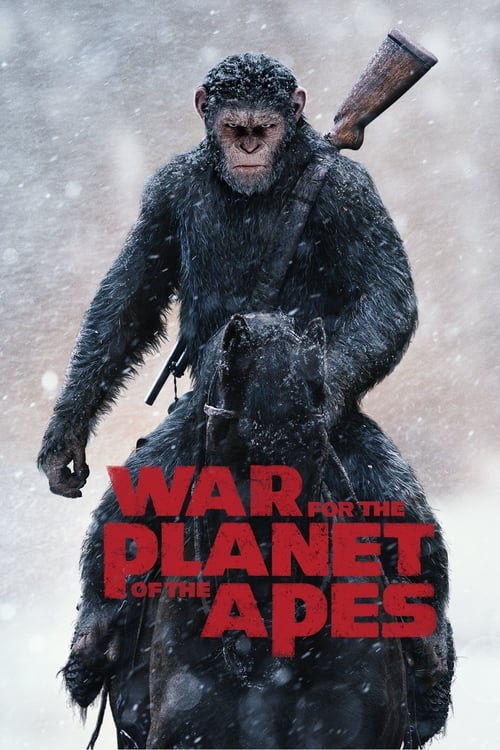
War for the Planet of the Apes
After the apes suffer unimaginable losses, Caesar wrestles with his darker instincts and begins his own mythic quest to avenge his kind.
Despite a major studio investment of $150.0M, War for the Planet of the Apes became a box office success, earning $490.7M worldwide—a 227% return. This commercial performance validated the ambitious narrative scope, demonstrating that audiences embrace unconventional structure even at blockbuster scale.
Nominated for 1 Oscar. 28 wins & 65 nominations


Plot Structure
Story beats plotted across runtime


Narrative Arc
Emotional journey through the story's key moments
Story Circle
Blueprint 15-beat structure
Structural Analysis
The Status Quo at 1 minutes (1% through the runtime) establishes Human soldiers advance through the forest toward the ape stronghold, displaying the ongoing war between species. Caesar's colony lives in hiding, constantly under threat of extinction.. Notably, this early placement immediately immerses viewers in the story world.
The inciting incident occurs at 17 minutes when The Colonel leads a covert night raid on the ape sanctuary, personally murdering Caesar's wife Cornelia and eldest son Blue Eyes. This devastating attack transforms Caesar's mission from protecting his colony to seeking personal vengeance.. At 12% through the film, this Disruption aligns precisely with traditional story structure. This beat shifts the emotional landscape, launching the protagonist into the central conflict.
The First Threshold at 35 minutes marks the transition into Act II, occurring at 25% of the runtime. This demonstrates the protagonist's commitment to Caesar commits fully to his path of vengeance, ordering the others to take Nova to the colony while he continues alone. His choice to pursue the Colonel despite the risk to his people marks his descent from leader to avenger, crossing into morally dangerous territory., moving from reaction to action.
At 70 minutes, the Midpoint arrives at 50% of the runtime—precisely centered, creating perfect narrative symmetry. Significantly, this crucial beat Caesar discovers the Colonel's fortified base and sees his entire colony—the apes he sent to safety—imprisoned and enslaved, being forced to build a wall. His quest for personal vengeance has cost him everything; his people are now hostages because he wasn't there to protect them., fundamentally raising what's at risk. The emotional intensity shifts, dividing the narrative into clear before-and-after phases.
The Collapse moment at 105 minutes (75% through) represents the emotional nadir. Here, Caesar is tied to a post, dehydrated and dying, as his people are denied food and water. Luca is killed trying to protect him. Caesar confronts his own reflection of Koba—the vengeful ape he killed—realizing he has become what he hated. His obsession with vengeance has led only to more death., reveals the protagonist at their lowest point. This beat's placement in the final quarter sets up the climactic reversal.
The Second Threshold at 112 minutes initiates the final act resolution at 80% of the runtime. Caesar discovers an underground tunnel system (revealed by Bad Ape) that can free his people. He shifts from vengeance to liberation, channeling his pain into a rescue plan. Nova's selfless act and Maurice's faith remind him who he truly is—a protector, not an executioner., demonstrating the transformation achieved throughout the journey.
Emotional Journey
War for the Planet of the Apes's emotional architecture traces a deliberate progression across 15 carefully calibrated beats.
Narrative Framework
This structural analysis employs systematic plot point analysis that identifies crucial turning points. By mapping War for the Planet of the Apes against these established plot points, we can identify how Matt Reeves utilizes or subverts traditional narrative conventions. The plot point approach reveals not only adherence to structural principles but also creative choices that distinguish War for the Planet of the Apes within the action genre.
Matt Reeves's Structural Approach
Among the 6 Matt Reeves films analyzed on Arcplot, the average structural score is 6.8, demonstrating varied approaches to story architecture. War for the Planet of the Apes exemplifies the director's characteristic narrative technique. For comparative analysis, explore the complete Matt Reeves filmography.
Comparative Analysis
Additional action films include The Bad Guys, Puss in Boots and Venom: The Last Dance. For more Matt Reeves analyses, see Let Me In, The Batman and Dawn of the Planet of the Apes.
Plot Points by Act
Act I
SetupStatus Quo
Human soldiers advance through the forest toward the ape stronghold, displaying the ongoing war between species. Caesar's colony lives in hiding, constantly under threat of extinction.
Theme
After the battle, Caesar tells the captured soldiers he did not start this war, stating "I fight only to protect apes." Maurice observes that humans will never forgive, foreshadowing the choice between mercy and vengeance that will define Caesar's journey.
Worldbuilding
The apes' hidden colony is established as a sanctuary under constant threat. Caesar's family, his trusted advisors Maurice and Rocket, and the community's preparations to migrate to a new home across the desert are introduced. The stakes of survival are clear.
Disruption
The Colonel leads a covert night raid on the ape sanctuary, personally murdering Caesar's wife Cornelia and eldest son Blue Eyes. This devastating attack transforms Caesar's mission from protecting his colony to seeking personal vengeance.
Resistance
Caesar sends the colony toward the desert sanctuary while he embarks on a solo vengeance mission. Maurice, Rocket, and Luca insist on accompanying him. They discover an abandoned human village where they find Nova, a mute girl infected with the evolved virus, whom Maurice adopts despite Caesar's objections.
Act II
ConfrontationFirst Threshold
Caesar commits fully to his path of vengeance, ordering the others to take Nova to the colony while he continues alone. His choice to pursue the Colonel despite the risk to his people marks his descent from leader to avenger, crossing into morally dangerous territory.
Mirror World
Bad Ape, a former zoo chimpanzee who survived alone, joins the group. His comic presence and innocent perspective contrast with Caesar's growing darkness. Bad Ape represents what Caesar could become—isolated by hatred—while also showing resilience and the possibility of connection despite trauma.
Premise
The small band tracks the Colonel through harsh winter terrain. They encounter evidence of the virus spreading among humans—soldiers executed by their own kind. Caesar's obsession grows as he gets closer to his target, while his companions witness his transformation with concern.
Midpoint
Caesar discovers the Colonel's fortified base and sees his entire colony—the apes he sent to safety—imprisoned and enslaved, being forced to build a wall. His quest for personal vengeance has cost him everything; his people are now hostages because he wasn't there to protect them.
Opposition
Caesar infiltrates the compound and is captured. The Colonel reveals his plan: build a wall to defend against a coming human army that wants to stop him from exterminating all apes. Caesar endures torture and witnesses his people's suffering. Red, a traitorous ape who serves the Colonel, enforces the brutal labor.
Collapse
Caesar is tied to a post, dehydrated and dying, as his people are denied food and water. Luca is killed trying to protect him. Caesar confronts his own reflection of Koba—the vengeful ape he killed—realizing he has become what he hated. His obsession with vengeance has led only to more death.
Crisis
Nova sneaks into the compound to bring Caesar water and her doll, risking her life. Maurice and the others watch helplessly from outside. Caesar must reconcile his desire for vengeance with his responsibility as a leader and his essential compassion.
Act III
ResolutionSecond Threshold
Caesar discovers an underground tunnel system (revealed by Bad Ape) that can free his people. He shifts from vengeance to liberation, channeling his pain into a rescue plan. Nova's selfless act and Maurice's faith remind him who he truly is—a protector, not an executioner.
Synthesis
Caesar orchestrates the mass escape through the tunnels while the human army attacks the Colonel's base. He confronts the Colonel, now infected and mute, but chooses not to kill him—the Colonel takes his own life. Caesar leads his people through the battle as explosions and an avalanche destroy both human factions. Red, the traitor, sacrifices himself to save Caesar.
Transformation
Caesar leads the surviving apes to an oasis—their promised land. Wounded from a crossbow bolt during the escape, he watches his people find peace by a beautiful lake. Maurice sits with him as Caesar dies, having delivered his people to safety. His transformation is complete: from vengeance-consumed warrior back to selfless leader who gave everything for his kind.