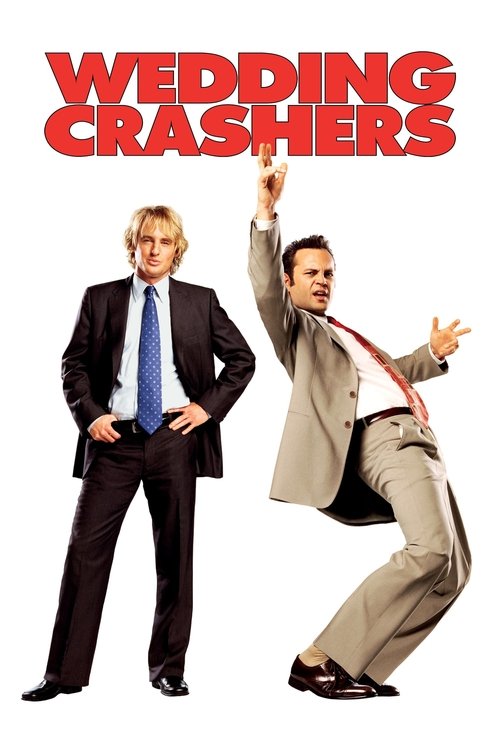
Wedding Crashers
John and his buddy, Jeremy are emotional criminals who know how to use a woman's hopes and dreams for their own carnal gain. Their modus operandi: crashing weddings. Normally, they meet guests who want to toast the romantic day with a random hook-up. But when John meets Claire, he discovers what true love – and heartache – feels like.
Despite a moderate budget of $40.0M, Wedding Crashers became a massive hit, earning $288.5M worldwide—a remarkable 621% return.
11 wins & 11 nominations


Plot Structure
Story beats plotted across runtime


Narrative Arc
Emotional journey through the story's key moments
Story Circle
Blueprint 15-beat structure
Arcplot Score Breakdown
Weighted: Precision (70%) + Arc (15%) + Theme (15%)
Wedding Crashers (2005) exemplifies deliberately positioned dramatic framework, characteristic of David Dobkin's storytelling approach. This structural analysis examines how the film's 15-point plot structure maps to proven narrative frameworks across 1 hour and 59 minutes. With an Arcplot score of 7.1, the film balances conventional beats with creative variation.
Structural Analysis
The Status Quo at 2 minutes (1% through the runtime) establishes Opening montage establishes John Beckwith and Jeremy Grey as successful wedding crashers - charismatic divorce mediators who spend their weekends infiltrating weddings to meet women. They live carefree, commitment-free lives built on elaborate lies and performance, masters of manufactured charm with no real emotional vulnerability.. Of particular interest, this early placement immediately immerses viewers in the story world.
The inciting incident occurs at 14 minutes when At the Cleary wedding, John spots Claire Cleary and experiences something unexpected - genuine attraction that goes beyond the con. For the first time, he wants more than a one-night stand. This disrupts his emotional detachment and sets him on a collision course with his own philosophy about love being fiction.. At 12% through the film, this Disruption aligns precisely with traditional story structure. This beat shifts the emotional landscape, launching the protagonist into the central conflict.
The First Threshold at 30 minutes marks the transition into Act II, occurring at 25% of the runtime. This indicates the protagonist's commitment to John and Jeremy make the active choice to stay at the Cleary compound for the entire weekend, fully committing to an extended deception that violates their own rules about crashing (never stay past breakfast). They cross into Act 2's new world - playing house with a real family, where authentic feelings become impossible to avoid., moving from reaction to action.
At 60 minutes, the Midpoint arrives at 50% of the runtime—precisely centered, creating perfect narrative symmetry. Notably, this crucial beat False victory: John and Claire share an intimate late-night moment on the beach, nearly kissing. She opens up about feeling trapped with Sack. John is getting exactly what he wanted - Claire is falling for him. But the lie is still in place, and the audience knows this connection is built on a foundation that must eventually crumble. Stakes raised., fundamentally raising what's at risk. The emotional intensity shifts, dividing the narrative into clear before-and-after phases.
The Collapse moment at 89 minutes (75% through) represents the emotional nadir. Here, Sack publicly exposes John and Jeremy as wedding crashers at the Cleary family dinner table. Complete humiliation and betrayal revealed. Claire feels devastated by John's deception. The friendship between John and Jeremy fractures under recrimination. Everything dies: their reputation, their relationships, their brotherhood, and their entire lifestyle built on lies., reveals the protagonist at their lowest point. This beat's placement in the final quarter sets up the climactic reversal.
The Second Threshold at 95 minutes initiates the final act resolution at 79% of the runtime. John visits Chazz Reinhold, the legendary crasher who now crashes funerals and lives with his mother - representing the empty endgame of their lifestyle. This pathetic vision clarifies what John must do: risk real vulnerability by telling the truth. Jeremy arrives with the same realization. Synthesis of who they were (crashers) with who they need to be (honest men)., demonstrating the transformation achieved throughout the journey.
Emotional Journey
Wedding Crashers's emotional architecture traces a deliberate progression across 15 carefully calibrated beats.
Narrative Framework
This structural analysis employs structural analysis methodology used to understand storytelling architecture. By mapping Wedding Crashers against these established plot points, we can identify how David Dobkin utilizes or subverts traditional narrative conventions. The plot point approach reveals not only adherence to structural principles but also creative choices that distinguish Wedding Crashers within the comedy genre.
David Dobkin's Structural Approach
Among the 6 David Dobkin films analyzed on Arcplot, the average structural score is 7.0, reflecting strong command of classical structure. Wedding Crashers represents one of the director's most structurally precise works. For comparative analysis, explore the complete David Dobkin filmography.
Comparative Analysis
Additional comedy films include The Bad Guys, Ella Enchanted and The Evening Star. For more David Dobkin analyses, see The Change-Up, Shanghai Knights and Fred Claus.
Plot Points by Act
Act I
SetupStatus Quo
Opening montage establishes John Beckwith and Jeremy Grey as successful wedding crashers - charismatic divorce mediators who spend their weekends infiltrating weddings to meet women. They live carefree, commitment-free lives built on elaborate lies and performance, masters of manufactured charm with no real emotional vulnerability.
Theme
John articulates his cynical philosophy: "True love is your soul's recognition of its counterpoint in another" is fiction invented by greeting card companies. This thematic statement about authenticity versus performance will be challenged throughout the story as John discovers real connection requires dropping the mask.
Worldbuilding
Extended setup of John and Jeremy's world: their day jobs as mediators, the elaborate wedding crashing playbook they've perfected over years, their brotherhood dynamic, and Jeremy's slightly more romantic nature foreshadowing his arc. Wedding season is upon them - their Super Bowl of crashing.
Disruption
At the Cleary wedding, John spots Claire Cleary and experiences something unexpected - genuine attraction that goes beyond the con. For the first time, he wants more than a one-night stand. This disrupts his emotional detachment and sets him on a collision course with his own philosophy about love being fiction.
Resistance
John debates whether to extend the con by accepting Secretary Cleary's invitation to the family compound. Jeremy resists, sensing danger in staying too long and catching feelings, but John convinces him. They meet the extended Cleary family including Claire's aggressive boyfriend Sack Lodge and obsessive sister Gloria. The lie expands.
Act II
ConfrontationFirst Threshold
John and Jeremy make the active choice to stay at the Cleary compound for the entire weekend, fully committing to an extended deception that violates their own rules about crashing (never stay past breakfast). They cross into Act 2's new world - playing house with a real family, where authentic feelings become impossible to avoid.
Mirror World
Jeremy begins forming an unexpected genuine connection with the clingy Gloria, despite his attempts to maintain emotional distance. This B-story relationship mirrors and accelerates John's journey - Jeremy will experience the cost of intimacy-through-deception first, serving as a warning and ultimately a guide for John's transformation.
Premise
The fun promised by the premise: sailing excursions, touch football games, awkward family dinners, paintings, and a disastrous hunting trip. John falls deeper for Claire while navigating Sack's hostility. Jeremy endures Gloria's aggressive pursuit and her unstable brother Todd's advances. The comedy of maintaining the con while real feelings emerge.
Midpoint
False victory: John and Claire share an intimate late-night moment on the beach, nearly kissing. She opens up about feeling trapped with Sack. John is getting exactly what he wanted - Claire is falling for him. But the lie is still in place, and the audience knows this connection is built on a foundation that must eventually crumble. Stakes raised.
Opposition
Pressure intensifies from all sides: Sack grows more suspicious and aggressive, Jeremy suffers through increasingly uncomfortable situations with Gloria and the family, John's guilt about deceiving Claire mounts as his feelings deepen, and the lies become harder to maintain. The antagonistic forces close in as the con threatens to collapse under its own weight.
Collapse
Sack publicly exposes John and Jeremy as wedding crashers at the Cleary family dinner table. Complete humiliation and betrayal revealed. Claire feels devastated by John's deception. The friendship between John and Jeremy fractures under recrimination. Everything dies: their reputation, their relationships, their brotherhood, and their entire lifestyle built on lies.
Crisis
John spirals into depression, unable to work, barely functioning. Jeremy isolates himself. Both men process the consequences of their actions in darkness - they've lost not just Claire and Gloria, but their own friendship and sense of identity. The dark night of the soul where they must confront what they've become and what they've lost through dishonesty.
Act III
ResolutionSecond Threshold
John visits Chazz Reinhold, the legendary crasher who now crashes funerals and lives with his mother - representing the empty endgame of their lifestyle. This pathetic vision clarifies what John must do: risk real vulnerability by telling the truth. Jeremy arrives with the same realization. Synthesis of who they were (crashers) with who they need to be (honest men).
Synthesis
John crashes Claire's wedding to Sack, but this time with complete honesty - publicly confessing his lies while declaring his genuine feelings. He risks everything with no con, no safety net. Jeremy reconciles with Gloria with equal authenticity. Claire makes her choice, recognizing that John's vulnerable truth is worth more than Sack's hollow security. True love requires dropping the mask.
Transformation
Final image mirrors the opening wedding montage: John and Jeremy are at a wedding again. But now they're invited guests, not crashers. With Claire and Gloria as real dates, not conquests. They've transformed from con men hiding behind performance into authentic men capable of real intimacy. The same setting, completely different men.