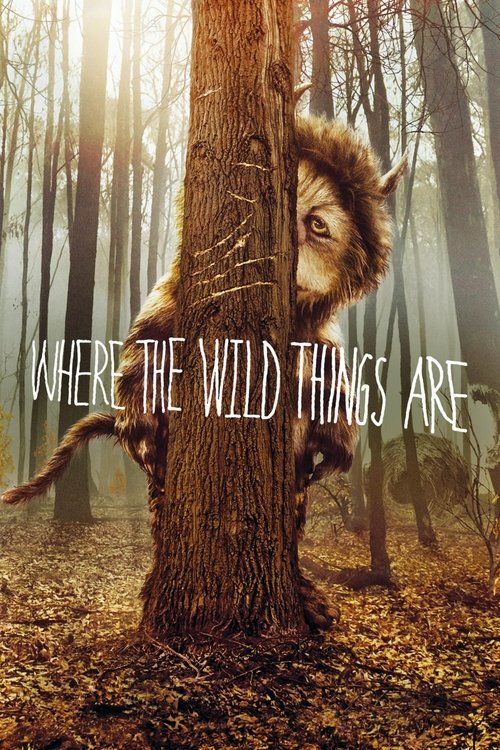
Where the Wild Things Are
Max imagines running away from his mom and sailing to a far-off land where large talking beasts—Ira, Carol, Douglas, the Bull, Judith and Alexander—crown him as their king, play rumpus, build forts and discover secret hideaways.
Working with a substantial budget of $100.0M, the film achieved a steady performer with $100.1M in global revenue (+0% profit margin).
7 wins & 54 nominations


Plot Structure
Story beats plotted across runtime


Narrative Arc
Emotional journey through the story's key moments
Story Circle
Blueprint 15-beat structure
Arcplot Score Breakdown
Weighted: Precision (70%) + Arc (15%) + Theme (15%)
Where the Wild Things Are (2009) reveals strategically placed narrative architecture, characteristic of Spike Jonze's storytelling approach. This structural analysis examines how the film's 15-point plot structure maps to proven narrative frameworks across 1 hour and 41 minutes. With an Arcplot score of 6.8, the film balances conventional beats with creative variation.
Structural Analysis
The Status Quo at 1 minutes (1% through the runtime) establishes Max chases his dog through the house in his wolf suit, wild and untamed. He builds a snow fort alone, establishing his imaginative but isolated world where he craves attention and connection.. The analysis reveals that this early placement immediately immerses viewers in the story world.
The inciting incident occurs at 12 minutes when Max's snow fort is destroyed by Claire's friends. His rage erupts when he trashes Claire's room. Later, he bites his mother during a tantrum when she pays attention to her boyfriend instead of him. The violence shocks everyone.. At 12% through the film, this Disruption aligns precisely with traditional story structure. This beat shifts the emotional landscape, launching the protagonist into the central conflict.
The First Threshold at 24 minutes marks the transition into Act II, occurring at 23% of the runtime. This shows the protagonist's commitment to Max's boat reaches the shore of the island. He steps onto the beach and ventures into the dark forest, actively choosing to explore this strange new land rather than stay safe by the water., moving from reaction to action.
At 51 minutes, the Midpoint arrives at 50% of the runtime—precisely centered, creating perfect narrative symmetry. Of particular interest, this crucial beat The dirt clod war begins as joyful play but escalates dangerously. Douglas gets his arm ripped off. Max realizes his "kingdom" has real consequences and he cannot simply decree happiness. The false victory of perfect control begins to crumble., fundamentally raising what's at risk. The emotional intensity shifts, dividing the narrative into clear before-and-after phases.
The Collapse moment at 75 minutes (74% through) represents the emotional nadir. Here, Carol discovers Max is not a real king - just a boy. In a terrifying rage, Carol chases Max through the forest, threatening to eat him. Max hides inside KW's stomach. The illusion of control is shattered; the "king" is revealed as powerless and afraid., indicates the protagonist at their lowest point. This beat's placement in the final quarter sets up the climactic reversal.
The Second Threshold at 81 minutes initiates the final act resolution at 80% of the runtime. Max decides he must go home. He tells the Wild Things he has to leave - not because they failed, but because he has people who need him and whom he needs. He chooses responsibility over fantasy., demonstrating the transformation achieved throughout the journey.
Emotional Journey
Where the Wild Things Are's emotional architecture traces a deliberate progression across 15 carefully calibrated beats.
Narrative Framework
This structural analysis employs proven narrative structure principles that track dramatic progression. By mapping Where the Wild Things Are against these established plot points, we can identify how Spike Jonze utilizes or subverts traditional narrative conventions. The plot point approach reveals not only adherence to structural principles but also creative choices that distinguish Where the Wild Things Are within the fantasy genre.
Spike Jonze's Structural Approach
Among the 4 Spike Jonze films analyzed on Arcplot, the average structural score is 5.1, showcasing experimental approaches to narrative form. Where the Wild Things Are represents one of the director's most structurally precise works. For comparative analysis, explore the complete Spike Jonze filmography.
Comparative Analysis
Additional fantasy films include Thinner, Ella Enchanted and Conan the Barbarian. For more Spike Jonze analyses, see Being John Malkovich, Adaptation and Her.
Plot Points by Act
Act I
SetupStatus Quo
Max chases his dog through the house in his wolf suit, wild and untamed. He builds a snow fort alone, establishing his imaginative but isolated world where he craves attention and connection.
Theme
Max's teacher discusses the eventual death of the sun, and how everything will freeze and end. This foreshadows the theme: all things end, and we must cherish love and connection while we have them.
Worldbuilding
Max's fractured home life unfolds: his sister Claire ignores him, his mother struggles as a single parent working from home, and her new boyfriend intrudes on their world. Max feels increasingly invisible and powerless.
Disruption
Max's snow fort is destroyed by Claire's friends. His rage erupts when he trashes Claire's room. Later, he bites his mother during a tantrum when she pays attention to her boyfriend instead of him. The violence shocks everyone.
Resistance
Max flees into the night after biting his mother. He runs through the neighborhood, finds a small boat, and sails across a vast ocean for days. His journey through storm and calm prepares him for the new world ahead.
Act II
ConfrontationFirst Threshold
Max's boat reaches the shore of the island. He steps onto the beach and ventures into the dark forest, actively choosing to explore this strange new land rather than stay safe by the water.
Mirror World
Max encounters the Wild Things, especially Carol, who is destroying the huts in a rage. Max recognizes Carol's fury as his own. To survive, Max claims to be a king with magical powers, and the Wild Things crown him, beginning the mirror relationship.
Premise
Max revels in being king. He leads the Wild Rumpus, sleeps in a pile with the creatures, and promises to build a perfect fort where everyone will be happy and nothing bad will happen. The fantasy of total control unfolds gloriously.
Midpoint
The dirt clod war begins as joyful play but escalates dangerously. Douglas gets his arm ripped off. Max realizes his "kingdom" has real consequences and he cannot simply decree happiness. The false victory of perfect control begins to crumble.
Opposition
Tensions rise among the Wild Things. Carol becomes jealous and suspicious of Max's attention to KW. The fort-building reveals divisions rather than unity. Max begins to see that being king means dealing with everyone's pain, not escaping his own.
Collapse
Carol discovers Max is not a real king - just a boy. In a terrifying rage, Carol chases Max through the forest, threatening to eat him. Max hides inside KW's stomach. The illusion of control is shattered; the "king" is revealed as powerless and afraid.
Crisis
Max sits with KW in the quiet aftermath. She tells him that Carol has a sadness that will never go away. Max understands: you cannot fix everyone, and love doesn't mean controlling or being controlled. Sometimes people leave.
Act III
ResolutionSecond Threshold
Max decides he must go home. He tells the Wild Things he has to leave - not because they failed, but because he has people who need him and whom he needs. He chooses responsibility over fantasy.
Synthesis
Max says goodbye to each Wild Thing at the shore. Carol arrives at the last moment, and they share a wordless farewell - both understanding that loving someone means letting them go. Max sails away as the Wild Things howl.
Transformation
Max returns home. His mother embraces him without anger, only relief and love. She serves him dinner and watches him eat. No words are needed. Max is no longer raging - he is present, accepting love imperfectly given.