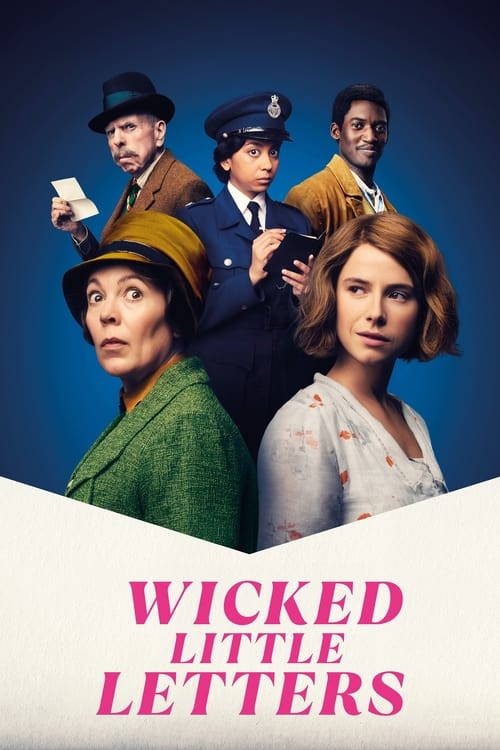
Wicked Little Letters
When the denizens of Littlehampton – including conservative Edith – begin receiving letters full of hilarious profanities, rowdy Irish migrant Rose is charged with the crime. Suspecting something amiss, the town's women band together to investigate.
Despite its modest budget of $12.6M, Wicked Little Letters became a financial success, earning $27.2M worldwide—a 116% return.


Plot Structure
Story beats plotted across runtime


Narrative Arc
Emotional journey through the story's key moments
Story Circle
Blueprint 15-beat structure
Structural Analysis
The Status Quo at 1 minutes (1% through the runtime) establishes The quiet, repressed town of Littlehampton is introduced. Edith Swan goes about her mundane daily routine under the watchful eye of her controlling father Edward, embodying the suffocating propriety of 1920s England.. Structural examination shows that this early placement immediately immerses viewers in the story world.
The inciting incident occurs at 13 minutes when Edith receives the first obscene letter filled with vulgar insults. The shocking correspondence disrupts the peaceful facade of Littlehampton and sets the scandal in motion, as Edith shows the letter to authorities.. At 13% through the film, this Disruption is delayed, allowing extended setup of the story world. This beat shifts the emotional landscape, launching the protagonist into the central conflict.
The First Threshold at 25 minutes marks the transition into Act II, occurring at 25% of the runtime. This demonstrates the protagonist's commitment to Rose Gooding is arrested and charged with criminal libel. The formal accusation marks the point of no return - the town has chosen its scapegoat, and the legal machinery is now in motion to prosecute an innocent woman., moving from reaction to action.
At 51 minutes, the Midpoint arrives at 51% of the runtime—precisely centered, creating perfect narrative symmetry. Of particular interest, this crucial beat Rose's first trial ends in conviction, but the women discover crucial evidence suggesting the letters may have come from inside the Swan household. This false victory for the prosecution reveals the truth is far more complex - Edith herself becomes a suspect in the women's eyes., fundamentally raising what's at risk. The emotional intensity shifts, dividing the narrative into clear before-and-after phases.
The Collapse moment at 75 minutes (75% through) represents the emotional nadir. Here, Rose faces the prospect of prison as the appeal seems doomed. The women's investigation appears to have failed - the patriarchal system refuses to consider that respectable Edith could be the culprit. Years of abuse have made Edith incapable of confession., reveals the protagonist at their lowest point. This beat's placement in the final quarter sets up the climactic reversal.
The Second Threshold at 80 minutes initiates the final act resolution at 80% of the runtime. The women devise a plan to catch Edith in the act by staging a trap with a fake letter opportunity. Their solidarity and ingenuity combine with new forensic evidence comparing handwriting, giving them the ammunition needed to expose the truth., demonstrating the transformation achieved throughout the journey.
Emotional Journey
Wicked Little Letters's emotional architecture traces a deliberate progression across 15 carefully calibrated beats.
Narrative Framework
This structural analysis employs proven narrative structure principles that track dramatic progression. By mapping Wicked Little Letters against these established plot points, we can identify how Thea Sharrock utilizes or subverts traditional narrative conventions. The plot point approach reveals not only adherence to structural principles but also creative choices that distinguish Wicked Little Letters within the comedy genre.
Thea Sharrock's Structural Approach
Among the 3 Thea Sharrock films analyzed on Arcplot, the average structural score is 7.2, reflecting strong command of classical structure. Wicked Little Letters exemplifies the director's characteristic narrative technique. For comparative analysis, explore the complete Thea Sharrock filmography.
Comparative Analysis
Additional comedy films include The Bad Guys, Ella Enchanted and The Evening Star. For more Thea Sharrock analyses, see The Beautiful Game, Me Before You.
Plot Points by Act
Act I
SetupStatus Quo
The quiet, repressed town of Littlehampton is introduced. Edith Swan goes about her mundane daily routine under the watchful eye of her controlling father Edward, embodying the suffocating propriety of 1920s England.
Theme
Rose Gooding speaks freely and colorfully to her neighbors, her uninhibited speech contrasting sharply with the town's propriety. Her authentic self-expression embodies the film's theme: that repression breeds destruction while authenticity liberates.
Worldbuilding
The rigid social hierarchy of 1920s Littlehampton is established. We meet Edith, trapped in servitude to her tyrannical father Edward. Rose Gooding is introduced as her vibrant, foul-mouthed Irish neighbor. The women's friendship and stark differences are shown alongside the town's gossip-prone residents.
Disruption
Edith receives the first obscene letter filled with vulgar insults. The shocking correspondence disrupts the peaceful facade of Littlehampton and sets the scandal in motion, as Edith shows the letter to authorities.
Resistance
More obscene letters arrive, targeting multiple townspeople. Rose Gooding becomes the prime suspect due to her colorful language. Edith struggles with the accusations while police officer Gladys Moss begins investigating. The town debates Rose's guilt as evidence seems to mount against her.
Act II
ConfrontationFirst Threshold
Rose Gooding is arrested and charged with criminal libel. The formal accusation marks the point of no return - the town has chosen its scapegoat, and the legal machinery is now in motion to prosecute an innocent woman.
Mirror World
Gladys Moss, the overlooked female police officer, forms an alliance with the skeptical women of the town. Their investigation becomes a parallel story of female solidarity and empowerment, challenging the male-dominated establishment that readily condemned Rose.
Premise
The women's investigation unfolds as they examine evidence and interview witnesses. The comedic premise delivers as the prim ladies read aloud the increasingly vulgar letters. Gladys and her allies discover inconsistencies in the case against Rose while navigating the patronizing male authorities.
Midpoint
Rose's first trial ends in conviction, but the women discover crucial evidence suggesting the letters may have come from inside the Swan household. This false victory for the prosecution reveals the truth is far more complex - Edith herself becomes a suspect in the women's eyes.
Opposition
The women dig deeper into the Swan family dynamics. Edward Swan's abusive control over Edith is exposed. The male authorities resist reopening the case, dismissing the women's findings. Rose languishes under house arrest as the clock ticks toward her potential imprisonment.
Collapse
Rose faces the prospect of prison as the appeal seems doomed. The women's investigation appears to have failed - the patriarchal system refuses to consider that respectable Edith could be the culprit. Years of abuse have made Edith incapable of confession.
Crisis
Gladys and the women face a moment of despair. They know the truth but cannot prove it. Edith remains trapped by her father's control and her own internalized shame. The injustice seems insurmountable.
Act III
ResolutionSecond Threshold
The women devise a plan to catch Edith in the act by staging a trap with a fake letter opportunity. Their solidarity and ingenuity combine with new forensic evidence comparing handwriting, giving them the ammunition needed to expose the truth.
Synthesis
The truth emerges in court - Edith wrote the letters as an outlet for her repressed rage against her abusive father and the stifling society. Rose is exonerated. Edith's psychological torment is laid bare, revealing her as both villain and victim of patriarchal oppression.
Transformation
Rose is free and vindicated. The women of Littlehampton have found their voices. Edith, though disgraced, is finally released from her father's control. The closing moments show the town transformed - where once there was silent repression, now there is acknowledged truth and hard-won liberation.