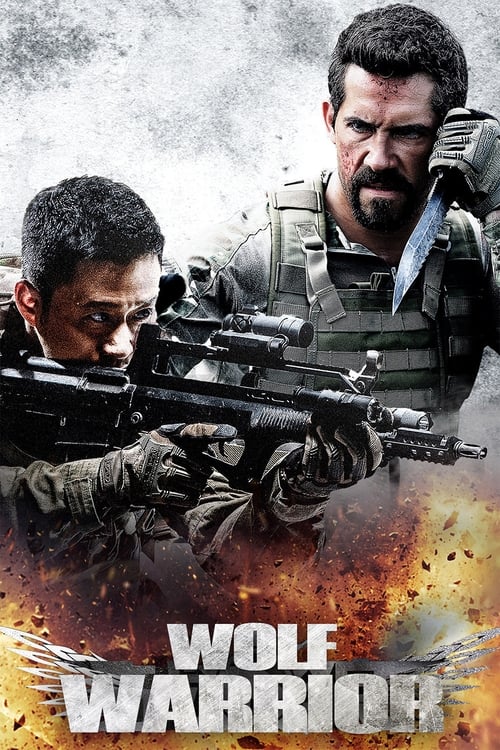
Wolf Warrior
A Chinese special force soldier with extraordinary marksmanship is confronted by a group of deadly foreign mercenaries who are hired to assassinate him by a vicious drug lord.
Despite its limited budget of $12.0M, Wolf Warrior became a runaway success, earning $80.0M worldwide—a remarkable 567% return. The film's fresh perspective connected with viewers, illustrating how strong storytelling can transcend budget limitations.


Plot Structure
Story beats plotted across runtime


Narrative Arc
Emotional journey through the story's key moments
Story Circle
Blueprint 15-beat structure
Arcplot Score Breakdown
Weighted: Precision (70%) + Arc (15%) + Theme (15%)
Wolf Warrior (2015) demonstrates precise narrative design, characteristic of Wu Jing's storytelling approach. This structural analysis examines how the film's 15-point plot structure maps to proven narrative frameworks across 1 hour and 30 minutes. With an Arcplot score of 7.4, the film balances conventional beats with creative variation.
Structural Analysis
The Status Quo at 1 minutes (1% through the runtime) establishes Leng Feng demonstrates exceptional marksmanship skills during a military operation, establishing him as an elite soldier operating within standard military protocol.. Notably, this early placement immediately immerses viewers in the story world.
The inciting incident occurs at 10 minutes when Leng Feng disobeys direct orders to kill a hostage-taker who is the brother of a local civilian, resulting in disciplinary action and potential court-martial.. At 11% through the film, this Disruption aligns precisely with traditional story structure. This beat shifts the emotional landscape, launching the protagonist into the central conflict.
The First Threshold at 21 minutes marks the transition into Act II, occurring at 23% of the runtime. This demonstrates the protagonist's commitment to Leng Feng officially accepts his position with the Wolf Warriors and commits to the elite special forces training and mission, entering a new world of unconventional warfare., moving from reaction to action.
At 44 minutes, the Midpoint arrives at 49% of the runtime—precisely centered, creating perfect narrative symmetry. The analysis reveals that this crucial beat Tom Cat and his mercenaries infiltrate Chinese territory and launch an assault on the Wolf Warrior compound, turning the training exercise into a real life-or-death battle. Stakes escalate dramatically., fundamentally raising what's at risk. The emotional intensity shifts, dividing the narrative into clear before-and-after phases.
The Collapse moment at 66 minutes (73% through) represents the emotional nadir. Here, Long Xiaoyun is captured by Tom Cat and the mercenaries. A close Wolf Warrior teammate is killed. Leng Feng faces his darkest moment, having lost his mentor figure and with his commander in enemy hands., shows the protagonist at their lowest point. This beat's placement in the final quarter sets up the climactic reversal.
The Second Threshold at 71 minutes initiates the final act resolution at 79% of the runtime. Leng Feng synthesizes his earlier lesson about conscience over orders with his elite warrior skills. He rallies the remaining Wolf Warriors for a final assault, accepting his role as a leader., demonstrating the transformation achieved throughout the journey.
Emotional Journey
Wolf Warrior's emotional architecture traces a deliberate progression across 15 carefully calibrated beats.
Narrative Framework
This structural analysis employs a 15-point narrative structure framework that maps key story moments. By mapping Wolf Warrior against these established plot points, we can identify how Wu Jing utilizes or subverts traditional narrative conventions. The plot point approach reveals not only adherence to structural principles but also creative choices that distinguish Wolf Warrior within the action genre.
Wu Jing's Structural Approach
Among the 2 Wu Jing films analyzed on Arcplot, the average structural score is 7.4, reflecting strong command of classical structure. Wolf Warrior exemplifies the director's characteristic narrative technique. For comparative analysis, explore the complete Wu Jing filmography.
Comparative Analysis
Additional action films include The Bad Guys, Puss in Boots and Venom: The Last Dance. For more Wu Jing analyses, see Wolf Warrior 2.
Plot Points by Act
Act I
SetupStatus Quo
Leng Feng demonstrates exceptional marksmanship skills during a military operation, establishing him as an elite soldier operating within standard military protocol.
Theme
A superior officer comments on the nature of duty versus conscience, foreshadowing Leng Feng's central conflict between following orders and doing what's right.
Worldbuilding
Introduction to Chinese military operations, Leng Feng's reputation as a sharpshooter, the chain of command, and the threat of criminal elements and foreign mercenaries operating near the border.
Disruption
Leng Feng disobeys direct orders to kill a hostage-taker who is the brother of a local civilian, resulting in disciplinary action and potential court-martial.
Resistance
Rather than face punishment, Leng Feng is recruited by Long Xiaoyun into the Wolf Warrior special forces unit. He undergoes evaluation and debates whether to accept this dangerous new path.
Act II
ConfrontationFirst Threshold
Leng Feng officially accepts his position with the Wolf Warriors and commits to the elite special forces training and mission, entering a new world of unconventional warfare.
Mirror World
Leng Feng develops a relationship with Long Xiaoyun, the female commander, who represents a balance between duty and humanity, teaching him that strength includes protecting others.
Premise
Wolf Warrior training sequences showcasing elite combat skills, team dynamics, and the introduction of the antagonist Tom Cat and his mercenary team who seek revenge against Leng Feng.
Midpoint
Tom Cat and his mercenaries infiltrate Chinese territory and launch an assault on the Wolf Warrior compound, turning the training exercise into a real life-or-death battle. Stakes escalate dramatically.
Opposition
The mercenaries gain the upper hand using superior tactics and weaponry. Wolf Warriors are hunted in the jungle. Team members are injured or killed. Leng Feng's aggressive tactics are questioned.
Collapse
Long Xiaoyun is captured by Tom Cat and the mercenaries. A close Wolf Warrior teammate is killed. Leng Feng faces his darkest moment, having lost his mentor figure and with his commander in enemy hands.
Crisis
Leng Feng wrestles with doubt and grief. He must process the loss and decide whether to follow protocol and wait for backup or take individual action to save Long Xiaoyun.
Act III
ResolutionSecond Threshold
Leng Feng synthesizes his earlier lesson about conscience over orders with his elite warrior skills. He rallies the remaining Wolf Warriors for a final assault, accepting his role as a leader.
Synthesis
Final battle sequence where Leng Feng leads the assault against the mercenaries, using both tactical brilliance and moral conviction. Confrontation with Tom Cat, rescue of Long Xiaoyun, and defeat of the foreign threat.
Transformation
Leng Feng stands victorious, having proven that a warrior who fights for others and follows his conscience is stronger than one who merely follows orders. He has fully embodied the "Wolf Warrior" spirit.