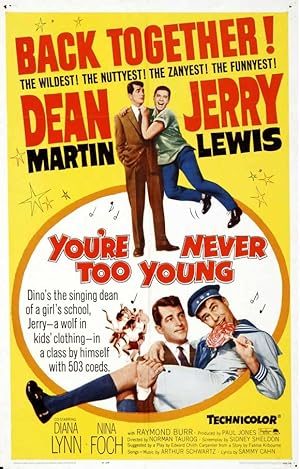
You're Never Too Young
Wilbur is a young man whose dream is to become a great barber, but for now, he's working just as an assistant, at a hotel's barber shop. When one day he gets involved (by mistake) in some big robbery, he is forced to disguise himself as a 12 year old boy, so that he can get away from his persecutor.


Plot Structure
Story beats plotted across runtime


Narrative Arc
Emotional journey through the story's key moments
Story Circle
Blueprint 15-beat structure
Arcplot Score Breakdown
Weighted: Precision (70%) + Arc (15%) + Theme (15%)
You're Never Too Young (1955) showcases deliberately positioned plot construction, characteristic of Norman Taurog's storytelling approach. This structural analysis examines how the film's 15-point plot structure maps to proven narrative frameworks across 1 hour and 42 minutes. With an Arcplot score of 6.8, the film balances conventional beats with creative variation.
Structural Analysis
The Status Quo at 1 minutes (1% through the runtime) establishes Wilbur Hoolick works as a bumbling barber's apprentice in a salon, establishing his hapless but good-natured character in his ordinary world.. Of particular interest, this early placement immediately immerses viewers in the story world.
The inciting incident occurs at 12 minutes when The stolen diamond accidentally ends up in Wilbur's possession, making him an unwitting target of both the dangerous jewel thief Noonan and the police who suspect him of the crime.. At 12% through the film, this Disruption aligns precisely with traditional story structure. This beat shifts the emotional landscape, launching the protagonist into the central conflict.
The First Threshold at 26 minutes marks the transition into Act II, occurring at 25% of the runtime. This indicates the protagonist's commitment to Wilbur makes the bold decision to disguise himself as a 12-year-old boy and board a train to escape Noonan, committing fully to the deception that will define the rest of the story., moving from reaction to action.
At 51 minutes, the Midpoint arrives at 50% of the runtime—precisely centered, creating perfect narrative symmetry. Of particular interest, this crucial beat Wilbur seems to have successfully evaded Noonan and settled into his disguise at the school. Bob's romance with Nancy appears to be blossoming. This false victory masks the danger still pursuing them., fundamentally raising what's at risk. The emotional intensity shifts, dividing the narrative into clear before-and-after phases.
The Collapse moment at 77 minutes (75% through) represents the emotional nadir. Here, Noonan corners Wilbur, and his disguise is on the verge of being exposed. The diamond scheme threatens to destroy everything, including Bob's career and relationship with Nancy. All seems lost for our heroes., demonstrates the protagonist at their lowest point. This beat's placement in the final quarter sets up the climactic reversal.
The Second Threshold at 82 minutes initiates the final act resolution at 80% of the runtime. Wilbur and Bob realize they must work together and confront Noonan directly rather than continue running. They devise a plan to expose the real criminal and clear Wilbur's name., demonstrating the transformation achieved throughout the journey.
Emotional Journey
You're Never Too Young's emotional architecture traces a deliberate progression across 15 carefully calibrated beats.
Narrative Framework
This structural analysis employs structural analysis methodology used to understand storytelling architecture. By mapping You're Never Too Young against these established plot points, we can identify how Norman Taurog utilizes or subverts traditional narrative conventions. The plot point approach reveals not only adherence to structural principles but also creative choices that distinguish You're Never Too Young within the comedy genre.
Norman Taurog's Structural Approach
Among the 5 Norman Taurog films analyzed on Arcplot, the average structural score is 7.1, reflecting strong command of classical structure. You're Never Too Young takes a more unconventional approach compared to the director's typical style. For comparative analysis, explore the complete Norman Taurog filmography.
Comparative Analysis
Additional comedy films include The Bad Guys, Ella Enchanted and The Evening Star. For more Norman Taurog analyses, see Jumping Jacks, Visit to a Small Planet and Pardners.
Plot Points by Act
Act I
SetupStatus Quo
Wilbur Hoolick works as a bumbling barber's apprentice in a salon, establishing his hapless but good-natured character in his ordinary world.
Theme
The theme of identity and growing up is introduced when a character remarks about how people aren't always what they appear to be, foreshadowing Wilbur's coming deception.
Worldbuilding
The world of 1950s America is established with Wilbur's barber shop life, the jewel thief Noonan stealing a valuable diamond, and the setup of the characters who will become entangled in the comedic chase.
Disruption
The stolen diamond accidentally ends up in Wilbur's possession, making him an unwitting target of both the dangerous jewel thief Noonan and the police who suspect him of the crime.
Resistance
Wilbur panics and debates what to do as Noonan pursues him. He encounters Bob Miles, who inadvertently helps him come up with a desperate escape plan. Wilbur resists the drastic measure of disguising himself as a child.
Act II
ConfrontationFirst Threshold
Wilbur makes the bold decision to disguise himself as a 12-year-old boy and board a train to escape Noonan, committing fully to the deception that will define the rest of the story.
Mirror World
Wilbur arrives at the Doolittle School for Girls where Bob teaches, and the romantic subplot between Bob and Nancy is established, providing the thematic counterpoint about genuine identity and mature love.
Premise
The comedy of the premise delivers as Wilbur navigates life disguised as a child at the girls' school, creating increasingly absurd situations while Bob pursues Nancy and tries to manage the chaos Wilbur creates.
Midpoint
Wilbur seems to have successfully evaded Noonan and settled into his disguise at the school. Bob's romance with Nancy appears to be blossoming. This false victory masks the danger still pursuing them.
Opposition
Noonan tracks Wilbur to the school and begins closing in. Wilbur's disguise becomes harder to maintain as various characters grow suspicious. Bob's relationship with Nancy faces complications, and the walls close in on all sides.
Collapse
Noonan corners Wilbur, and his disguise is on the verge of being exposed. The diamond scheme threatens to destroy everything, including Bob's career and relationship with Nancy. All seems lost for our heroes.
Crisis
Wilbur and Bob face the consequences of the deception as Noonan threatens them and the truth about Wilbur's identity becomes impossible to hide. They must find a way out of the seemingly hopeless situation.
Act III
ResolutionSecond Threshold
Wilbur and Bob realize they must work together and confront Noonan directly rather than continue running. They devise a plan to expose the real criminal and clear Wilbur's name.
Synthesis
The climactic confrontation unfolds as Wilbur and Bob execute their plan to defeat Noonan. A series of comedic chases and physical gags leads to Noonan's capture, the recovery of the diamond, and the resolution of all romantic subplots.
Transformation
Wilbur, no longer disguised, has proven himself capable and brave. Bob and Nancy are united in love. The transformed Wilbur is now respected as an adult who rose to the occasion, contrasting his earlier hapless status.