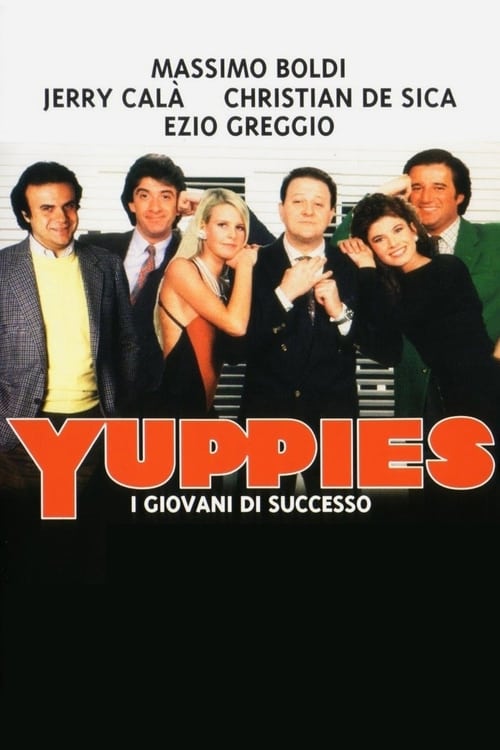
Yuppies
Willy, Giacomo, Lorenzo and Sandro are 4 young yuppies rampant in the "Milano da bere" of the 80s, who live in the myth of Lawyer Gianni Agnelli and Silvio Berlusconi; their only purpose in life is to appear rather than be. Giacomo is an advertiser, Lorenzo is a notary, Sandro is a dentist, and Willy is a car salesman.
The film earned $4.8M at the global box office.
Plot Structure
Story beats plotted across runtime


Narrative Arc
Emotional journey through the story's key moments
Story Circle
Blueprint 15-beat structure
Structural Analysis
The Status Quo at 1 minutes (1% through the runtime) establishes Opening montage of Milan's glittering skyline and fashion district establishes the world of ambitious young professionals chasing success, status, and material wealth in 1980s Italy.. Notably, this early placement immediately immerses viewers in the story world.
The inciting incident occurs at 11 minutes when A major business opportunity emerges that promises to elevate the protagonists' status significantly. The chance for advancement disrupts their comfortable routines and intensifies their competitive instincts.. At 12% through the film, this Disruption aligns precisely with traditional story structure. This beat shifts the emotional landscape, launching the protagonist into the central conflict.
The First Threshold at 23 minutes marks the transition into Act II, occurring at 25% of the runtime. This illustrates the protagonist's commitment to The protagonists fully commit to the yuppie lifestyle and its ruthless pursuit of success, making calculated moves in both their professional and personal lives that mark a point of no return., moving from reaction to action.
At 45 minutes, the Midpoint arrives at 50% of the runtime—precisely centered, creating perfect narrative symmetry. Significantly, this crucial beat The protagonists achieve a significant victory - a major deal closes, a prestigious invitation is secured, or social acceptance seems within reach. A false peak that masks the emptiness of their achievements., fundamentally raising what's at risk. The emotional intensity shifts, dividing the narrative into clear before-and-after phases.
The Collapse moment at 68 minutes (75% through) represents the emotional nadir. Here, Public humiliation strikes as the characters' pretensions are exposed. A business deal falls through, a relationship implodes spectacularly, or their carefully constructed images crumble - revealing the emptiness beneath., indicates the protagonist at their lowest point. This beat's placement in the final quarter sets up the climactic reversal.
The Second Threshold at 72 minutes initiates the final act resolution at 80% of the runtime. A moment of self-awareness emerges. The characters recognize the absurdity of their values and begin to reconcile their ambitions with more authentic connections and genuine self-worth., demonstrating the transformation achieved throughout the journey.
Emotional Journey
Yuppies's emotional architecture traces a deliberate progression across 15 carefully calibrated beats.
Narrative Framework
This structural analysis employs proven narrative structure principles that track dramatic progression. By mapping Yuppies against these established plot points, we can identify how Carlo Vanzina utilizes or subverts traditional narrative conventions. The plot point approach reveals not only adherence to structural principles but also creative choices that distinguish Yuppies within the comedy genre.
Carlo Vanzina's Structural Approach
Among the 2 Carlo Vanzina films analyzed on Arcplot, Yuppies exemplifies the director's characteristic narrative technique. For comparative analysis, explore the complete Carlo Vanzina filmography.
Comparative Analysis
Additional comedy films include The Bad Guys, Ella Enchanted and The Evening Star. For more Carlo Vanzina analyses, see Life Is a Wonderful Thing.
Plot Points by Act
Act I
SetupStatus Quo
Opening montage of Milan's glittering skyline and fashion district establishes the world of ambitious young professionals chasing success, status, and material wealth in 1980s Italy.
Theme
A colleague cynically remarks that in Milan, "you are what you own, not who you are" - establishing the film's satirical examination of superficial values and the emptiness beneath material success.
Worldbuilding
Introduction to the ensemble of young professionals: their corporate jobs, expensive apartments, designer clothes, trendy nightclubs, and competitive social dynamics. Each character's particular brand of ambition and insecurity is established.
Disruption
A major business opportunity emerges that promises to elevate the protagonists' status significantly. The chance for advancement disrupts their comfortable routines and intensifies their competitive instincts.
Resistance
The group debates strategies for success, navigating office politics and social maneuvering. They seek advice from those who've already "made it" while wrestling with how far they're willing to compromise their values.
Act II
ConfrontationFirst Threshold
The protagonists fully commit to the yuppie lifestyle and its ruthless pursuit of success, making calculated moves in both their professional and personal lives that mark a point of no return.
Mirror World
Romantic subplots emerge as the characters pursue relationships that mirror their materialistic values - choosing partners for status rather than genuine connection, highlighting the theme of superficiality.
Premise
The comedic heart of the film: elaborate schemes, status competitions, fashion disasters, embarrassing social climbing attempts, and increasingly absurd situations as the characters navigate Milan's elite social scene.
Midpoint
The protagonists achieve a significant victory - a major deal closes, a prestigious invitation is secured, or social acceptance seems within reach. A false peak that masks the emptiness of their achievements.
Opposition
Cracks appear in the facade. Professional rivalries turn vicious, relationships strain under the weight of pretense, and the consequences of their shallow choices begin to surface. The humor takes on a darker edge.
Collapse
Public humiliation strikes as the characters' pretensions are exposed. A business deal falls through, a relationship implodes spectacularly, or their carefully constructed images crumble - revealing the emptiness beneath.
Crisis
The protagonists face the consequences of their superficial pursuits. Stripped of their status symbols and social standing, they must confront who they really are beneath the designer labels.
Act III
ResolutionSecond Threshold
A moment of self-awareness emerges. The characters recognize the absurdity of their values and begin to reconcile their ambitions with more authentic connections and genuine self-worth.
Synthesis
The finale unfolds as characters attempt to repair relationships and salvage what matters. Comic resolutions interweave with moments of genuine connection, though the satire maintains an ironic edge about lasting change.
Transformation
Final image mirrors the opening but with subtle shifts - the characters return to their Milan world, perhaps slightly wiser, though the film's satirical tone suggests the yuppie cycle may well continue.