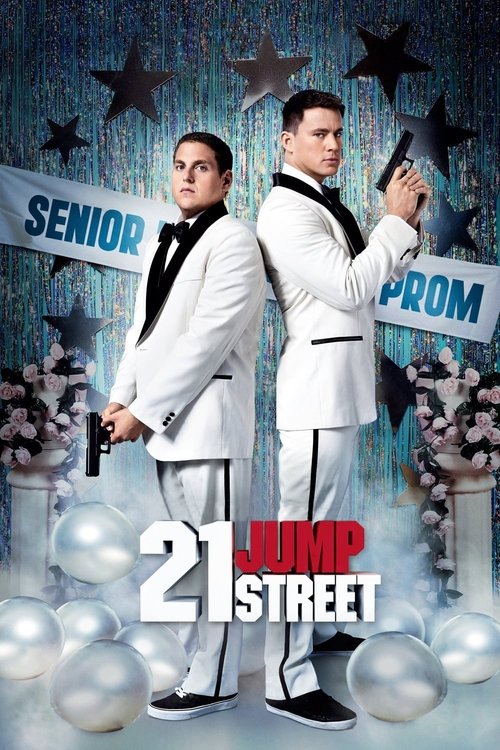
21 Jump Street
A pair of underachieving cops are sent back to a local high school to blend in and bring down a synthetic drug ring.
Despite a mid-range budget of $42.0M, 21 Jump Street became a financial success, earning $201.6M worldwide—a 380% return.
11 wins & 21 nominations


Plot Structure
Story beats plotted across runtime


Narrative Arc
Emotional journey through the story's key moments
Story Circle
Blueprint 15-beat structure
Characters
Cast & narrative archetypes

Morton Schmidt
Greg Jenko
Captain Dickson
Eric Molson
Molly Tracey
Mr. Walters
Main Cast & Characters
Morton Schmidt
Played by Jonah Hill
Awkward, nerdy cop who was unpopular in high school, now going undercover as a student to bust a drug ring.
Greg Jenko
Played by Channing Tatum
Popular jock turned cop who struggles academically, partnered with his former high school rival.
Captain Dickson
Played by Ice Cube
No-nonsense, foul-mouthed captain who runs the revived Jump Street program and rides the duo hard.
Eric Molson
Played by Dave Franco
Popular, environmentally-conscious student and secret drug dealer who befriends Schmidt.
Molly Tracey
Played by Brie Larson
Smart, progressive student who becomes romantically interested in Schmidt.
Mr. Walters
Played by Rob Riggle
High school chemistry teacher who secretly manufactures the synthetic drug HFS.
Structural Analysis
The Status Quo at 1 minutes (1% through the runtime) establishes 2005 high school flashback: Schmidt is a nerdy outcast rejected at prom, while Jenko is a popular jock who fails classes. Both are trapped in their respective social roles.. Of particular interest, this early placement immediately immerses viewers in the story world.
The inciting incident occurs at 12 minutes when After botching an arrest, Schmidt and Jenko are reassigned to a revived undercover unit at 21 Jump Street for their youthful appearance.. At 11% through the film, this Disruption aligns precisely with traditional story structure. This beat shifts the emotional landscape, launching the protagonist into the central conflict.
The First Threshold at 26 minutes marks the transition into Act II, occurring at 24% of the runtime. This demonstrates the protagonist's commitment to Schmidt and Jenko enter high school on their first day undercover, crossing into a world where everything has changed since 2005—geeks are cool and jocks are outcasts., moving from reaction to action.
At 55 minutes, the Midpoint arrives at 50% of the runtime—precisely centered, creating perfect narrative symmetry. Of particular interest, this crucial beat False victory: Schmidt and Jenko are invited to the cool kids' party and meet Eric, the popular dealer. They seem to be making progress on the case while enjoying their new high school lives., fundamentally raising what's at risk. The emotional intensity shifts, dividing the narrative into clear before-and-after phases.
The Collapse moment at 80 minutes (73% through) represents the emotional nadir. Here, Schmidt and Jenko's partnership explodes during a confrontation. Their cover is blown when Molly discovers Schmidt's true identity at prom. The real supplier is revealed: Mr. Walters, the chemistry teacher., illustrates the protagonist at their lowest point. This beat's placement in the final quarter sets up the climactic reversal.
The Second Threshold at 86 minutes initiates the final act resolution at 79% of the runtime. Schmidt and Jenko reconcile, realizing their friendship and partnership matter more than high school popularity. They learn the drug deal is happening at prom and choose to work together., demonstrating the transformation achieved throughout the journey.
Emotional Journey
21 Jump Street's emotional architecture traces a deliberate progression across 15 carefully calibrated beats.
Narrative Framework
This structural analysis employs proven narrative structure principles that track dramatic progression. By mapping 21 Jump Street against these established plot points, we can identify how Christopher Miller utilizes or subverts traditional narrative conventions. The plot point approach reveals not only adherence to structural principles but also creative choices that distinguish 21 Jump Street within the action genre.
Christopher Miller's Structural Approach
Among the 2 Christopher Miller films analyzed on Arcplot, the average structural score is 7.4, reflecting strong command of classical structure. 21 Jump Street exemplifies the director's characteristic narrative technique. For comparative analysis, explore the complete Christopher Miller filmography.
Comparative Analysis
Additional action films include The Bad Guys, Puss in Boots and Venom: The Last Dance. For more Christopher Miller analyses, see Cloudy with a Chance of Meatballs.
Plot Points by Act
Act I
SetupStatus Quo
2005 high school flashback: Schmidt is a nerdy outcast rejected at prom, while Jenko is a popular jock who fails classes. Both are trapped in their respective social roles.
Theme
At police academy, an instructor tells them: "You're not going to be popular anymore, you're going to have to work together." Hints at role reversal and partnership theme.
Worldbuilding
Schmidt and Jenko become unlikely friends at police academy, graduate as partners, but fail miserably as bike patrol cops in their first arrest attempt.
Disruption
After botching an arrest, Schmidt and Jenko are reassigned to a revived undercover unit at 21 Jump Street for their youthful appearance.
Resistance
Captain Dickson briefs them on their mission: infiltrate high school to find a synthetic drug supplier. They prepare identities and get their class assignments, though the assignments get switched.
Act II
ConfrontationFirst Threshold
Schmidt and Jenko enter high school on their first day undercover, crossing into a world where everything has changed since 2005—geeks are cool and jocks are outcasts.
Mirror World
Schmidt befriends Molly, a smart, environmentally-conscious student who represents the new social order. She becomes his romantic interest and thematic mirror—accepting people for who they really are.
Premise
Role reversal fun and games: Schmidt becomes popular with theater kids and AP students while Jenko struggles with academics. They investigate the drug, try it themselves, and get closer to dealer Eric.
Midpoint
False victory: Schmidt and Jenko are invited to the cool kids' party and meet Eric, the popular dealer. They seem to be making progress on the case while enjoying their new high school lives.
Opposition
Their friendship deteriorates as they compete for status and attention. Schmidt dates Molly while lying about his identity. The investigation stalls. They discover Eric isn't the supplier, just a dealer.
Collapse
Schmidt and Jenko's partnership explodes during a confrontation. Their cover is blown when Molly discovers Schmidt's true identity at prom. The real supplier is revealed: Mr. Walters, the chemistry teacher.
Crisis
At the prom, separated and dejected, both realize how much they've hurt each other and compromised the mission. Captain Dickson arrives and scolds them for their failure.
Act III
ResolutionSecond Threshold
Schmidt and Jenko reconcile, realizing their friendship and partnership matter more than high school popularity. They learn the drug deal is happening at prom and choose to work together.
Synthesis
Extended action finale: Schmidt and Jenko pursue Mr. Walters and the drug gang, leading to a shootout and car chase. They use their complementary skills—Schmidt's smarts and Jenko's physicality—to take down the criminals.
Transformation
Back at 21 Jump Street, Schmidt and Jenko are celebrated as successful partners. They're assigned to college next, embracing their true selves and their partnership rather than trying to relive the past.