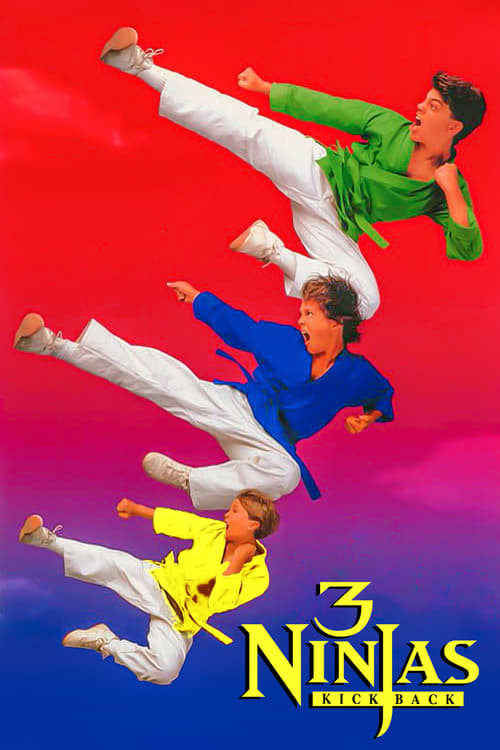
3 Ninjas Kick Back
During a championship baseball match, the three brothers hear that their grandfather in Japan is in trouble, and head out to help him, conceding the match. When they arrive in Japan, they must use all their powers to defend him against his ancient enemy, who has returned to exact revenge.
The film underperformed commercially against its moderate budget of $20.0M, earning $11.8M globally (-41% loss). While initial box office returns were modest, the film has gained appreciation for its fresh perspective within the family genre.


Plot Structure
Story beats plotted across runtime


Narrative Arc
Emotional journey through the story's key moments
Story Circle
Blueprint 15-beat structure
Arcplot Score Breakdown
Weighted: Precision (70%) + Arc (15%) + Theme (15%)
3 Ninjas Kick Back (1994) reveals carefully calibrated story structure, characteristic of Charles T. Kanganis's storytelling approach. This structural analysis examines how the film's 15-point plot structure maps to proven narrative frameworks across 1 hour and 33 minutes. With an Arcplot score of 7.6, the film showcases strong structural fundamentals.
Characters
Cast & narrative archetypes

Rocky Douglas
Colt Douglas
Tum Tum Douglas
Grandpa Mori Shintaro
Koga
Miyo
Main Cast & Characters
Rocky Douglas
Played by Michael Treanor
The eldest of the three ninja brothers, a natural leader who takes responsibility seriously and struggles with balancing teenage interests with ninja training.
Colt Douglas
Played by Max Elliott Slade
The middle brother, confident and athletic, often competitive and eager to prove himself as the best fighter of the trio.
Tum Tum Douglas
Played by J. Evan Bonifant
The youngest brother, food-loving and comedic, provides humor while demonstrating surprising ninja skills despite his age and playful nature.
Grandpa Mori Shintaro
Played by Victor Wong
The wise ninja master and grandfather who trains the boys in martial arts and Japanese traditions, embarking on a journey to Japan for a tournament.
Koga
Played by Sab Shimono
The primary antagonist, a ruthless villain seeking a valuable dagger and willing to use violence and deception to obtain it.
Miyo
Played by Caroline Junko King
A young Japanese girl who befriends the brothers in Japan, serves as their guide and helps them navigate cultural differences.
Structural Analysis
The Status Quo at 1 minutes (1% through the runtime) establishes The three ninja brothers (Colt, Rocky, and Tum-Tum) are shown in their ordinary American suburban life, excited about an upcoming baseball game while also training in martial arts with their grandfather.. Of particular interest, this early placement immediately immerses viewers in the story world.
The inciting incident occurs at 10 minutes when Koga and his ninjas attack Grandpa Mori to steal the ceremonial dagger before the tournament. Grandpa is injured, raising the stakes and making the tournament personally urgent.. At 11% through the film, this Disruption aligns precisely with traditional story structure. This beat shifts the emotional landscape, launching the protagonist into the central conflict.
The First Threshold at 23 minutes marks the transition into Act II, occurring at 24% of the runtime. This reveals the protagonist's commitment to The boys actively choose to abandon the baseball playoffs and travel to Japan with their grandfather, embracing their ninja heritage over their American suburban desires., moving from reaction to action.
At 47 minutes, the Midpoint arrives at 50% of the runtime—precisely centered, creating perfect narrative symmetry. Structural examination shows that this crucial beat False defeat: Koga and his men capture the boys and gain possession of the dagger. The tournament is in jeopardy, and the boys realize they're in over their heads. Stakes raise significantly as the villain gains the upper hand., fundamentally raising what's at risk. The emotional intensity shifts, dividing the narrative into clear before-and-after phases.
The Collapse moment at 68 minutes (73% through) represents the emotional nadir. Here, All seems lost when Koga has both the dagger and positional advantage at the tournament grounds. Grandpa's honor and the family legacy appear doomed. The boys face the possibility that they've failed their grandfather and their heritage., shows the protagonist at their lowest point. This beat's placement in the final quarter sets up the climactic reversal.
The Second Threshold at 73 minutes initiates the final act resolution at 79% of the runtime. The boys synthesize their American creativity with their ninja training, formulating a plan that uses both their modern thinking and traditional skills. They fully commit to honoring their grandfather and heritage., demonstrating the transformation achieved throughout the journey.
Emotional Journey
3 Ninjas Kick Back's emotional architecture traces a deliberate progression across 15 carefully calibrated beats.
Narrative Framework
This structural analysis employs proven narrative structure principles that track dramatic progression. By mapping 3 Ninjas Kick Back against these established plot points, we can identify how Charles T. Kanganis utilizes or subverts traditional narrative conventions. The plot point approach reveals not only adherence to structural principles but also creative choices that distinguish 3 Ninjas Kick Back within the family genre.
Comparative Analysis
Additional family films include The Black Stallion, The Bad Guys and Ella Enchanted.
Plot Points by Act
Act I
SetupStatus Quo
The three ninja brothers (Colt, Rocky, and Tum-Tum) are shown in their ordinary American suburban life, excited about an upcoming baseball game while also training in martial arts with their grandfather.
Theme
Grandpa Mori speaks about the importance of honoring tradition and family duty, subtly suggesting that some things are more important than personal desires like baseball games.
Worldbuilding
Setup of the boys' dual life: American kids who love baseball and their ninja training heritage. Introduction of Grandpa's need to return to Japan for a tournament and the ancient dagger MacGuffin. The boys are torn between baseball playoffs and family obligation.
Disruption
Koga and his ninjas attack Grandpa Mori to steal the ceremonial dagger before the tournament. Grandpa is injured, raising the stakes and making the tournament personally urgent.
Resistance
The boys debate whether to abandon their baseball playoff game to help their grandfather travel to Japan. Their parents are skeptical. Grandpa needs them but won't force them. The boys resist leaving their normal lives.
Act II
ConfrontationFirst Threshold
The boys actively choose to abandon the baseball playoffs and travel to Japan with their grandfather, embracing their ninja heritage over their American suburban desires.
Mirror World
Arrival in Japan and meeting Miyo, a young Japanese girl who represents the traditional culture they must learn to embrace. She becomes a thematic mirror showing them what honoring heritage truly means.
Premise
Fun and games in Japan: the boys explore Japanese culture, get into comedic misadventures, continue their ninja training, and pursue the stolen dagger. They experience the "fish out of water" comedy the premise promises while bonding with Miyo and learning about their heritage.
Midpoint
False defeat: Koga and his men capture the boys and gain possession of the dagger. The tournament is in jeopardy, and the boys realize they're in over their heads. Stakes raise significantly as the villain gains the upper hand.
Opposition
Koga tightens his grip on the situation. The boys must escape captivity and face increasingly dangerous obstacles. Their American attitudes and immaturity become liabilities as Koga anticipates their moves and the tournament deadline approaches.
Collapse
All seems lost when Koga has both the dagger and positional advantage at the tournament grounds. Grandpa's honor and the family legacy appear doomed. The boys face the possibility that they've failed their grandfather and their heritage.
Crisis
Dark night moment where the boys must confront their selfishness and immaturity. They process their failure and realize they must fully embrace their ninja training and family values, not just play at being ninjas.
Act III
ResolutionSecond Threshold
The boys synthesize their American creativity with their ninja training, formulating a plan that uses both their modern thinking and traditional skills. They fully commit to honoring their grandfather and heritage.
Synthesis
Final confrontation at the tournament. The boys use their combined skills to defeat Koga's forces, recover the dagger, and enable Grandpa to compete with honor. Action-packed finale demonstrates their growth and mastery.
Transformation
Closing image mirrors the opening but shows transformation: the boys are still American kids, but now they understand and embrace their heritage. They've learned that family and honor are more important than personal glory, having matured from selfish children to young warriors who respect tradition.