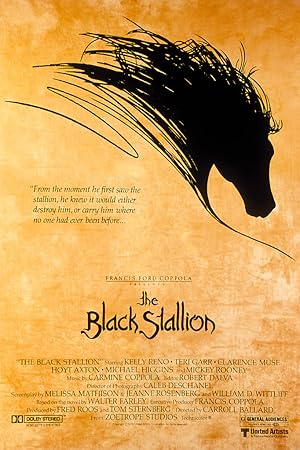
The Black Stallion
While traveling with his father, young Alec becomes fascinated by a mysterious Arabian stallion who is brought on board and stabled in the ship he is sailing on. When it tragically sinks both he and the horse survive only to be stranded on a desert island. He befriends it, so when finally rescued, both return to his home where they soon meet Henry Dailey, a once-successful trainer. Together they begin training the stallion to race against the fastest horses in the world.
Despite its modest budget of $2.7M, The Black Stallion became a massive hit, earning $37.8M worldwide—a remarkable 1300% return. The film's unique voice connected with viewers, demonstrating that strong storytelling can transcend budget limitations.
Nominated for 2 Oscars. 8 wins & 6 nominations


Plot Structure
Story beats plotted across runtime


Narrative Arc
Emotional journey through the story's key moments
Story Circle
Blueprint 15-beat structure
Arcplot Score Breakdown
Weighted: Precision (70%) + Arc (15%) + Theme (15%)
The Black Stallion (1979) exemplifies meticulously timed narrative architecture, characteristic of Carroll Ballard's storytelling approach. This structural analysis examines how the film's 15-point plot structure maps to proven narrative frameworks across 1 hour and 58 minutes. With an Arcplot score of 7.0, the film balances conventional beats with creative variation.
Characters
Cast & narrative archetypes

Alec Ramsey
Henry Dailey
The Black
Alec's Father
Alec's Mother
Main Cast & Characters
Alec Ramsey
Played by Kelly Reno
A young boy who survives a shipwreck and bonds with a wild Arabian stallion on a deserted island.
Henry Dailey
Played by Mickey Rooney
A retired jockey and horse trainer who helps Alec train the Black for racing.
The Black
A wild, untamed Arabian stallion who forms an extraordinary bond with Alec after they survive together.
Alec's Father
Played by Hoyt Axton
Alec's loving father who perishes in the shipwreck but gives Alec a small knife and pocketknife.
Alec's Mother
Played by Teri Garr
Alec's worried mother who supports her son's connection with the horse despite her concerns.
Structural Analysis
The Status Quo at 1 minutes (1% through the runtime) establishes Young Alec Ramsey aboard a ship in the Mediterranean, a boy disconnected from the world around him, reading adventure stories while isolated from meaningful connection.. Notably, this early placement immediately immerses viewers in the story world.
The inciting incident occurs at 12 minutes when The ship catches fire and sinks in a violent storm. Alec's father dies, and the boy is thrown into the raging sea. The entire world as he knew it is destroyed.. At 10% through the film, this Disruption aligns precisely with traditional story structure. This beat shifts the emotional landscape, launching the protagonist into the central conflict.
The First Threshold at 27 minutes marks the transition into Act II, occurring at 23% of the runtime. This illustrates the protagonist's commitment to Alec frees the stallion from the rope tangled in rocks. This act of trust and compassion marks the beginning of their true relationship—Alec chooses connection over control., moving from reaction to action.
At 56 minutes, the Midpoint arrives at 48% of the runtime—precisely centered, creating perfect narrative symmetry. Significantly, this crucial beat Former racehorse trainer Henry Dailey sees the Black racing and recognizes his incredible speed. He offers to train them. A false victory—they have hope and a path forward, but haven't yet faced the real challenge., fundamentally raising what's at risk. The emotional intensity shifts, dividing the narrative into clear before-and-after phases.
The Collapse moment at 87 minutes (74% through) represents the emotional nadir. Here, On the morning of the race, Alec's confidence wavers completely. He faces the enormity of the challenge—professional jockeys, champion horses, massive crowds. His fear of failure and losing the Black threatens to overwhelm him., reveals the protagonist at their lowest point. This beat's placement in the final quarter sets up the climactic reversal.
The Second Threshold at 94 minutes initiates the final act resolution at 79% of the runtime. Alec mounts the Black in the paddock before the race. He centers himself, remembers the island, and lets go of fear. The synthesis: combining his island bond with Henry's training wisdom., demonstrating the transformation achieved throughout the journey.
Emotional Journey
The Black Stallion's emotional architecture traces a deliberate progression across 15 carefully calibrated beats.
Narrative Framework
This structural analysis employs proven narrative structure principles that track dramatic progression. By mapping The Black Stallion against these established plot points, we can identify how Carroll Ballard utilizes or subverts traditional narrative conventions. The plot point approach reveals not only adherence to structural principles but also creative choices that distinguish The Black Stallion within the adventure genre.
Carroll Ballard's Structural Approach
Among the 2 Carroll Ballard films analyzed on Arcplot, the average structural score is 7.3, reflecting strong command of classical structure. The Black Stallion takes a more unconventional approach compared to the director's typical style. For comparative analysis, explore the complete Carroll Ballard filmography.
Comparative Analysis
Additional adventure films include The Bad Guys, Puss in Boots and Venom: The Last Dance. For more Carroll Ballard analyses, see Fly Away Home.
Plot Points by Act
Act I
SetupStatus Quo
Young Alec Ramsey aboard a ship in the Mediterranean, a boy disconnected from the world around him, reading adventure stories while isolated from meaningful connection.
Theme
A passenger remarks on the wild black stallion: "Some things are better left alone." The theme of trust, connection, and whether wild things can or should be tamed.
Worldbuilding
Establishing Alec's lonely existence on the ship, his fascination with the wild black Arabian stallion in the hold, and his father's distant presence. The boy secretly feeds the horse sugar cubes.
Disruption
The ship catches fire and sinks in a violent storm. Alec's father dies, and the boy is thrown into the raging sea. The entire world as he knew it is destroyed.
Resistance
Alec struggles to survive in the ocean, desperately grabs the stallion's rope as the horse swims free. Boy and horse wash up separately on a deserted island. Alec must learn to survive and slowly approach the wary, wild horse.
Act II
ConfrontationFirst Threshold
Alec frees the stallion from the rope tangled in rocks. This act of trust and compassion marks the beginning of their true relationship—Alec chooses connection over control.
Mirror World
The horse allows Alec to touch him for the first time, then permits the boy to ride. A wordless, profound bond forms—the relationship that will teach Alec about trust, respect, and partnership.
Premise
The promise of the premise: boy and horse together on a paradise island. Extended wordless sequences of them running on beaches, swimming, bonding. Alec is rescued and returns home with the horse to his mother's house.
Midpoint
Former racehorse trainer Henry Dailey sees the Black racing and recognizes his incredible speed. He offers to train them. A false victory—they have hope and a path forward, but haven't yet faced the real challenge.
Opposition
Training intensifies. Henry pushes them hard. The racing establishment doubts and mocks them—an unknown horse with no papers, a boy rider, an old trainer. Pressure mounts as they prepare for the match race.
Collapse
On the morning of the race, Alec's confidence wavers completely. He faces the enormity of the challenge—professional jockeys, champion horses, massive crowds. His fear of failure and losing the Black threatens to overwhelm him.
Crisis
Henry gives Alec a quiet talk, reminding him it's not about proving anything to others—it's about the bond with the horse. Alec processes his fear and reconnects with what matters: trust.
Act III
ResolutionSecond Threshold
Alec mounts the Black in the paddock before the race. He centers himself, remembers the island, and lets go of fear. The synthesis: combining his island bond with Henry's training wisdom.
Synthesis
The match race finale. The Black and Alec face two champion horses. They fall behind, then surge forward through pure heart and connection. The Black wins in a photo finish. Victory celebration.
Transformation
Alec and the Black together in the stable, quiet and at peace. The boy who was isolated and disconnected now has profound connection—to the horse, to Henry, to himself. No longer alone.