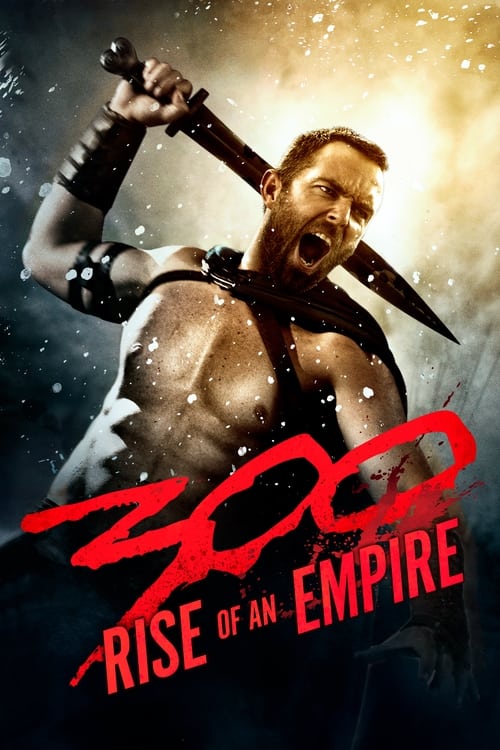
300: Rise of an Empire
Greek general Themistocles attempts to unite all of Greece by leading the charge that will change the course of the war. Themistocles faces the massive invading Persian forces led by mortal-turned-god, Xerxes and Artemesia, the vengeful commander of the Persian navy.
Despite a considerable budget of $110.0M, 300: Rise of an Empire became a solid performer, earning $337.6M worldwide—a 207% return.
2 wins & 7 nominations


Plot Structure
Story beats plotted across runtime


Narrative Arc
Emotional journey through the story's key moments
Story Circle
Blueprint 15-beat structure
Arcplot Score Breakdown
Weighted: Precision (70%) + Arc (15%) + Theme (15%)
300: Rise of an Empire (2014) showcases deliberately positioned story structure, characteristic of Noam Murro's storytelling approach. This structural analysis examines how the film's 15-point plot structure maps to proven narrative frameworks across 1 hour and 42 minutes. With an Arcplot score of 6.8, the film balances conventional beats with creative variation.
Characters
Cast & narrative archetypes

Themistocles
Artemisia
Queen Gorgo
Xerxes
Scyllias
Calisto
Aeskylos
Main Cast & Characters
Themistocles
Played by Sullivan Stapleton
Athenian general and warrior who leads the Greek naval forces against the Persian invasion with strategic brilliance and unwavering determination.
Artemisia
Played by Eva Green
Ruthless Greek-born naval commander of the Persian fleet, driven by vengeance against Greece for her tragic past.
Queen Gorgo
Played by Lena Headey
Warrior queen of Sparta and widow of Leonidas, who rallies the Spartan forces to join the Greek resistance.
Xerxes
Played by Rodrigo Santoro
God-king of Persia whose massive invasion of Greece is fueled by divine ambition and the manipulations of Artemisia.
Scyllias
Played by Callan Mulvey
Loyal Greek warrior and trusted friend to Themistocles who fights alongside him in the naval battles.
Calisto
Played by Jack O'Connell
Fierce female warrior who fights for Greece and seeks vengeance for her family killed by the Persians.
Aeskylos
Played by Hans Matheson
Young Athenian warrior who narrates the story and fights under Themistocles' command.
Structural Analysis
The Status Quo at 1 minutes (1% through the runtime) establishes Queen Gorgo narrates the story of Greece, establishing the fragmented city-states and their warrior culture before unity was tested.. Notably, this early placement immediately immerses viewers in the story world.
The inciting incident occurs at 12 minutes when Xerxes' massive Persian fleet approaches Greece. Themistokles realizes Athens and all of Greece will fall unless the city-states unite against this overwhelming force.. At 12% through the film, this Disruption aligns precisely with traditional story structure. This beat shifts the emotional landscape, launching the protagonist into the central conflict.
The First Threshold at 26 minutes marks the transition into Act II, occurring at 26% of the runtime. This shows the protagonist's commitment to Themistokles commits to face the Persian navy at Artemisium, choosing to fight despite being vastly outnumbered. He actively decides to become the leader Greece needs., moving from reaction to action.
At 51 minutes, the Midpoint arrives at 50% of the runtime—precisely centered, creating perfect narrative symmetry. The analysis reveals that this crucial beat Artemisia invites Themistokles to parley aboard her ship and offers him command of the Persian navy. Their sexual encounter represents a false victory—she believes she can seduce him to her side., fundamentally raising what's at risk. The emotional intensity shifts, dividing the narrative into clear before-and-after phases.
The Collapse moment at 76 minutes (74% through) represents the emotional nadir. Here, Scylias, Themistokles' trusted friend and father figure, is killed in battle. This death—combined with news of Sparta's defeat—represents the whiff of death and Greece's darkest hour., reveals the protagonist at their lowest point. This beat's placement in the final quarter sets up the climactic reversal.
The Second Threshold at 81 minutes initiates the final act resolution at 80% of the runtime. Queen Gorgo arrives with the Spartan fleet, united with other Greek city-states. Themistokles realizes that Leonidas' sacrifice has achieved what politics could not—Greek unity. They will fight together as one., demonstrating the transformation achieved throughout the journey.
Emotional Journey
300: Rise of an Empire's emotional architecture traces a deliberate progression across 15 carefully calibrated beats.
Narrative Framework
This structural analysis employs systematic plot point analysis that identifies crucial turning points. By mapping 300: Rise of an Empire against these established plot points, we can identify how Noam Murro utilizes or subverts traditional narrative conventions. The plot point approach reveals not only adherence to structural principles but also creative choices that distinguish 300: Rise of an Empire within the action genre.
Noam Murro's Structural Approach
Among the 2 Noam Murro films analyzed on Arcplot, the average structural score is 7.2, reflecting strong command of classical structure. 300: Rise of an Empire takes a more unconventional approach compared to the director's typical style. For comparative analysis, explore the complete Noam Murro filmography.
Comparative Analysis
Additional action films include The Bad Guys, Puss in Boots and Venom: The Last Dance. For more Noam Murro analyses, see Smart People.
Plot Points by Act
Act I
SetupStatus Quo
Queen Gorgo narrates the story of Greece, establishing the fragmented city-states and their warrior culture before unity was tested.
Theme
Gorgo states: "Freedom isn't free at all, it comes with the highest of costs. The cost of blood." The theme of sacrifice for freedom is established.
Worldbuilding
Flashback to Battle of Marathon ten years prior; young Themistokles kills King Darius; Artemisia's origin story and rise to power; Greek city-states remain divided despite Persian threat.
Disruption
Xerxes' massive Persian fleet approaches Greece. Themistokles realizes Athens and all of Greece will fall unless the city-states unite against this overwhelming force.
Resistance
Themistokles travels to Sparta seeking alliance; Gorgo refuses to commit Spartan forces while Leonidas lives; Themistokles debates whether he can unite Greece through naval warfare alone; prepares his Athenian fleet.
Act II
ConfrontationFirst Threshold
Themistokles commits to face the Persian navy at Artemisium, choosing to fight despite being vastly outnumbered. He actively decides to become the leader Greece needs.
Mirror World
First encounter with Artemisia, who commands with cruelty and fear. She is Themistokles' dark mirror—both brilliant strategists, but she uses terror while he inspires loyalty.
Premise
Naval battles at Artemisium deliver spectacular warfare; Themistokles uses strategy to overcome superior numbers; Greeks gain confidence; parallel to Leonidas fighting at Thermopylae; the promise of epic naval combat.
Midpoint
Artemisia invites Themistokles to parley aboard her ship and offers him command of the Persian navy. Their sexual encounter represents a false victory—she believes she can seduce him to her side.
Opposition
Themistokles refuses Artemisia's offer; she becomes vengeful; news of Leonidas' death at Thermopylae devastates Greek morale; Ephialtes' betrayal revealed; Greek allies begin to abandon the fight; Artemisia's forces close in.
Collapse
Scylias, Themistokles' trusted friend and father figure, is killed in battle. This death—combined with news of Sparta's defeat—represents the whiff of death and Greece's darkest hour.
Crisis
Themistokles mourns Scylias; Greek forces are shattered and retreating; Athens burns; all seems lost. Themistokles must find a way to inspire hope from complete devastation.
Act III
ResolutionSecond Threshold
Queen Gorgo arrives with the Spartan fleet, united with other Greek city-states. Themistokles realizes that Leonidas' sacrifice has achieved what politics could not—Greek unity. They will fight together as one.
Synthesis
The united Greek fleet engages Artemisia in the decisive Battle of Salamis; Themistokles combines Athenian naval tactics with Spartan warrior ferocity; he confronts Artemisia in personal combat; Gorgo delivers the killing blow; Persian fleet destroyed.
Transformation
Themistokles stands with Gorgo and the united Greek forces, transformed from a lone Athenian general into the leader of a unified Greece. Freedom has been won through blood and unity.