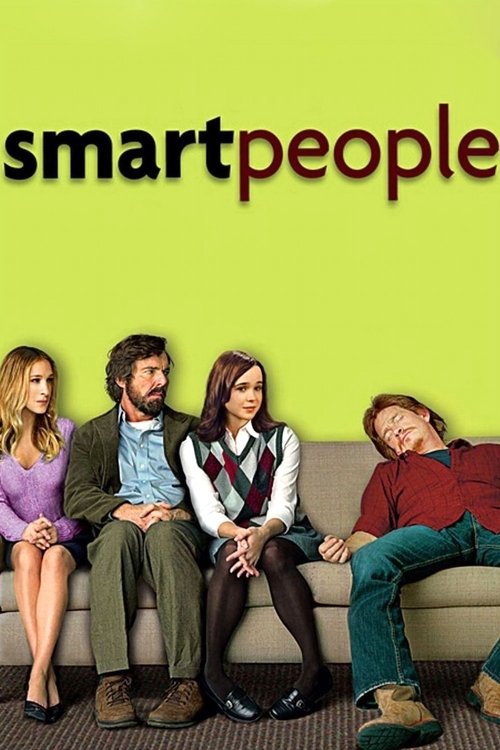
Smart People
Professor Lawrence Wetherhold might be imperiously brilliant, monumentally self-possessed and an intellectual giant -- but when it comes to solving the conundrums of love and family, he's as downright flummoxed as the next guy.
Working with a tight budget of $7.0M, the film achieved a modest success with $10.6M in global revenue (+51% profit margin).


Plot Structure
Story beats plotted across runtime


Narrative Arc
Emotional journey through the story's key moments
Story Circle
Blueprint 15-beat structure
Arcplot Score Breakdown
Weighted: Precision (70%) + Arc (15%) + Theme (15%)
Smart People (2008) demonstrates meticulously timed narrative architecture, characteristic of Noam Murro's storytelling approach. This structural analysis examines how the film's 15-point plot structure maps to proven narrative frameworks across 1 hour and 35 minutes. With an Arcplot score of 7.6, the film showcases strong structural fundamentals.
Characters
Cast & narrative archetypes

Lawrence Wetherhold
Janet Hartigan
Chuck Wetherhold
Vanessa Wetherhold
James Wetherhold
Main Cast & Characters
Lawrence Wetherhold
Played by Dennis Quaid
A widowed, arrogant English professor struggling with depression and social disconnection after his wife's death.
Janet Hartigan
Played by Sarah Jessica Parker
A former student and emergency room doctor who becomes romantically involved with Lawrence.
Chuck Wetherhold
Played by Thomas Haden Church
Lawrence's adopted brother, a charming ne'er-do-well who moves in and disrupts the family's rigid routines.
Vanessa Wetherhold
Played by Ellen Page
Lawrence's overachieving teenage daughter who acts as the family's de facto adult before learning to be a teenager.
James Wetherhold
Played by Ashton Holmes
Lawrence's alienated younger son who struggles for his father's attention and approval.
Structural Analysis
The Status Quo at 1 minutes (1% through the runtime) establishes Lawrence Wetherhold, an arrogant literature professor, lectures to disinterested students, embodying intellectual superiority and emotional isolation. His daughter Vanessa is equally uptight, managing their household with rigid control.. Of particular interest, this early placement immediately immerses viewers in the story world.
The inciting incident occurs at 12 minutes when Lawrence has a seizure and falls, hitting his head while trying to retrieve his briefcase from an impound lot. He's hospitalized with a head injury and can't drive for six months.. At 13% through the film, this Disruption is delayed, allowing extended setup of the story world. This beat shifts the emotional landscape, launching the protagonist into the central conflict.
The First Threshold at 24 minutes marks the transition into Act II, occurring at 25% of the runtime. This shows the protagonist's commitment to Lawrence agrees to let Chuck move in and be his driver, accepting that he must engage with the world differently. He also reconnects with Janet, a former student who treated him at the ER, and agrees to see her socially., moving from reaction to action.
At 48 minutes, the Midpoint arrives at 51% of the runtime—precisely centered, creating perfect narrative symmetry. Significantly, this crucial beat Lawrence and Janet's relationship deepens; he seems to be opening up emotionally. He appears to be achieving both professional validation (potential department chair position) and personal growth, but his underlying arrogance remains unaddressed., fundamentally raising what's at risk. The emotional intensity shifts, dividing the narrative into clear before-and-after phases.
The Collapse moment at 72 minutes (76% through) represents the emotional nadir. Here, Janet breaks up with Lawrence after he fails to show up for an important event, revealing he hasn't changed at all. His emotional cowardice and self-absorption have killed the relationship—a death of possibility and hope for transformation., indicates the protagonist at their lowest point. This beat's placement in the final quarter sets up the climactic reversal.
The Second Threshold at 76 minutes initiates the final act resolution at 80% of the runtime. Lawrence realizes he must actually change, not just go through the motions. He understands that being "smart" doesn't mean being alive, and he needs to risk vulnerability to have real relationships., demonstrating the transformation achieved throughout the journey.
Emotional Journey
Smart People's emotional architecture traces a deliberate progression across 15 carefully calibrated beats.
Narrative Framework
This structural analysis employs systematic plot point analysis that identifies crucial turning points. By mapping Smart People against these established plot points, we can identify how Noam Murro utilizes or subverts traditional narrative conventions. The plot point approach reveals not only adherence to structural principles but also creative choices that distinguish Smart People within the comedy genre.
Noam Murro's Structural Approach
Among the 2 Noam Murro films analyzed on Arcplot, the average structural score is 7.2, reflecting strong command of classical structure. Smart People represents one of the director's most structurally precise works. For comparative analysis, explore the complete Noam Murro filmography.
Comparative Analysis
Additional comedy films include The Bad Guys, Ella Enchanted and The Evening Star. For more Noam Murro analyses, see 300: Rise of an Empire.
Plot Points by Act
Act I
SetupStatus Quo
Lawrence Wetherhold, an arrogant literature professor, lectures to disinterested students, embodying intellectual superiority and emotional isolation. His daughter Vanessa is equally uptight, managing their household with rigid control.
Theme
A colleague or student hints at Lawrence's emotional disconnection, suggesting that intelligence without humanity leads to emptiness. The theme of needing human connection versus intellectual isolation is established.
Worldbuilding
We see Lawrence's dysfunctional family dynamics: his bright but neurotic daughter Vanessa, his underachieving son James, and his own pompous behavior. His book isn't selling, and he's deeply unpopular at the university.
Disruption
Lawrence has a seizure and falls, hitting his head while trying to retrieve his briefcase from an impound lot. He's hospitalized with a head injury and can't drive for six months.
Resistance
Lawrence resists accepting help and dealing with his limitations. His adopted brother Chuck, a ne'er-do-well, shows up and offers to be his driver. Lawrence reluctantly begins depending on others.
Act II
ConfrontationFirst Threshold
Lawrence agrees to let Chuck move in and be his driver, accepting that he must engage with the world differently. He also reconnects with Janet, a former student who treated him at the ER, and agrees to see her socially.
Mirror World
Janet Hartigan, the ER doctor and former student, represents emotional openness and life beyond academia. Their romantic subplot carries the theme: can Lawrence learn to be vulnerable and human?
Premise
Lawrence explores a relationship with Janet while Chuck disrupts the household's rigid order, teaching Vanessa to loosen up. Lawrence struggles between his intellectual superiority and genuine connection, experiencing awkward but real moments of intimacy.
Midpoint
Lawrence and Janet's relationship deepens; he seems to be opening up emotionally. He appears to be achieving both professional validation (potential department chair position) and personal growth, but his underlying arrogance remains unaddressed.
Opposition
Lawrence's inability to truly change becomes apparent. He sabotages his relationship with Janet through selfishness and emotional unavailability. Vanessa's rigidity causes her to crash when she tries to loosen up. Chuck's presence creates more chaos than growth.
Collapse
Janet breaks up with Lawrence after he fails to show up for an important event, revealing he hasn't changed at all. His emotional cowardice and self-absorption have killed the relationship—a death of possibility and hope for transformation.
Crisis
Lawrence faces his emptiness. Chuck leaves, disappointed. Vanessa has her own crisis. Lawrence must confront whether intellectual superiority is enough or if he's wasted his life avoiding genuine human connection.
Act III
ResolutionSecond Threshold
Lawrence realizes he must actually change, not just go through the motions. He understands that being "smart" doesn't mean being alive, and he needs to risk vulnerability to have real relationships.
Synthesis
Lawrence takes genuine steps toward change: he reaches out to Janet authentically, makes amends with his family, and begins to let go of his arrogance. He demonstrates growth through action, not just intention.
Transformation
Lawrence appears humble and open, genuinely connecting with others. Unlike the opening where he was isolated and superior, he now engages with warmth and authenticity—still intelligent, but finally human.