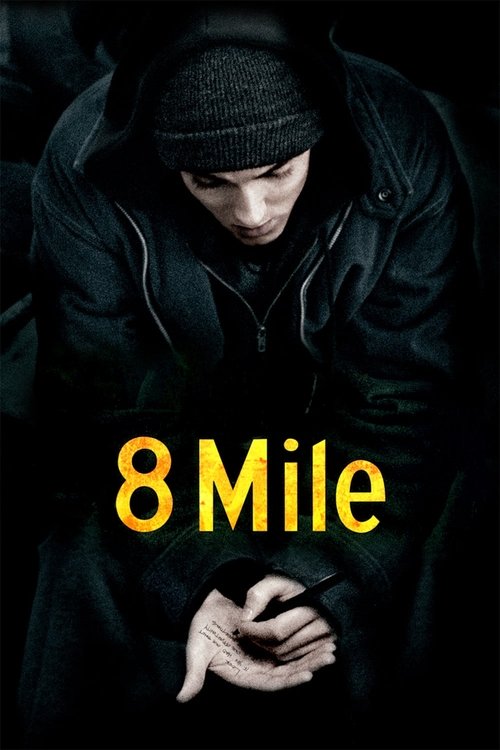
8 Mile
For Jimmy Smith, Jr., life is a daily fight just to keep hope alive. Feeding his dreams in Detroit's vibrant music scene, Jimmy wages an extraordinary personal struggle to find his own voice - and earn a place in a world where rhymes rule, legends are born and every moment… is another chance.
Despite a respectable budget of $41.0M, 8 Mile became a box office success, earning $242.9M worldwide—a 492% return.
1 Oscar. 17 wins & 21 nominations


Plot Structure
Story beats plotted across runtime


Narrative Arc
Emotional journey through the story's key moments
Story Circle
Blueprint 15-beat structure
Arcplot Score Breakdown
Weighted: Precision (70%) + Arc (15%) + Theme (15%)
8 Mile (2002) exhibits meticulously timed plot construction, characteristic of Curtis Hanson's storytelling approach. This structural analysis examines how the film's 15-point plot structure maps to proven narrative frameworks across 1 hour and 51 minutes. With an Arcplot score of 7.0, the film balances conventional beats with creative variation.
Characters
Cast & narrative archetypes

Jimmy "B-Rabbit" Smith Jr.
Future
Alex
Stephanie Smith
Papa Doc
Cheddar Bob
Sol George
DJ Iz
Main Cast & Characters
Jimmy "B-Rabbit" Smith Jr.
Played by Eminem
A white rapper struggling to make it in Detroit's underground hip-hop scene while working at a factory and living in a trailer park.
Future
Played by Mekhi Phifer
B-Rabbit's best friend and host of the rap battles at The Shelter, who believes in Jimmy's talent and encourages him to compete.
Alex
Played by Brittany Murphy
An aspiring model who becomes romantically involved with Jimmy, representing a potential escape from his current life.
Stephanie Smith
Played by Kim Basinger
Jimmy's troubled mother who is irresponsible, emotionally unstable, and relies on her son while pursuing her own selfish interests.
Papa Doc
Played by Anthony Mackie
The arrogant leader of the rival rap group "Leaders of the Free World" and Jimmy's main antagonist in the battle rap scene.
Cheddar Bob
Played by Evan Jones
Jimmy's well-meaning but incompetent friend who accidentally shoots himself and provides comic relief to the crew.
Sol George
Played by Omar Benson Miller
One of Jimmy's close friends in his crew who supports him through his struggles and battles.
DJ Iz
Played by De'Angelo Wilson
A member of Jimmy's crew and a DJ who provides support and loyalty to the group.
Structural Analysis
The Status Quo at 1 minutes (1% through the runtime) establishes Jimmy "B-Rabbit" Smith Jr. Freezes during a rap battle at The Shelter, unable to spit a single word while his opponent Free World destroys him. He walks off stage in humiliation, establishing his struggle with self-doubt and his inability to seize opportunities in Detroit's battle rap scene.. Structural examination shows that this early placement immediately immerses viewers in the story world.
The inciting incident occurs at 14 minutes when Jimmy returns to the trailer to find his mother has let her boyfriend Greg move in without asking. His already unstable home life becomes more chaotic, and the trailer he shares with his mother and sister is now even more cramped and dysfunctional, pushing him toward needing to escape his circumstances.. At 13% through the film, this Disruption is delayed, allowing extended setup of the story world. This beat shifts the emotional landscape, launching the protagonist into the central conflict.
The First Threshold at 29 minutes marks the transition into Act II, occurring at 26% of the runtime. This shows the protagonist's commitment to Jimmy actively chooses to enter the next battle at The Shelter. After Future's persistent encouragement and Jimmy's growing frustration with his dead-end life, he makes the decision to face his fear and step back on stage. This is his commitment to proving himself., moving from reaction to action.
At 56 minutes, the Midpoint arrives at 50% of the runtime—precisely centered, creating perfect narrative symmetry. Structural examination shows that this crucial beat Jimmy discovers Alex has been cheating on him with his rival Wink, who works for a record producer. He beats up Wink in front of Alex. This false defeat shatters his trust and the one relationship that made him believe he could transcend his circumstances. The stakes are raised as personal betrayal intersects with his artistic ambitions., fundamentally raising what's at risk. The emotional intensity shifts, dividing the narrative into clear before-and-after phases.
The Collapse moment at 84 minutes (75% through) represents the emotional nadir. Here, Free World brutally beats Jimmy and Future in a parking lot ambush. Jimmy is left physically beaten, jobless, broke, betrayed, and seemingly defeated. The "whiff of death" is the death of his dreams—he has nothing left, no money for a demo, no job, no girl, and his crew is falling apart. This is his lowest point., illustrates the protagonist at their lowest point. This beat's placement in the final quarter sets up the climactic reversal.
The Second Threshold at 90 minutes initiates the final act resolution at 81% of the runtime. Jimmy decides to enter the final battle at The Shelter despite everything. He realizes he has nothing left to lose and that his authenticity—his real life struggles—are his greatest weapon. He synthesizes his painful experiences with his rap skills, understanding that exposing his own vulnerabilities before his opponents can is the key to victory., demonstrating the transformation achieved throughout the journey.
Emotional Journey
8 Mile's emotional architecture traces a deliberate progression across 15 carefully calibrated beats.
Narrative Framework
This structural analysis employs proven narrative structure principles that track dramatic progression. By mapping 8 Mile against these established plot points, we can identify how Curtis Hanson utilizes or subverts traditional narrative conventions. The plot point approach reveals not only adherence to structural principles but also creative choices that distinguish 8 Mile within the drama genre.
Curtis Hanson's Structural Approach
Among the 9 Curtis Hanson films analyzed on Arcplot, the average structural score is 6.9, demonstrating varied approaches to story architecture. 8 Mile represents one of the director's most structurally precise works. For comparative analysis, explore the complete Curtis Hanson filmography.
Comparative Analysis
Additional drama films include After Thomas, South Pacific and Dirty Dancing: Havana Nights. For more Curtis Hanson analyses, see The River Wild, The Hand That Rocks the Cradle and Bad Influence.
Plot Points by Act
Act I
SetupStatus Quo
Jimmy "B-Rabbit" Smith Jr. freezes during a rap battle at The Shelter, unable to spit a single word while his opponent Free World destroys him. He walks off stage in humiliation, establishing his struggle with self-doubt and his inability to seize opportunities in Detroit's battle rap scene.
Theme
Future tells Jimmy, "You gotta take your shot. This is your moment." The theme of seizing opportunities and finding your voice despite fear and external circumstances is established through Future's encouragement.
Worldbuilding
We see Jimmy's world: working at New Detroit Stamping plant, living in a trailer park with his alcoholic mother Stephanie and little sister Lily, driving a broken-down car, and navigating the racial and economic tensions of 1995 Detroit. His crew includes Future, Sol, DJ Iz, and Cheddar Bob. He writes rhymes constantly but lacks confidence to perform.
Disruption
Jimmy returns to the trailer to find his mother has let her boyfriend Greg move in without asking. His already unstable home life becomes more chaotic, and the trailer he shares with his mother and sister is now even more cramped and dysfunctional, pushing him toward needing to escape his circumstances.
Resistance
Jimmy debates whether to try again at battling or give up entirely. He meets Alex, an aspiring model who becomes his love interest. He continues working at the plant, writing rhymes, and hanging with his crew. Future keeps pushing him to battle again, while Jimmy resists, still traumatized by his opening freeze. He observes the battles but won't participate.
Act II
ConfrontationFirst Threshold
Jimmy actively chooses to enter the next battle at The Shelter. After Future's persistent encouragement and Jimmy's growing frustration with his dead-end life, he makes the decision to face his fear and step back on stage. This is his commitment to proving himself.
Mirror World
Jimmy's relationship with Alex deepens as they connect in her car. She represents a life beyond Detroit's limitations and encourages his artistic ambitions. Unlike his chaotic home life, she sees his potential and believes in him, providing the emotional support that mirrors what he needs to find within himself.
Premise
Jimmy navigates the rap battle world while developing his skills and confidence. He wins his first battle, continues his relationship with Alex, clashes with rival crew Leaders of the Free World (particularly Papa Doc), and deals with workplace tensions. He's exploring what it means to be a white rapper in a predominantly Black art form while proving his authenticity and skill.
Midpoint
Jimmy discovers Alex has been cheating on him with his rival Wink, who works for a record producer. He beats up Wink in front of Alex. This false defeat shatters his trust and the one relationship that made him believe he could transcend his circumstances. The stakes are raised as personal betrayal intersects with his artistic ambitions.
Opposition
Everything intensifies and falls apart. Jimmy's crew retaliates against Free World, leading to Cheddar Bob accidentally shooting himself. Jimmy loses his job at the plant after fighting Wink. His mother steals money he saved for a demo tape. Free World vandalizes his mom's car and jumps Jimmy and Future. The opposition closes in from all sides—personal, professional, and artistic.
Collapse
Free World brutally beats Jimmy and Future in a parking lot ambush. Jimmy is left physically beaten, jobless, broke, betrayed, and seemingly defeated. The "whiff of death" is the death of his dreams—he has nothing left, no money for a demo, no job, no girl, and his crew is falling apart. This is his lowest point.
Crisis
Jimmy retreats into himself, processing the beating and the collapse of everything he was building. He tends to his wounds, contemplates his situation, and faces the dark reality that maybe he doesn't belong in this world. He's at a crossroads between giving up entirely or finding a new way forward.
Act III
ResolutionSecond Threshold
Jimmy decides to enter the final battle at The Shelter despite everything. He realizes he has nothing left to lose and that his authenticity—his real life struggles—are his greatest weapon. He synthesizes his painful experiences with his rap skills, understanding that exposing his own vulnerabilities before his opponents can is the key to victory.
Synthesis
The final battle sequence where Jimmy faces three opponents at The Shelter. He defeats Lickety Splickety, then Lotto, using raw honesty and skill. In the final round against Papa Doc, Jimmy preemptively exposes all his own vulnerabilities—being white, living in a trailer, having a deadbeat mom—leaving Papa Doc with nothing to say. Jimmy wins by owning his truth.
Transformation
Jimmy walks out of The Shelter victorious but declines to go celebrate or ride his victory. Instead, he walks alone back to work at the plant, choosing to return to his life with newfound confidence. He has found his voice and proven himself, but understands success is about the work ahead, not the glory. He is transformed from a man silenced by fear to one empowered by his authentic truth.