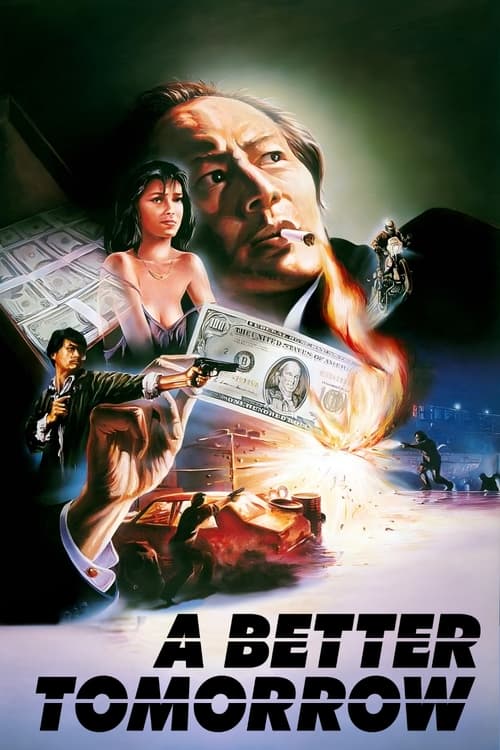
A Better Tomorrow
A reforming ex-gangster tries to reconcile with his estranged policeman brother, but the ties to his former gang are difficult to break.
The film earned $5.0M at the global box office.
6 wins & 14 nominations


Plot Structure
Story beats plotted across runtime


Narrative Arc
Emotional journey through the story's key moments
Story Circle
Blueprint 15-beat structure
Arcplot Score Breakdown
Weighted: Precision (70%) + Arc (15%) + Theme (15%)
A Better Tomorrow (1986) exhibits precise narrative design, characteristic of John Woo's storytelling approach. This structural analysis examines how the film's 15-point plot structure maps to proven narrative frameworks across 1 hour and 35 minutes. With an Arcplot score of 7.4, the film balances conventional beats with creative variation.
Characters
Cast & narrative archetypes

Ho
Mark Gor
Kit
Shing
Jackie
Main Cast & Characters
Ho
Played by Ti Lung
A counterfeiting kingpin who seeks redemption after prison, determined to go straight for his family despite his criminal past.
Mark Gor
Played by Chow Yun-fat
A flamboyant, loyal hitman and counterfeiter with a strict code of honor who becomes crippled and seeks revenge against those who destroyed him.
Kit
Played by Leslie Cheung
Ho's younger brother, an idealistic police officer who is ashamed of his family's criminal background and struggles with divided loyalties.
Shing
Played by Waise Lee
A ruthless, ambitious gangster who betrays Ho and takes over the counterfeiting operation through violence and treachery.
Jackie
Played by Emily Chu
Kit's girlfriend and fellow police officer who provides emotional support and represents the legitimate life Kit aspires to.
Structural Analysis
The Status Quo at 1 minutes (1% through the runtime) establishes Ho and Mark in their prime as successful counterfeit money smugglers, dressed sharply and operating with confidence in Hong Kong's criminal underworld.. Significantly, this early placement immediately immerses viewers in the story world.
The inciting incident occurs at 11 minutes when Ho is sent to Taiwan for what should be a routine deal, but their contact betrays them. Ho is arrested and Mark is shot and crippled trying to avenge Ho.. At 11% through the film, this Disruption aligns precisely with traditional story structure. This beat shifts the emotional landscape, launching the protagonist into the central conflict.
The First Threshold at 24 minutes marks the transition into Act II, occurring at 25% of the runtime. This shows the protagonist's commitment to Ho is released from prison and makes the active choice to go straight, refusing offers to return to crime, determined to reconcile with Kit and build an honest life., moving from reaction to action.
At 47 minutes, the Midpoint arrives at 49% of the runtime—precisely centered, creating perfect narrative symmetry. Structural examination shows that this crucial beat Shing tries to force Ho back into the organization. When Ho refuses, Shing threatens Kit. The stakes escalate - Ho's attempt at going straight puts his brother in danger., fundamentally raising what's at risk. The emotional intensity shifts, dividing the narrative into clear before-and-after phases.
The Collapse moment at 71 minutes (74% through) represents the emotional nadir. Here, Shing's men ambush and severely wound Kit. Ho realizes that going straight isn't enough - his past has destroyed his brother anyway. His dream of redemption and reconciliation dies., demonstrates the protagonist at their lowest point. This beat's placement in the final quarter sets up the climactic reversal.
The Second Threshold at 75 minutes initiates the final act resolution at 79% of the runtime. Ho realizes he must end this on his terms. He synthesizes his new values (protecting family, honor) with his old skills (violence, strategy). He and Mark prepare for the final confrontation with Shing., demonstrating the transformation achieved throughout the journey.
Emotional Journey
A Better Tomorrow's emotional architecture traces a deliberate progression across 15 carefully calibrated beats.
Narrative Framework
This structural analysis employs a 15-point narrative structure framework that maps key story moments. By mapping A Better Tomorrow against these established plot points, we can identify how John Woo utilizes or subverts traditional narrative conventions. The plot point approach reveals not only adherence to structural principles but also creative choices that distinguish A Better Tomorrow within the action genre.
John Woo's Structural Approach
Among the 9 John Woo films analyzed on Arcplot, the average structural score is 7.1, reflecting strong command of classical structure. A Better Tomorrow represents one of the director's most structurally precise works. For comparative analysis, explore the complete John Woo filmography.
Comparative Analysis
Additional action films include The Bad Guys, Puss in Boots and Venom: The Last Dance. For more John Woo analyses, see Red Cliff, Paycheck and Hard Target.
Plot Points by Act
Act I
SetupStatus Quo
Ho and Mark in their prime as successful counterfeit money smugglers, dressed sharply and operating with confidence in Hong Kong's criminal underworld.
Theme
Mark tells Ho, "We decide our own fate" - establishing the film's central theme about honor, brotherhood, and choosing one's path despite circumstances.
Worldbuilding
Introduction to the counterfeiting operation, Ho's relationship with Mark and their boss, and Ho's younger brother Kit who is training to be a police officer, unaware of Ho's criminal activities.
Disruption
Ho is sent to Taiwan for what should be a routine deal, but their contact betrays them. Ho is arrested and Mark is shot and crippled trying to avenge Ho.
Resistance
Ho serves his prison sentence, during which their father is killed. Kit blames Ho for their father's death. Mark becomes a broken man, reduced to working menial jobs. Ho contemplates his choices.
Act II
ConfrontationFirst Threshold
Ho is released from prison and makes the active choice to go straight, refusing offers to return to crime, determined to reconcile with Kit and build an honest life.
Mirror World
Ho reunites with Mark and sees how far his former partner has fallen - working as a cleaner and errand boy, despised by their former underlings. Their friendship represents the thematic cost of the life they lived.
Premise
Ho attempts to build a legitimate life working a taxi driver job while trying to reconnect with Kit, who rejects him. Mark stays loyal but struggles with his diminished status. Shing, their former subordinate, now runs the organization.
Midpoint
Shing tries to force Ho back into the organization. When Ho refuses, Shing threatens Kit. The stakes escalate - Ho's attempt at going straight puts his brother in danger.
Opposition
Shing's pressure intensifies. Kit investigates Shing's organization. Mark wants revenge. Ho is caught between his loyalty to Mark, his love for Kit, and his desire to stay clean. The walls close in from all sides.
Collapse
Shing's men ambush and severely wound Kit. Ho realizes that going straight isn't enough - his past has destroyed his brother anyway. His dream of redemption and reconciliation dies.
Crisis
Ho sits with his wounded brother in the hospital. Mark urges action. Ho wrestles with his soul - should he maintain his principles or embrace violence for justice? The dark night before the decision.
Act III
ResolutionSecond Threshold
Ho realizes he must end this on his terms. He synthesizes his new values (protecting family, honor) with his old skills (violence, strategy). He and Mark prepare for the final confrontation with Shing.
Synthesis
The iconic finale shootout. Ho, Mark, and Kit unite against Shing and his army of gunmen in an explosive battle. Mark sacrifices himself. Ho and Kit emerge victorious, having avenged their father and destroyed Shing's operation.
Transformation
Kit and Ho stand together over Mark's body. Kit finally understands and accepts his brother. Ho has paid the price but earned redemption. The brothers are reconciled, transformed by sacrifice and blood.