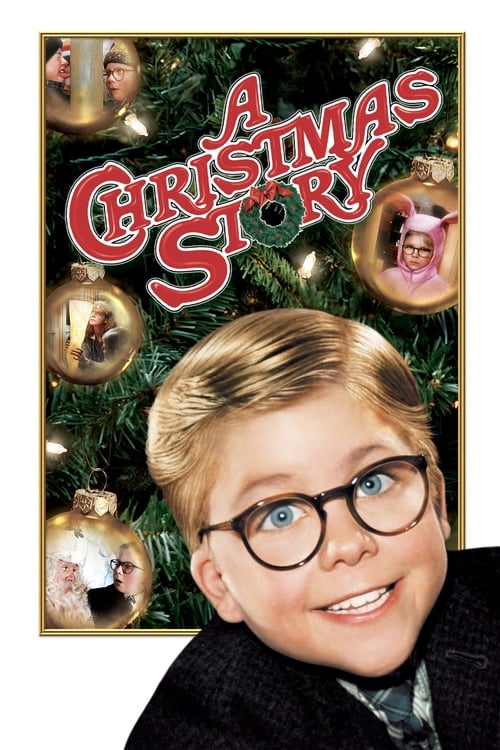
A Christmas Story
The comic mishaps and adventures of a young boy named Ralph, trying to convince his parents, teachers, and Santa that a Red Ryder B.B. gun really is the perfect Christmas gift for the 1940s.
Despite its modest budget of $3.3M, A Christmas Story became a massive hit, earning $20.7M worldwide—a remarkable 527% return. The film's distinctive approach resonated with audiences, demonstrating that strong storytelling can transcend budget limitations.
4 wins & 11 nominations


Plot Structure
Story beats plotted across runtime


Narrative Arc
Emotional journey through the story's key moments
Story Circle
Blueprint 15-beat structure
Arcplot Score Breakdown
Weighted: Precision (70%) + Arc (15%) + Theme (15%)
A Christmas Story (1983) exhibits deliberately positioned story structure, characteristic of Bob Clark's storytelling approach. This structural analysis examines how the film's 15-point plot structure maps to proven narrative frameworks across 1 hour and 33 minutes. With an Arcplot score of 7.2, the film balances conventional beats with creative variation.
Characters
Cast & narrative archetypes

Ralphie Parker
The Old Man (Mr. Parker)
Mother (Mrs. Parker)
Randy Parker
Scut Farkus
Flick
Schwartz
Main Cast & Characters
Ralphie Parker
Played by Peter Billingsley
A 9-year-old boy obsessed with getting a Red Ryder BB gun for Christmas, navigating childhood in 1940s Indiana.
The Old Man (Mr. Parker)
Played by Darren McGavin
Ralphie's father, a working-class man prone to colorful profanity and battles with the furnace, who wins a garish leg lamp.
Mother (Mrs. Parker)
Played by Melinda Dillon
Ralphie's practical and patient mother who manages the household chaos with quiet competence and occasional exasperation.
Randy Parker
Played by Ian Petrella
Ralphie's younger brother, a perpetually bundled-up whiner who refuses to eat and famously helps the bullies.
Scut Farkus
Played by Zack Ward
The neighborhood bully with yellow eyes who terrorizes Ralphie and his friends until a breaking point is reached.
Flick
Played by Scott Schwartz
Ralphie's friend who famously gets his tongue stuck to a frozen flagpole on a triple-dog-dare.
Schwartz
Played by R.D. Robb
Ralphie's friend and the mastermind behind dares, known for his strategic thinking in childhood schemes.
Structural Analysis
The Status Quo at 1 minutes (1% through the runtime) establishes Opening narration over snowy Indiana street scene. Adult Ralphie's voiceover establishes nostalgic tone: "Over the years I got to be quite a connoisseur of soap." Shows ordinary life of 1940s childhood - school, bullies, family dinners.. Of particular interest, this early placement immediately immerses viewers in the story world.
The inciting incident occurs at 10 minutes when Ralphie sees the Red Ryder BB gun in Higbee's department store window display. Heavenly choir accompaniment. "There it is! The Holy Grail of Christmas gifts!" His singular obsession is born - this disrupts his ordinary Christmas routine with a focused want.. At 11% through the film, this Disruption aligns precisely with traditional story structure. This beat shifts the emotional landscape, launching the protagonist into the central conflict.
The First Threshold at 22 minutes marks the transition into Act II, occurring at 24% of the runtime. This demonstrates the protagonist's commitment to Ralphie decides to make his final appeal to Santa Claus at Higbee's - his last hope. "It was all over - the double-barreled pressure of Christmas." Active choice to enter the Christmas gauntlet: endure the terrifying Santa for one shot at the gun. Crosses into Act 2's episodic adventures., moving from reaction to action.
At 47 minutes, the Midpoint arrives at 51% of the runtime—precisely centered, creating perfect narrative symmetry. Notably, this crucial beat False defeat: Ralphie's essay returns marked C+ with note: "You'll shoot your eye out." Miss Shields, his last adult hope besides Santa, has rejected him. Stakes raise - time is running out before Christmas. The fantasy sequences intensify as reality closes in., fundamentally raising what's at risk. The emotional intensity shifts, dividing the narrative into clear before-and-after phases.
The Collapse moment at 69 minutes (74% through) represents the emotional nadir. Here, Ralphie snaps and violently beats up Scut Farkus, sobbing and cursing. "A+ + +. The Mother lode of all dirty words. The f-dash-dash-dash word." His innocence dies. Mother's look of shock and disappointment. Ralphie has become what he feared - out of control, dangerous. His BB gun dreams seem over., reveals the protagonist at their lowest point. This beat's placement in the final quarter sets up the climactic reversal.
The Second Threshold at 74 minutes initiates the final act resolution at 80% of the runtime. Christmas morning arrives. Ralphie has given up hope, accepts whatever comes. The synthesis: accepting disappointment with grace (lesson learned) while parents independently decided he deserves the gun anyway. Old Man reveals final present hidden behind desk - the BB gun. The miracle happens because he stopped demanding it., demonstrating the transformation achieved throughout the journey.
Emotional Journey
A Christmas Story's emotional architecture traces a deliberate progression across 15 carefully calibrated beats.
Narrative Framework
This structural analysis employs structural analysis methodology used to understand storytelling architecture. By mapping A Christmas Story against these established plot points, we can identify how Bob Clark utilizes or subverts traditional narrative conventions. The plot point approach reveals not only adherence to structural principles but also creative choices that distinguish A Christmas Story within the comedy genre.
Bob Clark's Structural Approach
Among the 8 Bob Clark films analyzed on Arcplot, the average structural score is 7.1, reflecting strong command of classical structure. A Christmas Story represents one of the director's most structurally precise works. For comparative analysis, explore the complete Bob Clark filmography.
Comparative Analysis
Additional comedy films include The Bad Guys, Ella Enchanted and The Evening Star. For more Bob Clark analyses, see Porky's, Superbabies: Baby Geniuses 2 and From the Hip.
Plot Points by Act
Act I
SetupStatus Quo
Opening narration over snowy Indiana street scene. Adult Ralphie's voiceover establishes nostalgic tone: "Over the years I got to be quite a connoisseur of soap." Shows ordinary life of 1940s childhood - school, bullies, family dinners.
Theme
Mother warns Ralphie: "You'll shoot your eye out." Theme stated - the adult world dismisses childhood desires as dangerous, but the magic of childhood persists anyway. Every authority figure will repeat this line.
Worldbuilding
Establish Ralphie's world: his fantasy-prone imagination, younger brother Randy, chain-smoking Old Man father, protective mother. Introduction to school (Miss Shields), bully Scut Farkus, best friends Flick and Schwartz. Family dynamics and 1940s Midwestern childhood culture.
Disruption
Ralphie sees the Red Ryder BB gun in Higbee's department store window display. Heavenly choir accompaniment. "There it is! The Holy Grail of Christmas gifts!" His singular obsession is born - this disrupts his ordinary Christmas routine with a focused want.
Resistance
Ralphie debates how to get the BB gun. First attempt: strategic placement in mother's Life magazine. Mother's immediate rejection: "You'll shoot your eye out." Tries teacher with "What I Want for Christmas" essay. Multiple authority figures become unwitting guides who all give same warning. Ralphie persists but hasn't committed to final plan.
Act II
ConfrontationFirst Threshold
Ralphie decides to make his final appeal to Santa Claus at Higbee's - his last hope. "It was all over - the double-barreled pressure of Christmas." Active choice to enter the Christmas gauntlet: endure the terrifying Santa for one shot at the gun. Crosses into Act 2's episodic adventures.
Mirror World
The Old Man's major award leg lamp arrives. Father's childlike joy over his "prize" mirrors Ralphie's BB gun obsession. Subplot showing that adults have irrational desires too - the Old Man battles Mother and neighbors over displaying his lamp, teaching Ralphie that wanting something "impractical" is human.
Premise
Episodic adventures of childhood Christmas season: Flick's tongue frozen to flagpole, decoder ring disappointment ("Ovaltine? A crummy commercial!"), soap poisoning fantasy, tire change in snow, Chinese restaurant planning. The fun nostalgic vignettes the audience came for - exploring 1940s childhood Christmas through comic mishaps.
Midpoint
False defeat: Ralphie's essay returns marked C+ with note: "You'll shoot your eye out." Miss Shields, his last adult hope besides Santa, has rejected him. Stakes raise - time is running out before Christmas. The fantasy sequences intensify as reality closes in.
Opposition
Pressure mounts as Christmas approaches. Mother breaks Old Man's lamp (symbolic of dashed dreams). Scut Farkus bullying escalates. Randy refuses to eat. Everything gets harder - the magical Christmas Ralphie imagines seems increasingly out of reach as adult reality (broken dreams, bullies, family conflict) intrudes.
Collapse
Ralphie snaps and violently beats up Scut Farkus, sobbing and cursing. "A+ + +. The Mother lode of all dirty words. The f-dash-dash-dash word." His innocence dies. Mother's look of shock and disappointment. Ralphie has become what he feared - out of control, dangerous. His BB gun dreams seem over.
Crisis
Ralphie awaits punishment. Dark night of the soul - he's sure he's ruined Christmas, proven he's too irresponsible for the gun. But in the darkness, parents whisper: "He looks like a pink nightmare." They're not angry - they understand. Ralphie processes that maybe being imperfect doesn't disqualify you from joy.
Act III
ResolutionSecond Threshold
Christmas morning arrives. Ralphie has given up hope, accepts whatever comes. The synthesis: accepting disappointment with grace (lesson learned) while parents independently decided he deserves the gun anyway. Old Man reveals final present hidden behind desk - the BB gun. The miracle happens because he stopped demanding it.
Synthesis
Finale: Ralphie gets his gun and immediately shoots his glasses, nearly hitting his eye ("Oh my god, I shot my eye out!"). Lies to mother about icicle breaking glasses - using his hard-won maturity to protect the gift. Family's Christmas disaster at Chinese restaurant becomes perfect memory. All threads resolve in warm chaos.
Transformation
Final image: Ralphie sleeping peacefully with BB gun in his arms while adult narration reflects: "All was right with the world." Mirrors opening but transformed - no longer longing for magic, he's living in it. The gun itself mattered less than the love and belief it represented. Perfect Christmas achieved.