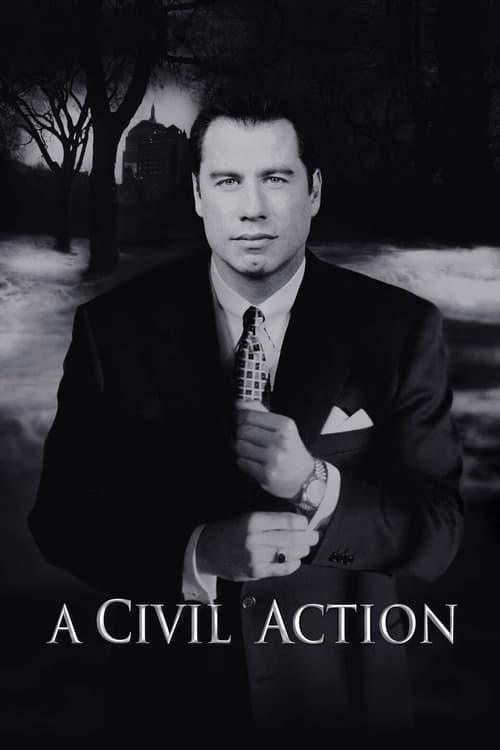
A Civil Action
Jan Schlickmann is a cynical lawyer who goes out to 'get rid of' a case, only to find out it is potentially worth millions. The case becomes his obsession, to the extent that he is willing to give up everything—including his career and his clients' goals—in order to continue the case against all odds.
The film struggled financially against its mid-range budget of $70.0M, earning $56.7M globally (-19% loss).
Nominated for 2 Oscars. 5 wins & 10 nominations


Plot Structure
Story beats plotted across runtime


Narrative Arc
Emotional journey through the story's key moments
Story Circle
Blueprint 15-beat structure
Arcplot Score Breakdown
Weighted: Precision (70%) + Arc (15%) + Theme (15%)
A Civil Action (1998) exemplifies deliberately positioned dramatic framework, characteristic of Steven Zaillian's storytelling approach. This structural analysis examines how the film's 15-point plot structure maps to proven narrative frameworks across 1 hour and 55 minutes. With an Arcplot score of 7.2, the film balances conventional beats with creative variation.
Characters
Cast & narrative archetypes

Jan Schlichtmann
Jerome Facher
James Gordon
Anne Anderson
Kevin Conway
Bill Crowley
Judge Walter J. Skinner
Main Cast & Characters
Jan Schlichtmann
Played by John Travolta
A charismatic personal injury lawyer who becomes obsessed with a toxic waste case that threatens to destroy his career and firm.
Jerome Facher
Played by Robert Duvall
A shrewd, experienced defense attorney representing Beatrice Foods who uses cunning tactics to outmaneuver the plaintiffs.
James Gordon
Played by William H. Macy
Jan's partner and financial manager who increasingly worries about the firm's survival as the case drains their resources.
Anne Anderson
Played by Kathleen Quinlan
A determined mother who leads the families seeking justice for their children who died from leukemia caused by contaminated water.
Kevin Conway
Played by Tony Shalhoub
One of Jan's partners at the law firm who becomes increasingly skeptical of the case.
Bill Crowley
Played by Zeljko Ivanek
Another partner at Jan's firm who stands by him through the difficult case.
Judge Walter J. Skinner
Played by John Lithgow
The federal judge presiding over the case who attempts to push for settlement and manages the complex proceedings.
Structural Analysis
The Status Quo at 1 minutes (1% through the runtime) establishes Jan Schlichtmann arrives in his Porsche at a settlement meeting, exuding confidence and success. He's a slick personal injury lawyer who takes only cases with wealthy defendants and clear liability - a man at the top of his game.. Notably, this early placement immediately immerses viewers in the story world.
The inciting incident occurs at 13 minutes when Anne Anderson arrives at Jan's office representing eight Woburn families whose children died of leukemia from contaminated water. Jan initially dismisses it - dead kids, no money defendants. But when he investigates, he discovers two corporate defendants: W.R. Grace and Beatrice Foods, both wealthy.. At 12% through the film, this Disruption aligns precisely with traditional story structure. This beat shifts the emotional landscape, launching the protagonist into the central conflict.
The First Threshold at 28 minutes marks the transition into Act II, occurring at 24% of the runtime. This shows the protagonist's commitment to Jan commits to the case, telling Anne Anderson he'll represent the families. This is his choice to abandon his mercenary principles for what appears to be both justice AND profit. He enters a new world where his usual tactics won't work., moving from reaction to action.
At 58 minutes, the Midpoint arrives at 50% of the runtime—precisely centered, creating perfect narrative symmetry. Significantly, this crucial beat Judge Skinner (John Lithgow) bifurcates the trial, separating the question of whether the companies contaminated the water from whether they caused the leukemia. This is a false defeat - it undermines Jan's strategy and makes victory much harder. The stakes escalate, the timeline extends, costs mount., fundamentally raising what's at risk. The emotional intensity shifts, dividing the narrative into clear before-and-after phases.
The Collapse moment at 84 minutes (73% through) represents the emotional nadir. Here, The jury delivers a mixed verdict that effectively exonerates Beatrice. Jan is devastated. He's forced to settle with Grace for a pittance ($8 million split among families after costs). His firm is bankrupt. His partners leave. He loses everything - office, car, reputation, savings. Total professional death., reveals the protagonist at their lowest point. This beat's placement in the final quarter sets up the climactic reversal.
The Second Threshold at 91 minutes initiates the final act resolution at 79% of the runtime. Jan discovers new evidence through EPA files - proof Grace lied about when they knew of the contamination. He can't use it in the civil case (it's over), but he turns it over to the EPA and Justice Department for criminal investigation. He chooses truth over his own recovery., demonstrating the transformation achieved throughout the journey.
Emotional Journey
A Civil Action's emotional architecture traces a deliberate progression across 15 carefully calibrated beats.
Narrative Framework
This structural analysis employs systematic plot point analysis that identifies crucial turning points. By mapping A Civil Action against these established plot points, we can identify how Steven Zaillian utilizes or subverts traditional narrative conventions. The plot point approach reveals not only adherence to structural principles but also creative choices that distinguish A Civil Action within the drama genre.
Steven Zaillian's Structural Approach
Among the 3 Steven Zaillian films analyzed on Arcplot, the average structural score is 7.1, reflecting strong command of classical structure. A Civil Action represents one of the director's most structurally precise works. For comparative analysis, explore the complete Steven Zaillian filmography.
Comparative Analysis
Additional drama films include After Thomas, South Pacific and Dirty Dancing: Havana Nights. For more Steven Zaillian analyses, see Searching for Bobby Fischer, All the King's Men.
Plot Points by Act
Act I
SetupStatus Quo
Jan Schlichtmann arrives in his Porsche at a settlement meeting, exuding confidence and success. He's a slick personal injury lawyer who takes only cases with wealthy defendants and clear liability - a man at the top of his game.
Theme
Jan's voiceover explains his rule: "The single question in a case is how much money. That's all." He describes the formula for calculating a case's value, dismissing families without breadwinners. This theme of reducing human tragedy to dollars will be challenged.
Worldbuilding
Jan lives lavishly in Boston, operating with partners Conway and Crowley. His office is expensive, his lifestyle extravagant. We see his method: charm, calculation, and settling quickly. He avoids cases involving dead children - they're "orphans" with no value.
Disruption
Anne Anderson arrives at Jan's office representing eight Woburn families whose children died of leukemia from contaminated water. Jan initially dismisses it - dead kids, no money defendants. But when he investigates, he discovers two corporate defendants: W.R. Grace and Beatrice Foods, both wealthy.
Resistance
Jan debates taking the case. His partners are skeptical - it's expensive, uncertain, and emotionally draining. Jan visits Woburn, sees the contaminated wells, meets the grieving families. He's moved but still calculating. He investigates the corporations, finding environmental violations. The case could be huge.
Act II
ConfrontationFirst Threshold
Jan commits to the case, telling Anne Anderson he'll represent the families. This is his choice to abandon his mercenary principles for what appears to be both justice AND profit. He enters a new world where his usual tactics won't work.
Mirror World
Jan develops a relationship with the Anderson family and other victims. Anne Anderson particularly represents the moral center - she wants acknowledgment and apology, not money. This relationship will force Jan to confront what justice actually means beyond settlement checks.
Premise
The "fun and games" of legal warfare. Jan faces Jerome Facher, Beatrice's brilliant lawyer, and William Cheeseman for Grace. Depositions, discovery battles, environmental testing. Jan spends enormous amounts - his own money - on experts, tests, drilling. The case becomes his obsession, consuming his practice.
Midpoint
Judge Skinner (John Lithgow) bifurcates the trial, separating the question of whether the companies contaminated the water from whether they caused the leukemia. This is a false defeat - it undermines Jan's strategy and makes victory much harder. The stakes escalate, the timeline extends, costs mount.
Opposition
Everything tightens. Jan runs out of money. His partners want to settle. Facher outmaneuvers him repeatedly. Personal relationships strain. The case is bleeding him dry financially and emotionally. The families grow impatient. Jan mortgages everything, refuses to quit. His obsession deepens even as chances of victory fade.
Collapse
The jury delivers a mixed verdict that effectively exonerates Beatrice. Jan is devastated. He's forced to settle with Grace for a pittance ($8 million split among families after costs). His firm is bankrupt. His partners leave. He loses everything - office, car, reputation, savings. Total professional death.
Crisis
Jan sits in the dark of his empty office, broken. He processes what he's lost and what it means. Anne Anderson confronts him - not with anger, but with quiet dignity. She thanks him for trying. He realizes money wasn't the point for her, even if it was for him.
Act III
ResolutionSecond Threshold
Jan discovers new evidence through EPA files - proof Grace lied about when they knew of the contamination. He can't use it in the civil case (it's over), but he turns it over to the EPA and Justice Department for criminal investigation. He chooses truth over his own recovery.
Synthesis
The EPA investigation leads to a massive cleanup of Woburn costing $69.4 million. Grace is held accountable. Jan, now working from a small office, poor but at peace, realizes the families got what they actually wanted: acknowledgment, cleanup, and justice. The real victory wasn't the settlement.
Transformation
Jan walks through Woburn. The wells are being cleaned. Children play safely. He smiles quietly - a man transformed from someone who measured worth in dollars to someone who understands justice has value beyond calculation. He's poor but whole, having learned what truly matters.