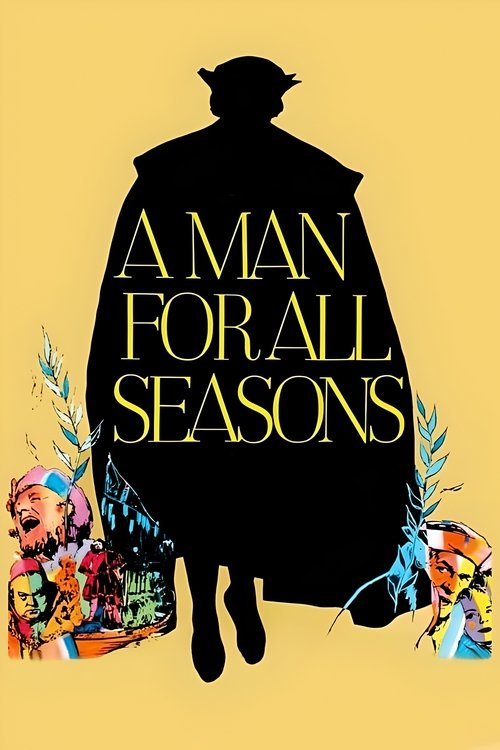
A Man for All Seasons
A depiction of the conflict between King Henry VIII of England and his Lord Chancellor, Sir Thomas More, who refuses to swear the Oath of Supremacy declaring Henry Supreme Head of the Church in England.
Despite its small-scale budget of $3.9M, A Man for All Seasons became a massive hit, earning $28.4M worldwide—a remarkable 627% return. The film's innovative storytelling resonated with audiences, demonstrating that strong storytelling can transcend budget limitations.
6 Oscars. 34 wins & 9 nominations


Plot Structure
Story beats plotted across runtime


Narrative Arc
Emotional journey through the story's key moments
Story Circle
Blueprint 15-beat structure
Arcplot Score Breakdown
Weighted: Precision (70%) + Arc (15%) + Theme (15%)
A Man for All Seasons (1966) demonstrates meticulously timed narrative design, characteristic of Fred Zinnemann's storytelling approach. This structural analysis examines how the film's 15-point plot structure maps to proven narrative frameworks across 2 hours. With an Arcplot score of 7.0, the film balances conventional beats with creative variation.
Structural Analysis
The Status Quo at 1 minutes (1% through the runtime) establishes Sir Thomas More enjoys a peaceful evening at his Chelsea home with his family, embodying the intelligent, principled man of conscience who serves as Chancellor of the Duchy of Lancaster. He is respected, comfortable, and living according to his principles.. Structural examination shows that this early placement immediately immerses viewers in the story world.
The inciting incident occurs at 15 minutes when Cardinal Wolsey summons More and demands he support the King's divorce. When More refuses to give a clear opinion supporting the King, Wolsey warns him of the danger he faces. This is the first direct pressure on More to compromise his conscience for political survival.. At 12% through the film, this Disruption aligns precisely with traditional story structure. This beat shifts the emotional landscape, launching the protagonist into the central conflict.
The First Threshold at 29 minutes marks the transition into Act II, occurring at 24% of the runtime. This shows the protagonist's commitment to More makes the active choice to resign as Lord Chancellor rather than attend the King's wedding to Anne Boleyn or sign the Act of Succession. This is his line in the sand—he will not actively support what his conscience tells him is wrong, even if it costs him everything., moving from reaction to action.
At 61 minutes, the Midpoint arrives at 50% of the runtime—precisely centered, creating perfect narrative symmetry. Significantly, this crucial beat More is summoned before Cromwell and the council, where he is formally asked to take the Oath of Supremacy acknowledging Henry as head of the Church. More refuses to explain why he won't take it, standing on his legal right to silence. This raises the stakes—false victory (he isn't arrested yet) but the battle lines are drawn. The game has changed from pressure to formal legal confrontation., fundamentally raising what's at risk. The emotional intensity shifts, dividing the narrative into clear before-and-after phases.
The Collapse moment at 90 minutes (75% through) represents the emotional nadir. Here, More is brought to trial. Despite his brilliant defense, Richard Rich gives false testimony about a private conversation, and More is found guilty of treason. The legal protection More believed in dies—the law has been corrupted and weaponized against him. He is sentenced to death., demonstrates the protagonist at their lowest point. This beat's placement in the final quarter sets up the climactic reversal.
The Second Threshold at 96 minutes initiates the final act resolution at 80% of the runtime. More achieves clarity and acceptance. Having finally spoken his truth in court, he embraces his martyrdom with dignity. His conscience is clear, and he finds spiritual victory in remaining true to himself. He is ready to face execution, having synthesized his legal mind with his moral conviction., demonstrating the transformation achieved throughout the journey.
Emotional Journey
A Man for All Seasons's emotional architecture traces a deliberate progression across 15 carefully calibrated beats.
Narrative Framework
This structural analysis employs a 15-point narrative structure framework that maps key story moments. By mapping A Man for All Seasons against these established plot points, we can identify how Fred Zinnemann utilizes or subverts traditional narrative conventions. The plot point approach reveals not only adherence to structural principles but also creative choices that distinguish A Man for All Seasons within the drama genre.
Fred Zinnemann's Structural Approach
Among the 5 Fred Zinnemann films analyzed on Arcplot, the average structural score is 7.1, reflecting strong command of classical structure. A Man for All Seasons takes a more unconventional approach compared to the director's typical style. For comparative analysis, explore the complete Fred Zinnemann filmography.
Comparative Analysis
Additional drama films include After Thomas, South Pacific and Dirty Dancing: Havana Nights. For more Fred Zinnemann analyses, see Julia, The Nun's Story and From Here to Eternity.
Plot Points by Act
Act I
SetupStatus Quo
Sir Thomas More enjoys a peaceful evening at his Chelsea home with his family, embodying the intelligent, principled man of conscience who serves as Chancellor of the Duchy of Lancaster. He is respected, comfortable, and living according to his principles.
Theme
The Duke of Norfolk tells More about the importance of practical compromise, and Richard Rich asks More about advancing in the world. More responds that Rich should be a teacher, stating "Why not be a teacher? You'd be a fine teacher. Perhaps even a great one." The theme of integrity versus ambition is established.
Worldbuilding
We are introduced to the political world of Tudor England under Henry VIII. More navigates relationships with Cardinal Wolsey, Richard Rich, the Duke of Norfolk, and his own family. The King's "great matter" (desire to divorce Catherine of Aragon) looms. More's principles and his dangerous position in a corrupt court are established.
Disruption
Cardinal Wolsey summons More and demands he support the King's divorce. When More refuses to give a clear opinion supporting the King, Wolsey warns him of the danger he faces. This is the first direct pressure on More to compromise his conscience for political survival.
Resistance
More attempts to maintain his position through silence, hoping to avoid taking a stance on the King's divorce. Wolsey dies, and Henry appoints More as Lord Chancellor. More accepts but continues to refuse to support the divorce publicly. Thomas Cromwell emerges as a new threat. More debates internally and with family about how long silence can protect him.
Act II
ConfrontationFirst Threshold
More makes the active choice to resign as Lord Chancellor rather than attend the King's wedding to Anne Boleyn or sign the Act of Succession. This is his line in the sand—he will not actively support what his conscience tells him is wrong, even if it costs him everything.
Mirror World
More's daughter Margaret represents the emotional mirror world that carries the theme. She loves her father but begs him to take the oath to save his life. Their relationship embodies the tension between love and principle, showing what More stands to lose by holding to his conscience.
Premise
More's strategy of silence is tested. He lives in reduced circumstances, refusing bribes and maintaining that silence is not consent. Various characters—Cromwell, Norfolk, his family, even the King—pressure him to take the oath. More navigates the legal and moral terrain, believing the law will protect him if he says nothing against the King's supremacy.
Midpoint
More is summoned before Cromwell and the council, where he is formally asked to take the Oath of Supremacy acknowledging Henry as head of the Church. More refuses to explain why he won't take it, standing on his legal right to silence. This raises the stakes—false victory (he isn't arrested yet) but the battle lines are drawn. The game has changed from pressure to formal legal confrontation.
Opposition
More is imprisoned in the Tower of London. His family suffers, his friends abandon him, and pressure intensifies. Richard Rich commits perjury. Margaret begs him to take the oath with mental reservation. The State closes in, manipulating laws and witnesses. More remains steadfast but increasingly isolated and weakened.
Collapse
More is brought to trial. Despite his brilliant defense, Richard Rich gives false testimony about a private conversation, and More is found guilty of treason. The legal protection More believed in dies—the law has been corrupted and weaponized against him. He is sentenced to death.
Crisis
After his conviction, More finally speaks freely, declaring the Act of Parliament contrary to God's law and acknowledging his true stance. He confronts the corruption of Rich and says his farewells to his family. He processes his fate and finds peace in his principles, preparing for death.
Act III
ResolutionSecond Threshold
More achieves clarity and acceptance. Having finally spoken his truth in court, he embraces his martyrdom with dignity. His conscience is clear, and he finds spiritual victory in remaining true to himself. He is ready to face execution, having synthesized his legal mind with his moral conviction.
Synthesis
More walks to his execution with courage and even humor, comforting the executioner. He maintains his dignity to the very end, demonstrating that the State can kill his body but not compromise his soul. The finale shows the ultimate cost of integrity and the legacy of a man who would not be broken.
Transformation
The closing titles reveal the fates of the other characters: Rich rose to power but died disgraced; Cromwell was executed by the King; the King broke with Rome. More, who lost everything, became a saint. The transformation is complete—the man who would not compromise his soul achieved eternal honor.