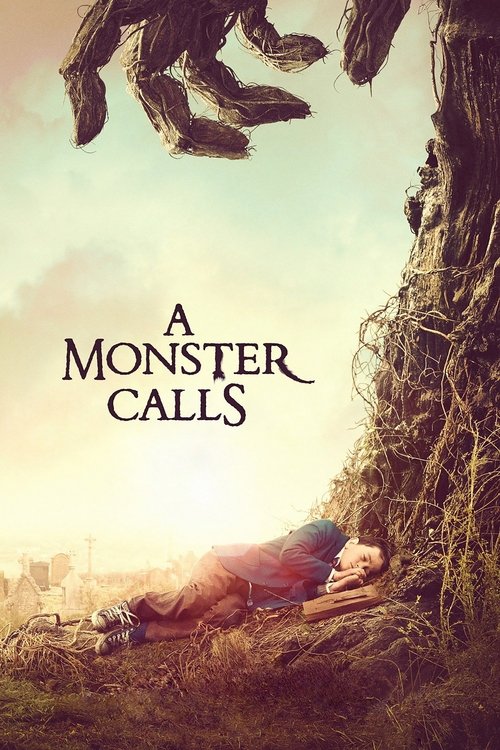
A Monster Calls
12-year-old Conor encounters an ancient tree monster who proceeds to help him cope with his mother's terminal illness and being bullied in school.
Working with a respectable budget of $43.0M, the film achieved a respectable showing with $47.3M in global revenue (+10% profit margin).
39 wins & 57 nominations


Plot Structure
Story beats plotted across runtime


Narrative Arc
Emotional journey through the story's key moments
Story Circle
Blueprint 15-beat structure
Arcplot Score Breakdown
Weighted: Precision (70%) + Arc (15%) + Theme (15%)
A Monster Calls (2016) demonstrates carefully calibrated narrative design, characteristic of J.A. Bayona's storytelling approach. This structural analysis examines how the film's 15-point plot structure maps to proven narrative frameworks across 1 hour and 48 minutes. With an Arcplot score of 7.1, the film balances conventional beats with creative variation.
Characters
Cast & narrative archetypes

Conor O'Malley
The Monster
Lizzie O'Malley
Grandma
Dad
Main Cast & Characters
Conor O'Malley
Played by Lewis MacDougall
A 12-year-old boy struggling with his mother's terminal illness, bullying, and nightmares, who is visited by a supernatural tree monster.
The Monster
Played by Liam Neeson
An ancient yew tree that comes to life to tell Conor three stories and demand the truth from him in return.
Lizzie O'Malley
Played by Felicity Jones
Conor's mother, battling terminal cancer with grace while trying to protect her son from the full weight of her condition.
Grandma
Played by Sigourney Weaver
Conor's strict and emotionally distant grandmother who must prepare to take custody of him.
Dad
Played by Toby Kebbell
Conor's father who moved to America with his new family, struggling to balance his past and present responsibilities.
Structural Analysis
The Status Quo at 1 minutes (1% through the runtime) establishes Conor jolts awake from his recurring nightmare—the churchyard crumbling, his mother's hand slipping from his grasp. He lies in bed, the weight of his hidden terror filling the silence before his daily routine of caring for his sick mother begins.. The analysis reveals that this early placement immediately immerses viewers in the story world.
The inciting incident occurs at 13 minutes when At exactly 12:07 am, the ancient yew tree in the churchyard transforms into a massive Monster that crashes through Conor's window, announcing it has come walking and will tell three stories—after which Conor must tell a fourth: his truth, the nightmare he hides.. At 12% through the film, this Disruption aligns precisely with traditional story structure. This beat shifts the emotional landscape, launching the protagonist into the central conflict.
The First Threshold at 27 minutes marks the transition into Act II, occurring at 25% of the runtime. This shows the protagonist's commitment to When the Monster returns, Conor finally agrees to listen to the first story. He makes the choice to engage with the creature rather than dismiss it, crossing from resistance into reluctant participation—a passive acceptance that will eventually require active truth-telling., moving from reaction to action.
At 54 minutes, the Midpoint arrives at 50% of the runtime—precisely centered, creating perfect narrative symmetry. Significantly, this crucial beat The experimental treatment has failed. Conor's mother will not recover—this is no longer a story of fighting cancer but of preparing for loss. The false victory of hope collapses; Conor's denial becomes unsustainable as reality intrudes on his protective fiction., fundamentally raising what's at risk. The emotional intensity shifts, dividing the narrative into clear before-and-after phases.
The Collapse moment at 81 minutes (75% through) represents the emotional nadir. Here, The nightmare plays in full: the churchyard crumbles, Conor holds his mother's hand as she dangles over the abyss—and he lets go. The terrible truth surfaces: he wanted it to be over, wanted an end to the exhausting hope and constant fear. He let her fall., shows the protagonist at their lowest point. This beat's placement in the final quarter sets up the climactic reversal.
The Second Threshold at 86 minutes initiates the final act resolution at 80% of the runtime. The Monster demands Conor speak his truth aloud. Through tears, Conor confesses: "I can't stand it anymore. I just want it to end." The Monster's response transforms everything: "That is not a sin. You merely wished to end your own suffering. That is the most human wish of all."., demonstrating the transformation achieved throughout the journey.
Emotional Journey
A Monster Calls's emotional architecture traces a deliberate progression across 15 carefully calibrated beats.
Narrative Framework
This structural analysis employs systematic plot point analysis that identifies crucial turning points. By mapping A Monster Calls against these established plot points, we can identify how J.A. Bayona utilizes or subverts traditional narrative conventions. The plot point approach reveals not only adherence to structural principles but also creative choices that distinguish A Monster Calls within the fantasy genre.
J.A. Bayona's Structural Approach
Among the 4 J.A. Bayona films analyzed on Arcplot, the average structural score is 7.3, reflecting strong command of classical structure. A Monster Calls takes a more unconventional approach compared to the director's typical style. For comparative analysis, explore the complete J.A. Bayona filmography.
Comparative Analysis
Additional fantasy films include Thinner, Ella Enchanted and Conan the Barbarian. For more J.A. Bayona analyses, see The Orphanage, The Impossible and Jurassic World: Fallen Kingdom.
Plot Points by Act
Act I
SetupStatus Quo
Conor jolts awake from his recurring nightmare—the churchyard crumbling, his mother's hand slipping from his grasp. He lies in bed, the weight of his hidden terror filling the silence before his daily routine of caring for his sick mother begins.
Theme
Conor's mother, looking through his drawings, tells him: "Stories are wild creatures... when you let them loose, who knows what havoc they might wreak?" The thematic foundation is laid: stories reveal truths we cannot otherwise face.
Worldbuilding
Conor's fractured world takes shape: his mother undergoes chemotherapy while maintaining false optimism; his estranged father lives in America with a new family; his rigid grandmother represents unwelcome change; and at school, bullies target him while he remains invisible to everyone else.
Disruption
At exactly 12:07 am, the ancient yew tree in the churchyard transforms into a massive Monster that crashes through Conor's window, announcing it has come walking and will tell three stories—after which Conor must tell a fourth: his truth, the nightmare he hides.
Resistance
Conor resists the Monster, insisting he's not afraid and doesn't need its stories. He continues his pattern of denial—assuring everyone his mother will recover, hiding his nightmare, enduring bullying silently. The Monster waits, knowing Conor is not yet ready to face his truth.
Act II
ConfrontationFirst Threshold
When the Monster returns, Conor finally agrees to listen to the first story. He makes the choice to engage with the creature rather than dismiss it, crossing from resistance into reluctant participation—a passive acceptance that will eventually require active truth-telling.
Mirror World
The Monster tells the first tale: a prince whose kingdom is stolen by his stepmother witch-queen, who is not the villain she seems. The story ends without the justice Conor expects, teaching him that humans are complicated—they can be both good and bad simultaneously.
Premise
Through watercolor-animated tales, the Monster guides Conor toward truth. A second story about an apothecary and a parson explores belief versus cynicism in healing. Conor's mother worsens; his father visits but offers no permanence; his grandmother intrudes into his life. The Monster's lessons accumulate beneath Conor's awareness.
Midpoint
The experimental treatment has failed. Conor's mother will not recover—this is no longer a story of fighting cancer but of preparing for loss. The false victory of hope collapses; Conor's denial becomes unsustainable as reality intrudes on his protective fiction.
Opposition
Conor's suppressed rage explodes outward. He destroys his grandmother's pristine living room in a Monster-fueled rampage. He beats his bully Harry mercilessly, then begs to be punished, wanting to feel something. His mother is hospitalized permanently. The third story reveals an invisible man who became visible through destruction—mirroring Conor's own desperate acts.
Collapse
The nightmare plays in full: the churchyard crumbles, Conor holds his mother's hand as she dangles over the abyss—and he lets go. The terrible truth surfaces: he wanted it to be over, wanted an end to the exhausting hope and constant fear. He let her fall.
Crisis
Conor is consumed by guilt and self-hatred for his secret wish. He believes this makes him a monster—that wanting his suffering mother's pain to end somehow means he doesn't love her. The Monster stands with him in this dark night, neither condemning nor absolving, simply present.
Act III
ResolutionSecond Threshold
The Monster demands Conor speak his truth aloud. Through tears, Conor confesses: "I can't stand it anymore. I just want it to end." The Monster's response transforms everything: "That is not a sin. You merely wished to end your own suffering. That is the most human wish of all."
Synthesis
Armed with self-forgiveness, Conor goes to his mother's hospital room. He tells her the truth—that he's afraid, that he doesn't want her to go, that he knows she will. Mother and son finally speak honestly. She gives him her childhood sketchbook, passing the torch of imagination and resilience.
Transformation
Conor opens his mother's childhood drawings to discover images of the Monster—she too was visited by the yew tree creature during her own childhood grief. He is not alone; he is part of a lineage of those who faced terrible truths through story. The Monster was always there, waiting to be needed.