The Orphanage
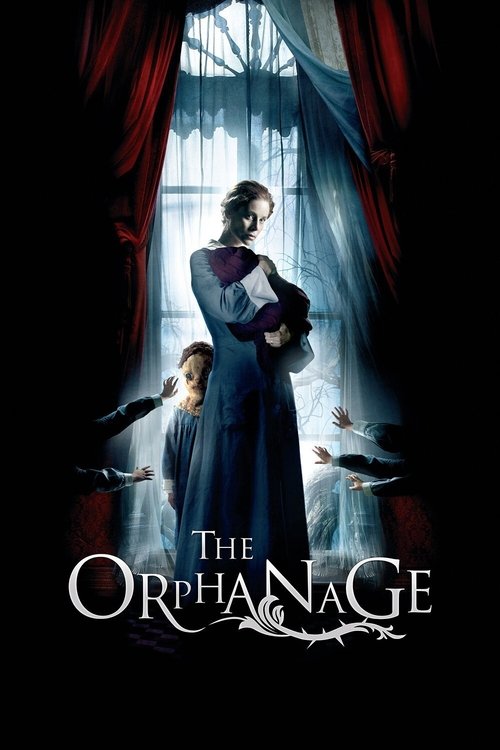
A woman brings her family back to her childhood home, which used to be an orphanage, intent on reopening it. Before long, her son starts to communicate with a new invisible friend.
Despite its small-scale budget of $3.4M, The Orphanage became a box office phenomenon, earning $78.6M worldwide—a remarkable 2213% return. The film's fresh perspective connected with viewers, confirming that strong storytelling can transcend budget limitations.
32 wins & 43 nominations


Plot Structure
Story beats plotted across runtime


Narrative Arc
Emotional journey through the story's key moments
Story Circle
Blueprint 15-beat structure
Arcplot Score Breakdown
Weighted: Precision (70%) + Arc (15%) + Theme (15%)
The Orphanage (2007) demonstrates deliberately positioned dramatic framework, characteristic of J.A. Bayona's storytelling approach. This structural analysis examines how the film's 15-point plot structure maps to proven narrative frameworks across 1 hour and 45 minutes. With an Arcplot score of 7.5, the film showcases strong structural fundamentals.
Structural Analysis
The Status Quo at 1 minutes (1% through the runtime) establishes Laura arrives with her family at the old orphanage where she grew up, now purchased to reopen as a home for disabled children. She's happy, hopeful, and ready to give back. Opening establishes her as a former orphan who found a family and now wants to help others.. Significantly, this early placement immediately immerses viewers in the story world.
The inciting incident occurs at 13 minutes when During the opening party, a strange masked child appears - Tomás. Simón becomes obsessed with this new "friend." Benigna appears uninvited and tells Laura about Simón's HIV status being discussed, suggesting she knows something. The idyllic new beginning is disrupted by the intrusion of the past.. At 12% through the film, this Disruption aligns precisely with traditional story structure. This beat shifts the emotional landscape, launching the protagonist into the central conflict.
The First Threshold at 26 minutes marks the transition into Act II, occurring at 25% of the runtime. This illustrates the protagonist's commitment to Simón vanishes during a heated argument with Laura. She searches frantically - he's gone without a trace. Laura makes the active choice to stay and search for her son rather than accept he might have run away or been taken elsewhere. She commits fully to finding him at the orphanage, entering a nightmare world of searching., moving from reaction to action.
At 53 minutes, the Midpoint arrives at 50% of the runtime—precisely centered, creating perfect narrative symmetry. Structural examination shows that this crucial beat Six months have passed - Simón is still missing. False defeat: Laura has lost everything in her search. Carlos has left her. The police investigation is cold. She's alone in the orphanage, consumed by grief and obsession. The stakes have been raised from "find my son" to "I've destroyed my entire life and still have no answers."., fundamentally raising what's at risk. The emotional intensity shifts, dividing the narrative into clear before-and-after phases.
The Collapse moment at 79 minutes (75% through) represents the emotional nadir. Here, During the séance, Laura is violently attacked by the ghost of Tomás, who pushes her. She crashes into furniture and is injured. Aurora's team flees in terror. Laura is left alone, broken, bleeding, and seemingly abandoned by both the living and the dead. Her hope of finding Simón alive appears completely dead., demonstrates the protagonist at their lowest point. This beat's placement in the final quarter sets up the climactic reversal.
The Second Threshold at 84 minutes initiates the final act resolution at 80% of the runtime. Laura has a realization: Simón's disappearance was part of an elaborate treasure hunt game he designed. She must play the game to find him. She accepts the supernatural reality and chooses to believe like a child. She gathers the clues Simón left and begins playing his game, synthesizing the adult world with a child's imagination., demonstrating the transformation achieved throughout the journey.
Emotional Journey
The Orphanage's emotional architecture traces a deliberate progression across 15 carefully calibrated beats.
Narrative Framework
This structural analysis employs systematic plot point analysis that identifies crucial turning points. By mapping The Orphanage against these established plot points, we can identify how J.A. Bayona utilizes or subverts traditional narrative conventions. The plot point approach reveals not only adherence to structural principles but also creative choices that distinguish The Orphanage within the horror genre.
J.A. Bayona's Structural Approach
Among the 4 J.A. Bayona films analyzed on Arcplot, the average structural score is 7.3, reflecting strong command of classical structure. The Orphanage represents one of the director's most structurally precise works. For comparative analysis, explore the complete J.A. Bayona filmography.
Comparative Analysis
Additional horror films include Thinner, A Nightmare on Elm Street and Mary Reilly. For more J.A. Bayona analyses, see The Impossible, A Monster Calls and Jurassic World: Fallen Kingdom.
Plot Points by Act
Act I
SetupStatus Quo
Laura arrives with her family at the old orphanage where she grew up, now purchased to reopen as a home for disabled children. She's happy, hopeful, and ready to give back. Opening establishes her as a former orphan who found a family and now wants to help others.
Theme
Benigna, the elderly social worker, tells Laura: "Some things should be left alone." This cryptic warning about disturbing the past foreshadows the film's exploration of denial, acceptance, and the consequences of refusing to let go.
Worldbuilding
Establishes Laura's family unit: husband Carlos (skeptic), adopted son Simón (HIV-positive, imaginative, has invisible friends). The orphanage's history is revealed - Laura was adopted from here. Simón plays games with imaginary friends in the old building. Laura plans a party to introduce the facility to potential families.
Disruption
During the opening party, a strange masked child appears - Tomás. Simón becomes obsessed with this new "friend." Benigna appears uninvited and tells Laura about Simón's HIV status being discussed, suggesting she knows something. The idyllic new beginning is disrupted by the intrusion of the past.
Resistance
Laura investigates the masked boy Tomás. Simón becomes increasingly attached to his invisible friends and angry when Laura doesn't believe him. Tension builds between Laura and Carlos about Simón's behavior. Laura resists believing something supernatural is happening, seeking rational explanations. Simón insists his friends are real and live in their house.
Act II
ConfrontationFirst Threshold
Simón vanishes during a heated argument with Laura. She searches frantically - he's gone without a trace. Laura makes the active choice to stay and search for her son rather than accept he might have run away or been taken elsewhere. She commits fully to finding him at the orphanage, entering a nightmare world of searching.
Mirror World
Police investigate but find nothing. Laura meets Aurora, a psychic investigator who represents belief in the spiritual world - the thematic opposite of Laura's rational denial. Aurora offers to help Laura see what she's been refusing to see: that the orphanage holds ghosts of the past.
Premise
Laura investigates Simón's disappearance, uncovering the orphanage's dark history. She learns about Tomás - a deformed child killed by other orphans decades ago. She discovers files about five children who disappeared. Carlos grows increasingly skeptical while Laura becomes more convinced supernatural forces are at play. She searches the building obsessively, following clues from Simón's games.
Midpoint
Six months have passed - Simón is still missing. False defeat: Laura has lost everything in her search. Carlos has left her. The police investigation is cold. She's alone in the orphanage, consumed by grief and obsession. The stakes have been raised from "find my son" to "I've destroyed my entire life and still have no answers."
Opposition
Laura invites Aurora and her team to conduct a séance. Supernatural activity intensifies - objects move, doors slam, ghostly children appear. Aurora channels the spirits and reveals the truth about the five orphans who were accidentally poisoned by Benigna (their caretaker). Laura's mental state deteriorates as the haunting grows more violent. The ghosts close in, showing increasing hostility.
Collapse
During the séance, Laura is violently attacked by the ghost of Tomás, who pushes her. She crashes into furniture and is injured. Aurora's team flees in terror. Laura is left alone, broken, bleeding, and seemingly abandoned by both the living and the dead. Her hope of finding Simón alive appears completely dead.
Crisis
Laura sits in darkness, processing her trauma and loss. She contemplates suicide, holding pills. In her darkest moment, she reflects on Simón's games and stories. She begins to understand that she must play by the rules of a child's world, not an adult's rational one.
Act III
ResolutionSecond Threshold
Laura has a realization: Simón's disappearance was part of an elaborate treasure hunt game he designed. She must play the game to find him. She accepts the supernatural reality and chooses to believe like a child. She gathers the clues Simón left and begins playing his game, synthesizing the adult world with a child's imagination.
Synthesis
Laura plays Simón's treasure hunt game, following clues through the house. She finds the hidden room behind the bathroom where Simón has been trapped. She discovers him dead - he died shortly after disappearing, unable to escape. In devastating clarity, Laura realizes the ghost children were trying to help her find him all along. She holds his body and makes a final choice: to stay with him.
Transformation
Laura takes pills to join Simón in death. In the final image, we see her playing happily with Simón and the five ghost children - she has become their eternal caretaker. The orphanage she wanted to create has manifested in the spiritual realm. The closing mirrors the opening's hope, but transformed: she found her purpose not in life but in death, finally accepting and embracing what she couldn't see before.