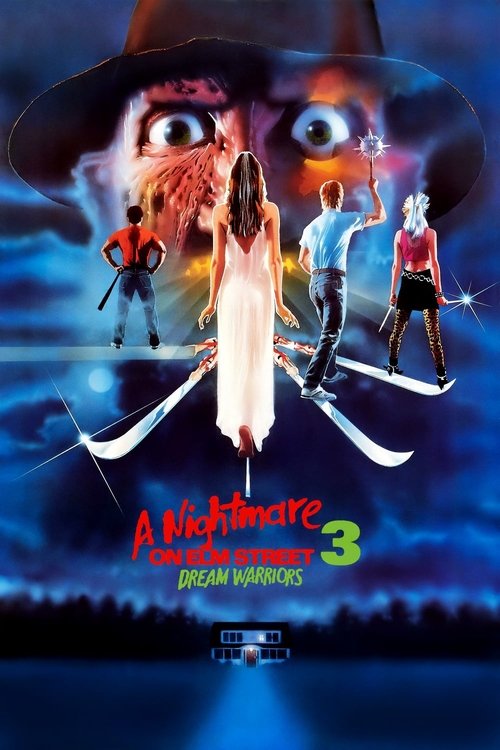
A Nightmare on Elm Street 3: Dream Warriors
A psychiatrist, familiar with the knife-wielding dream demon Freddy Krueger, helps teens at a mental hospital battle the killer who is invading their dreams.
Despite its small-scale budget of $4.5M, A Nightmare on Elm Street 3: Dream Warriors became a commercial juggernaut, earning $44.8M worldwide—a remarkable 907% return. The film's unique voice engaged audiences, demonstrating that strong storytelling can transcend budget limitations.
1 win & 4 nominations


Plot Structure
Story beats plotted across runtime


Narrative Arc
Emotional journey through the story's key moments
Story Circle
Blueprint 15-beat structure
Arcplot Score Breakdown
Weighted: Precision (70%) + Arc (15%) + Theme (15%)
A Nightmare on Elm Street 3: Dream Warriors (1987) demonstrates meticulously timed story structure, characteristic of Chuck Russell's storytelling approach. This structural analysis examines how the film's 15-point plot structure maps to proven narrative frameworks across 1 hour and 36 minutes. With an Arcplot score of 7.4, the film balances conventional beats with creative variation.
Characters
Cast & narrative archetypes

Kristen Parker
Nancy Thompson
Freddy Krueger
Dr. Neil Gordon
Kincaid
Joey
Taryn
Will
Jennifer
Phillip
Main Cast & Characters
Kristen Parker
Played by Patricia Arquette
A suicidal teenager with dream powers who can pull others into her dreams, becoming the group's spiritual leader against Freddy.
Nancy Thompson
Played by Heather Langenkamp
Survivor from the first film who returns as a dream researcher and therapist to help the Elm Street children fight Freddy.
Freddy Krueger
Played by Robert Englund
The burned child killer who stalks and murders teenagers in their dreams, seeking revenge on the Elm Street children.
Dr. Neil Gordon
Played by Craig Wasson
A compassionate psychiatrist who believes in Nancy's theories and helps the teens fight Freddy while uncovering his mother's secret.
Kincaid
Played by Ken Sagoes
A tough, angry teen with super strength in dreams who becomes a protective force for the group.
Joey
Played by Rodney Eastman
A mute teen who finds his voice in dreams and develops romantic feelings for a nurse.
Taryn
Played by Jennifer Rubin
A former drug addict who gains knife-fighting abilities in her dreams.
Will
Played by Ira Heiden
A wheelchair-bound teen and Dungeons & Dragons enthusiast who becomes a powerful wizard in dreams.
Jennifer
Played by Penelope Sudrow
An aspiring actress who dreams of stardom but is manipulated by her television obsession.
Phillip
Played by Bradley Gregg
A quiet artist who creates puppets and is tragically manipulated like a marionette by Freddy.
Structural Analysis
The Status Quo at 1 minutes (1% through the runtime) establishes Kristen Parker, a terrified teenage girl, wanders through a dark boiler room in her nightmare, hunted by Freddy Krueger. She tries desperately to stay awake using coffee and craft materials, establishing the protagonist's world of fear and isolation.. The analysis reveals that this early placement immediately immerses viewers in the story world.
The inciting incident occurs at 11 minutes when Phillip is killed by Freddy in a nightmare where he's turned into a human marionette and walked off the hospital roof. His death appears to be suicide, forcing the authorities to increase sedation on the remaining teens. The stakes become life and death.. At 12% through the film, this Disruption aligns precisely with traditional story structure. This beat shifts the emotional landscape, launching the protagonist into the central conflict.
The First Threshold at 24 minutes marks the transition into Act II, occurring at 25% of the runtime. This shows the protagonist's commitment to Kristen pulls Nancy into her dream during group therapy. Nancy witnesses Freddy's reality firsthand. Together they discover Kristen's power: she can pull others into her dreams. Nancy makes the active choice to use this ability to fight Freddy, organizing the teens into the "Dream Warriors" to battle him collectively rather than alone., moving from reaction to action.
At 46 minutes, the Midpoint arrives at 48% of the runtime—precisely centered, creating perfect narrative symmetry. Of particular interest, this crucial beat The Dream Warriors enter the dreamworld together for their first coordinated assault on Freddy's boiler room. They fight as a team, seemingly gaining the upper hand. They rescue Joey from Freddy's clutches. This false victory makes them believe they can defeat Freddy through unity and their newfound powers. Stakes are raised - Freddy now knows they can fight back., fundamentally raising what's at risk. The emotional intensity shifts, dividing the narrative into clear before-and-after phases.
The Collapse moment at 69 minutes (72% through) represents the emotional nadir. Here, Nancy confronts Freddy to save Kristen but is fatally wounded, stabbed through the stomach. The mentor dies protecting her students. Nancy's death represents the loss of hope and experience - the one person who had defeated Freddy before is gone. The whiff of death is literal and devastating., reveals the protagonist at their lowest point. This beat's placement in the final quarter sets up the climactic reversal.
The Second Threshold at 76 minutes initiates the final act resolution at 80% of the runtime. The Dream Warriors synthesize Nancy's teaching with their own powers. They realize the two-pronged solution: consecrate Freddy's bones in the real world (Dr. Gordon) while defeating him in the dream world (the teens). They coordinate the final assault, combining both dimensions. Will discovers his power as the Wizard Master can guide them., demonstrating the transformation achieved throughout the journey.
Emotional Journey
A Nightmare on Elm Street 3: Dream Warriors's emotional architecture traces a deliberate progression across 15 carefully calibrated beats.
Narrative Framework
This structural analysis employs proven narrative structure principles that track dramatic progression. By mapping A Nightmare on Elm Street 3: Dream Warriors against these established plot points, we can identify how Chuck Russell utilizes or subverts traditional narrative conventions. The plot point approach reveals not only adherence to structural principles but also creative choices that distinguish A Nightmare on Elm Street 3: Dream Warriors within the horror genre.
Chuck Russell's Structural Approach
Among the 5 Chuck Russell films analyzed on Arcplot, the average structural score is 6.8, demonstrating varied approaches to story architecture. A Nightmare on Elm Street 3: Dream Warriors represents one of the director's most structurally precise works. For comparative analysis, explore the complete Chuck Russell filmography.
Comparative Analysis
Additional horror films include Thinner, A Nightmare on Elm Street and Mary Reilly. For more Chuck Russell analyses, see The Mask, The Scorpion King and Bless the Child.
Plot Points by Act
Act I
SetupStatus Quo
Kristen Parker, a terrified teenage girl, wanders through a dark boiler room in her nightmare, hunted by Freddy Krueger. She tries desperately to stay awake using coffee and craft materials, establishing the protagonist's world of fear and isolation.
Theme
Nancy Thompson states to the Westin Hills staff: "The only way to beat him is to not be afraid." This encapsulates the film's central theme - conquering fear through collective courage and belief in one's own power.
Worldbuilding
Introduction to Westin Hills Psychiatric Hospital where the last Elm Street children are institutionalized. We meet the Dream Warriors ensemble: Joey (mute), Kincaid (angry), Phillip (puppet-maker), Jennifer (aspiring actress), Will (wheelchair-bound D&D master), and Taryn (former addict). Dr. Neil Gordon and Nancy Thompson (now a dream researcher) join the staff. The teens are misdiagnosed as suicidal, but they're being murdered in their dreams by Freddy Krueger.
Disruption
Phillip is killed by Freddy in a nightmare where he's turned into a human marionette and walked off the hospital roof. His death appears to be suicide, forcing the authorities to increase sedation on the remaining teens. The stakes become life and death.
Resistance
Nancy tries to convince Dr. Gordon and the staff that Freddy is real, but is met with skepticism. She teaches the teens about Freddy's history and works to help them understand their dream powers. Group therapy sessions reveal their shared trauma. Dr. Simms dismisses Nancy's theories. Nancy reconnects with her father, Lt. Thompson, learning that Freddy's remains were never properly buried.
Act II
ConfrontationFirst Threshold
Kristen pulls Nancy into her dream during group therapy. Nancy witnesses Freddy's reality firsthand. Together they discover Kristen's power: she can pull others into her dreams. Nancy makes the active choice to use this ability to fight Freddy, organizing the teens into the "Dream Warriors" to battle him collectively rather than alone.
Mirror World
Dr. Neil Gordon begins his own investigation into Freddy's past, meeting Sister Mary Helena (actually Amanda Krueger, Freddy's mother). She represents the thematic mirror - faith, redemption, and the power of proper burial/resolution. She tells Neil about Freddy's conception ("the bastard son of a hundred maniacs") and guides him toward finding Freddy's remains.
Premise
The Dream Warriors discover and develop their dream powers: Kincaid has super strength, Joey can scream powerfully, Taryn becomes a punk warrior, Will is the Wizard Master. They train together, learning to weaponize their imaginations. Jennifer is killed by Freddy through a TV ("This is it, Jennifer, your big break in TV!"). The group bonds and plans their assault on Freddy. Nancy and her father search for Freddy's unmarked grave at the junkyard.
Midpoint
The Dream Warriors enter the dreamworld together for their first coordinated assault on Freddy's boiler room. They fight as a team, seemingly gaining the upper hand. They rescue Joey from Freddy's clutches. This false victory makes them believe they can defeat Freddy through unity and their newfound powers. Stakes are raised - Freddy now knows they can fight back.
Opposition
Dr. Simms, refusing to believe, continues heavy sedation protocols. Freddy adapts, exploiting individual weaknesses. Taryn is killed (injected with drugs from Freddy's needle-fingers, preying on her addiction). Lt. Thompson is killed investigating the junkyard. Freddy's attacks become more vicious and personal. The hospital staff turns against Nancy. Dr. Gordon finds Freddy's hidden grave and begins the consecration ritual with holy water.
Collapse
Nancy confronts Freddy to save Kristen but is fatally wounded, stabbed through the stomach. The mentor dies protecting her students. Nancy's death represents the loss of hope and experience - the one person who had defeated Freddy before is gone. The whiff of death is literal and devastating.
Crisis
The remaining Dream Warriors (Kristen, Kincaid, Joey, Will) process Nancy's death and their darkest fears. They realize they must finish what Nancy started. Will returns to his wheelchair in despair. Meanwhile, Dr. Gordon continues the burial ritual at the grave site, representing the external solution parallel to the dream battle.
Act III
ResolutionSecond Threshold
The Dream Warriors synthesize Nancy's teaching with their own powers. They realize the two-pronged solution: consecrate Freddy's bones in the real world (Dr. Gordon) while defeating him in the dream world (the teens). They coordinate the final assault, combining both dimensions. Will discovers his power as the Wizard Master can guide them.
Synthesis
The finale cross-cuts between Dr. Gordon consecrating Freddy's remains at the junkyard and the Dream Warriors' battle in the dreamworld. Kristen uses her full power to become acrobatic and agile. Kincaid uses his strength. Joey finds his voice. Will/Wizard Master casts spells. When Gordon completes the burial, Freddy begins to dissolve. The Dream Warriors finish him with a stake through the chest. Freddy is defeated through the combination of proper burial (solving the past) and collective courage (the teens' growth).
Transformation
The surviving Dream Warriors (Kristen, Kincaid, Joey, Will) stand together in the hospital garden, no longer isolated and afraid. They place Nancy's name on a memorial stone. Where the Status Quo showed Kristen alone and terrified, the Transformation shows the group unified, empowered, and healing. They have conquered fear through friendship and belief in themselves.