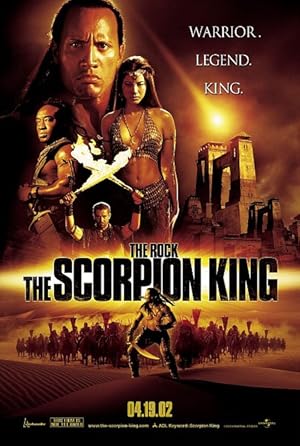
The Scorpion King
In ancient Gomorrah, thousands of years before the Pyramids, the remaining free nomadic tribes are forced to form an uneasy alliance to put an end to mighty King Memnon's reign of tyranny. One of the few survivors and the last of the Akkadians, the brave assassin, Mathayus, is entrusted with the impossible task of executing Memnon's fortune-telling sorceress, Cassandra, only to find himself up against a seemingly indestructible evil army. Now, with the help of his new powerful allies, including the great warrior, Balthazar, Mathayus returns to the legendary city to infiltrate Memnon's impenetrable fortress in the desert and exact his revenge. Is Mathayus destined to be the next Scorpion King?
Despite a respectable budget of $60.0M, The Scorpion King became a financial success, earning $165.3M worldwide—a 176% return.
2 wins & 4 nominations


Plot Structure
Story beats plotted across runtime


Narrative Arc
Emotional journey through the story's key moments
Story Circle
Blueprint 15-beat structure
Arcplot Score Breakdown
Weighted: Precision (70%) + Arc (15%) + Theme (15%)
The Scorpion King (2002) reveals meticulously timed plot construction, characteristic of Chuck Russell's storytelling approach. This structural analysis examines how the film's 15-point plot structure maps to proven narrative frameworks across 1 hour and 32 minutes. With an Arcplot score of 6.7, the film balances conventional beats with creative variation.
Structural Analysis
The Status Quo at 1 minutes (1% through the runtime) establishes Opening narration establishes the ancient world where warlord Memnon conquers kingdoms using his sorceress's visions. Mathayus is introduced as one of the last surviving Akkadian assassins, living as a mercenary in a brutal era of tribal warfare.. Of particular interest, this early placement immediately immerses viewers in the story world.
The inciting incident occurs at 12 minutes when Mathayus's mission is betrayed. His brother Jesup is captured and executed by Memnon's forces, shot with arrows and left to die. This personal tragedy transforms a mercenary job into a quest for vengeance.. At 13% through the film, this Disruption is delayed, allowing extended setup of the story world. This beat shifts the emotional landscape, launching the protagonist into the central conflict.
The First Threshold at 23 minutes marks the transition into Act II, occurring at 25% of the runtime. This shows the protagonist's commitment to Mathayus makes the choice to kidnap Cassandra instead of killing her, seeing her as leverage against Memnon. This active decision commits him to a larger conflict than simple assassination - he's now declared war on the most powerful warlord in the land., moving from reaction to action.
At 47 minutes, the Midpoint arrives at 51% of the runtime—precisely centered, creating perfect narrative symmetry. Structural examination shows that this crucial beat False victory: Mathayus and Cassandra consummate their relationship in a cave hideout. Their union seems to promise a new future, and the rebel tribes rally behind Mathayus. But this romantic interlude uses Cassandra's power, which Memnon can track., fundamentally raising what's at risk. The emotional intensity shifts, dividing the narrative into clear before-and-after phases.
The Collapse moment at 70 minutes (76% through) represents the emotional nadir. Here, Mathayus learns Cassandra has been recaptured and will be executed at dawn for her betrayal. His mentor figure Philos has been captured. The rebel alliance has crumbled. Everything Mathayus fought for seems lost - a whiff of death hangs over all his hopes., reveals the protagonist at their lowest point. This beat's placement in the final quarter sets up the climactic reversal.
The Second Threshold at 75 minutes initiates the final act resolution at 82% of the runtime. Mathayus declares he will attack Gomorrah alone if necessary. The scattered rebels reunite behind him. He synthesizes his assassin skills with newfound purpose as a leader. "I make my own destiny" - he embraces Cassandra's prophecy on his own terms., demonstrating the transformation achieved throughout the journey.
Emotional Journey
The Scorpion King's emotional architecture traces a deliberate progression across 15 carefully calibrated beats.
Narrative Framework
This structural analysis employs a 15-point narrative structure framework that maps key story moments. By mapping The Scorpion King against these established plot points, we can identify how Chuck Russell utilizes or subverts traditional narrative conventions. The plot point approach reveals not only adherence to structural principles but also creative choices that distinguish The Scorpion King within the action genre.
Chuck Russell's Structural Approach
Among the 5 Chuck Russell films analyzed on Arcplot, the average structural score is 6.8, demonstrating varied approaches to story architecture. The Scorpion King takes a more unconventional approach compared to the director's typical style. For comparative analysis, explore the complete Chuck Russell filmography.
Comparative Analysis
Additional action films include The Bad Guys, Puss in Boots and Venom: The Last Dance. For more Chuck Russell analyses, see The Mask, A Nightmare on Elm Street 3: Dream Warriors and Bless the Child.
Plot Points by Act
Act I
SetupStatus Quo
Opening narration establishes the ancient world where warlord Memnon conquers kingdoms using his sorceress's visions. Mathayus is introduced as one of the last surviving Akkadian assassins, living as a mercenary in a brutal era of tribal warfare.
Theme
The tribal leaders tell Mathayus that "a man's destiny is written by his own hand" - establishing the thematic question of whether fate can be changed and whether one man can alter the course of history through his choices.
Worldbuilding
The world of ancient Gomorrah is established: Memnon's army conquers through the sorceress Cassandra's prophecies, tribal leaders unite to hire Akkadian assassins to kill her, and Mathayus accepts the mission with his brother Jesup and fellow warrior Rama.
Disruption
Mathayus's mission is betrayed. His brother Jesup is captured and executed by Memnon's forces, shot with arrows and left to die. This personal tragedy transforms a mercenary job into a quest for vengeance.
Resistance
Mathayus is captured and buried alive in the desert with fire ants, but escapes. He stalks Memnon's camp, debates whether to simply kill the sorceress or use her. He encounters Arpid, a horse thief who becomes his reluctant guide to Gomorrah.
Act II
ConfrontationFirst Threshold
Mathayus makes the choice to kidnap Cassandra instead of killing her, seeing her as leverage against Memnon. This active decision commits him to a larger conflict than simple assassination - he's now declared war on the most powerful warlord in the land.
Mirror World
Cassandra reveals she is a prisoner, not Memnon's ally. She tells Mathayus of a vision showing him as a great king. Their relationship shifts from captor/captive to potential allies, introducing the romantic subplot that will transform them both.
Premise
Mathayus and Cassandra journey through the desert, evading Memnon's forces. They encounter the scientist Philos, find refuge with rebel tribes, and Mathayus begins to embrace his role as potential liberator. Action sequences showcase his warrior skills and growing legend.
Midpoint
False victory: Mathayus and Cassandra consummate their relationship in a cave hideout. Their union seems to promise a new future, and the rebel tribes rally behind Mathayus. But this romantic interlude uses Cassandra's power, which Memnon can track.
Opposition
Memnon's assassin Takmet attacks the rebel camp. Cassandra is recaptured to protect Mathayus. Memnon consolidates power and prepares for final conquest. Mathayus's allies are scattered, and his quest seems doomed as the enemy closes in from all sides.
Collapse
Mathayus learns Cassandra has been recaptured and will be executed at dawn for her betrayal. His mentor figure Philos has been captured. The rebel alliance has crumbled. Everything Mathayus fought for seems lost - a whiff of death hangs over all his hopes.
Crisis
Mathayus faces his darkest hour alone in the desert. Arpid finds him and delivers an impassioned speech about how the people need a leader. Mathayus must choose between fleeing to safety or mounting an impossible assault on Memnon's fortress.
Act III
ResolutionSecond Threshold
Mathayus declares he will attack Gomorrah alone if necessary. The scattered rebels reunite behind him. He synthesizes his assassin skills with newfound purpose as a leader. "I make my own destiny" - he embraces Cassandra's prophecy on his own terms.
Synthesis
The climactic assault on Gomorrah. Mathayus infiltrates the palace using his assassin skills while rebels attack the gates. He rescues Cassandra moments before her execution, duels Memnon on the rooftop, and finally defeats him with a legendary arrow shot.
Transformation
Mathayus stands before the people as the new king of Gomorrah, with Cassandra at his side. The lone assassin who sought only vengeance has become the legendary Scorpion King - a ruler who writes his own destiny rather than accepting fate.