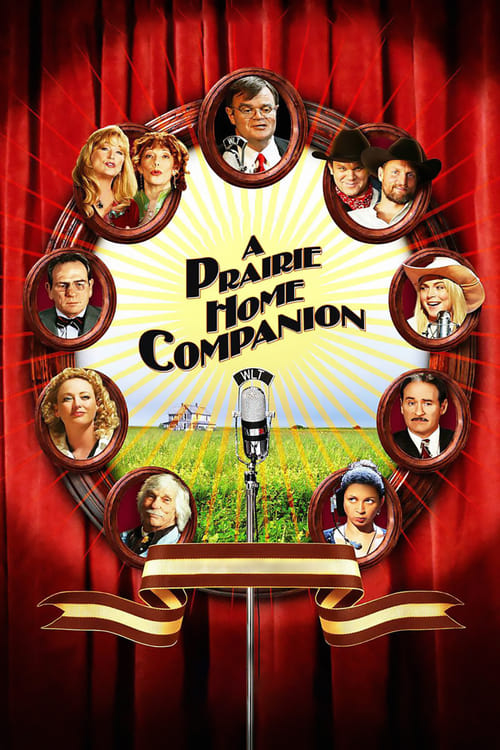
A Prairie Home Companion
A look at what goes on backstage during the last broadcast of America's most celebrated radio show, where singing cowboys Dusty and Lefty, a country music siren, and a host of others hold court.
Despite its small-scale budget of $10.0M, A Prairie Home Companion became a solid performer, earning $26.0M worldwide—a 160% return.
5 wins & 21 nominations


Plot Structure
Story beats plotted across runtime


Narrative Arc
Emotional journey through the story's key moments
Story Circle
Blueprint 15-beat structure
Arcplot Score Breakdown
Weighted: Precision (70%) + Arc (15%) + Theme (15%)
A Prairie Home Companion (2006) reveals precise narrative architecture, characteristic of Robert Altman's storytelling approach. This structural analysis examines how the film's 15-point plot structure maps to proven narrative frameworks across 1 hour and 45 minutes. With an Arcplot score of 6.6, the film balances conventional beats with creative variation.
Characters
Cast & narrative archetypes

Yolanda Johnson
Rhonda Johnson
Dusty
Lefty
Garrison Keillor (GK)
Guy Noir
Lola Johnson
The Dangerous Woman
Main Cast & Characters
Yolanda Johnson
Played by Meryl Streep
Singing partner in the Johnson Sisters duo, witty and world-weary performer on the final night of the radio show.
Rhonda Johnson
Played by Lily Tomlin
Yolanda's younger sister and singing partner, more optimistic and emotionally open than her sibling.
Dusty
Played by Woody Harrelson
One half of the cowboy duo, sings risqué songs and carries deep nostalgia for the old days of radio.
Lefty
Played by John C. Reilly
Dusty's singing partner, equally bawdy and devoted to preserving their comedy-western act.
Garrison Keillor (GK)
Played by Garrison Keillor
Host and creator of A Prairie Home Companion, calm storyteller who guides the show through its final broadcast.
Guy Noir
Played by Kevin Kline
Private eye character and stage manager, grounded problem-solver who keeps the show running backstage.
Lola Johnson
Played by Lindsay Lohan
Rhonda's rebellious daughter, aspiring poet who performs dark spoken-word pieces about suicide.
The Dangerous Woman
Played by Virginia Madsen
Mysterious woman in a white trench coat who appears throughout the show, seemingly an angel of death.
Structural Analysis
The Status Quo at 1 minutes (1% through the runtime) establishes The Fitzgerald Theater in St. Paul on a rainy night, with the familiar red neon sign glowing as performers and crew arrive for what appears to be another regular broadcast of A Prairie Home Companion.. Of particular interest, this early placement immediately immerses viewers in the story world.
The inciting incident occurs at 13 minutes when The Axeman, a representative from the Texas conglomerate that bought the theater, arrives to oversee the final broadcast. The show has been cancelled and the building will be torn down.. At 12% through the film, this Disruption aligns precisely with traditional story structure. This beat shifts the emotional landscape, launching the protagonist into the central conflict.
The First Threshold at 26 minutes marks the transition into Act II, occurring at 25% of the runtime. This illustrates the protagonist's commitment to Despite knowing this is the end, the cast commits fully to giving the audience one last great show. GK declares they'll go out the way they came in - with a song and a smile., moving from reaction to action.
At 53 minutes, the Midpoint arrives at 50% of the runtime—precisely centered, creating perfect narrative symmetry. The analysis reveals that this crucial beat Chuck Akers, the elderly singing cowboy, collapses and dies backstage. The Dangerous Woman reveals herself as an angel of death. Death has entered the theater literally, not just metaphorically., fundamentally raising what's at risk. The emotional intensity shifts, dividing the narrative into clear before-and-after phases.
The Collapse moment at 79 minutes (75% through) represents the emotional nadir. Here, GK confronts the reality that nothing can save the show. The Angel's presence intensifies as she seems drawn toward another performer. The weight of multiple endings - the show, an era, a life - converges., shows the protagonist at their lowest point. This beat's placement in the final quarter sets up the climactic reversal.
The Second Threshold at 84 minutes initiates the final act resolution at 80% of the runtime. Rather than taking another performer, the Angel turns her attention to the Axeman. In a twist of poetic justice, the corporate executioner becomes Death's next appointment, killed in a car accident after leaving the theater., demonstrating the transformation achieved throughout the journey.
Emotional Journey
A Prairie Home Companion's emotional architecture traces a deliberate progression across 15 carefully calibrated beats.
Narrative Framework
This structural analysis employs structural analysis methodology used to understand storytelling architecture. By mapping A Prairie Home Companion against these established plot points, we can identify how Robert Altman utilizes or subverts traditional narrative conventions. The plot point approach reveals not only adherence to structural principles but also creative choices that distinguish A Prairie Home Companion within the drama genre.
Robert Altman's Structural Approach
Among the 10 Robert Altman films analyzed on Arcplot, the average structural score is 6.9, demonstrating varied approaches to story architecture. A Prairie Home Companion takes a more unconventional approach compared to the director's typical style. For comparative analysis, explore the complete Robert Altman filmography.
Comparative Analysis
Additional drama films include After Thomas, South Pacific and Dirty Dancing: Havana Nights. For more Robert Altman analyses, see Cookie's Fortune, Dr. T & the Women and Nashville.
Plot Points by Act
Act I
SetupStatus Quo
The Fitzgerald Theater in St. Paul on a rainy night, with the familiar red neon sign glowing as performers and crew arrive for what appears to be another regular broadcast of A Prairie Home Companion.
Theme
Guy Noir muses in voiceover about endings and the passage of time, establishing the film's meditation on mortality, nostalgia, and the ephemeral nature of live performance.
Worldbuilding
Introduction to the colorful ensemble of performers: Yolanda and Rhonda Johnson, Dusty and Lefty the singing cowboys, host GK, and private eye Guy Noir who handles security. The backstage chaos and onstage warmth of the radio show world is established.
Disruption
The Axeman, a representative from the Texas conglomerate that bought the theater, arrives to oversee the final broadcast. The show has been cancelled and the building will be torn down.
Resistance
The performers learn this is their last show but choose to continue with grace. GK refuses to make an announcement. The mysterious Dangerous Woman in a white trench coat begins appearing, unnoticed by most but sensed by some.
Act II
ConfrontationFirst Threshold
Despite knowing this is the end, the cast commits fully to giving the audience one last great show. GK declares they'll go out the way they came in - with a song and a smile.
Mirror World
Lola Johnson, Yolanda's estranged daughter, arrives backstage seeking connection with her mother. Her presence introduces the parallel theme of family reconciliation against the larger story of saying goodbye.
Premise
The broadcast unfolds with musical performances, comedy sketches, and backstage drama. Yolanda and Rhonda perform their harmonies, Dusty and Lefty tell bad jokes, and Guy Noir tries to figure out who the mysterious woman in white is.
Midpoint
Chuck Akers, the elderly singing cowboy, collapses and dies backstage. The Dangerous Woman reveals herself as an angel of death. Death has entered the theater literally, not just metaphorically.
Opposition
The show continues despite Chuck's death, honoring the tradition that the show must go on. The Angel lingers, seeming to select her next soul. The Axeman grows impatient while performers process their grief through performance.
Collapse
GK confronts the reality that nothing can save the show. The Angel's presence intensifies as she seems drawn toward another performer. The weight of multiple endings - the show, an era, a life - converges.
Crisis
A quiet moment of reflection backstage as performers contemplate what comes next. Yolanda and Lola have a tentative reconciliation. The ensemble faces the void that awaits after the final curtain.
Act III
ResolutionSecond Threshold
Rather than taking another performer, the Angel turns her attention to the Axeman. In a twist of poetic justice, the corporate executioner becomes Death's next appointment, killed in a car accident after leaving the theater.
Synthesis
The final broadcast concludes with all performers joining for a last number. Goodbyes are said with humor and grace. The ensemble embraces the ending as part of life's natural rhythm, finding peace in shared memory and music.
Transformation
The empty Fitzgerald Theater after the broadcast, the stage dark but somehow still alive with echoes of decades of performances. The show has ended, but its spirit persists in all who experienced it.