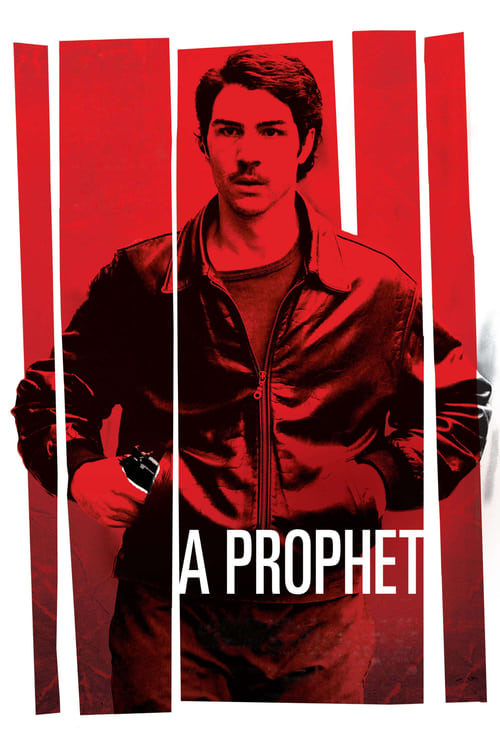
A Prophet
Sentenced to six years in prison, Malik El Djebena is alone in the world and can neither read nor write. On his arrival at the prison, he seems younger and more brittle than the others detained there. At once he falls under the sway of a group of Corsicans who enforce their rule in the prison. As the 'missions' go by, he toughens himself and wins the confidence of the Corsican group.
Working with a modest budget of $13.0M, the film achieved a steady performer with $17.9M in global revenue (+37% profit margin).
Nominated for 1 Oscar. 52 wins & 57 nominations


Plot Structure
Story beats plotted across runtime


Narrative Arc
Emotional journey through the story's key moments
Story Circle
Blueprint 15-beat structure
Arcplot Score Breakdown
Weighted: Precision (70%) + Arc (15%) + Theme (15%)
A Prophet (2009) exhibits deliberately positioned plot construction, characteristic of Jacques Audiard's storytelling approach. This structural analysis examines how the film's 15-point plot structure maps to proven narrative frameworks across 2 hours and 35 minutes. With an Arcplot score of 7.3, the film balances conventional beats with creative variation.
Characters
Cast & narrative archetypes

Malik El Djebena
César Luciani
Reyeb
Ryad
Lattrache
Main Cast & Characters
Malik El Djebena
Played by Tahar Rahim
A young illiterate Arab man sentenced to six years in prison who transforms into a cunning criminal operator through survival and manipulation.
César Luciani
Played by Niels Arestrup
The aging Corsican crime boss who rules the prison and forcibly recruits Malik as his hitman and errand boy.
Reyeb
Played by Hichem Yacoubi
A fellow Arab inmate and Muslim prisoner who Malik is forced to murder early in his sentence, haunting him throughout.
Ryad
Played by Adel Bencherif
A fellow Arab inmate who becomes Malik's friend, confidant, and business partner in the drug trade.
Lattrache
Played by Reda Kateb
An influential Arab crime figure outside prison who becomes Malik's connection to the Muslim criminal network.
Structural Analysis
The Status Quo at 1 minutes (1% through the runtime) establishes Nineteen-year-old Malik El Djebena arrives at prison, illiterate and alone, stripped and processed into the system. He is a blank slate, powerless and disconnected from any community.. Notably, this early placement immediately immerses viewers in the story world.
The inciting incident occurs at 19 minutes when César forces Malik to murder Reyeb, a fellow Muslim prisoner, or face death himself. Malik has no choice—he must kill or be killed. His innocence is about to end.. At 13% through the film, this Disruption is delayed, allowing extended setup of the story world. This beat shifts the emotional landscape, launching the protagonist into the central conflict.
The First Threshold at 39 minutes marks the transition into Act II, occurring at 25% of the runtime. This shows the protagonist's commitment to Malik murders Reyeb in a brutal, desperate act. Blood soaks his clothes. He crosses into a new identity: he is now a killer, bound to César and the Corsicans. His old self dies with his victim., moving from reaction to action.
At 78 minutes, the Midpoint arrives at 50% of the runtime—precisely centered, creating perfect narrative symmetry. The analysis reveals that this crucial beat During a day release, Malik successfully completes an independent drug deal, pocketing money for himself. He realizes he can play both sides—serving César while building his own empire. He has agency now., fundamentally raising what's at risk. The emotional intensity shifts, dividing the narrative into clear before-and-after phases.
The Collapse moment at 116 minutes (75% through) represents the emotional nadir. Here, Malik's friend Ryad is murdered because of their criminal activities. Death comes close to Malik again, reminding him of the cost of this life. He is alone once more, the price of power revealed., reveals the protagonist at their lowest point. This beat's placement in the final quarter sets up the climactic reversal.
The Second Threshold at 124 minutes initiates the final act resolution at 80% of the runtime. Malik realizes César is now powerless—isolated and dependent on him. Malik has become the prophet the title promised: he has foreseen his rise and now acts on it. He chooses to build his own criminal empire on his own terms., demonstrating the transformation achieved throughout the journey.
Emotional Journey
A Prophet's emotional architecture traces a deliberate progression across 15 carefully calibrated beats.
Narrative Framework
This structural analysis employs systematic plot point analysis that identifies crucial turning points. By mapping A Prophet against these established plot points, we can identify how Jacques Audiard utilizes or subverts traditional narrative conventions. The plot point approach reveals not only adherence to structural principles but also creative choices that distinguish A Prophet within the crime genre.
Jacques Audiard's Structural Approach
Among the 3 Jacques Audiard films analyzed on Arcplot, the average structural score is 7.4, reflecting strong command of classical structure. A Prophet takes a more unconventional approach compared to the director's typical style. For comparative analysis, explore the complete Jacques Audiard filmography.
Comparative Analysis
Additional crime films include The Bad Guys, Rustom and The Whole Ten Yards. For more Jacques Audiard analyses, see Rust and Bone, The Sisters Brothers.
Plot Points by Act
Act I
SetupStatus Quo
Nineteen-year-old Malik El Djebena arrives at prison, illiterate and alone, stripped and processed into the system. He is a blank slate, powerless and disconnected from any community.
Theme
A Corsican prisoner tells Malik, "In here, you're either with the Corsicans or the Muslims. You're Arab, but you're not with them." The film's central question: who will Malik become when forced to choose?
Worldbuilding
Malik navigates the brutal hierarchy of prison life. He learns the Corsican mob, led by César Luciani, controls everything. Malik is isolated, unable to read or write, and completely vulnerable in this world of violence and tribal loyalty.
Disruption
César forces Malik to murder Reyeb, a fellow Muslim prisoner, or face death himself. Malik has no choice—he must kill or be killed. His innocence is about to end.
Resistance
Malik resists internally but knows he has no options. He fashions a crude blade and rehearses the murder. The Corsicans coach him. He is terrified but trapped, preparing for an act that will define him.
Act II
ConfrontationFirst Threshold
Malik murders Reyeb in a brutal, desperate act. Blood soaks his clothes. He crosses into a new identity: he is now a killer, bound to César and the Corsicans. His old self dies with his victim.
Mirror World
Reyeb's ghost begins appearing to Malik, a haunting presence that represents his conscience and his Arab identity. This supernatural connection becomes Malik's moral compass as he navigates deeper into the criminal world.
Premise
Malik becomes César's errand boy, running drugs and messages. He learns to read and write. He earns day releases and begins building his own network, secretly meeting with Muslim prisoners. He is learning the game, becoming smarter and more powerful.
Midpoint
During a day release, Malik successfully completes an independent drug deal, pocketing money for himself. He realizes he can play both sides—serving César while building his own empire. He has agency now.
Opposition
César's power wanes as Corsican inmates are transferred out. Malik secretly builds alliances with Muslim and other Arab prisoners. César grows suspicious and threatened. The power dynamic shifts, but Malik must hide his growing strength.
Collapse
Malik's friend Ryad is murdered because of their criminal activities. Death comes close to Malik again, reminding him of the cost of this life. He is alone once more, the price of power revealed.
Crisis
Malik mourns Ryad and contemplates his path. He has become powerful but at tremendous cost. He must decide whether to continue serving César or to fully embrace his own identity and leadership.
Act III
ResolutionSecond Threshold
Malik realizes César is now powerless—isolated and dependent on him. Malik has become the prophet the title promised: he has foreseen his rise and now acts on it. He chooses to build his own criminal empire on his own terms.
Synthesis
Malik orchestrates the assassination of César's enemies while consolidating control over the Muslim prisoners. He outmaneuvers everyone. Upon release, he walks out as a made man, a criminal leader with a network waiting for him outside.
Transformation
Malik walks out of prison surrounded by his loyal crew—cars waiting, men showing respect. He has transformed from an illiterate, powerless boy into a self-made criminal leader. He has become the prophet of his own destiny.