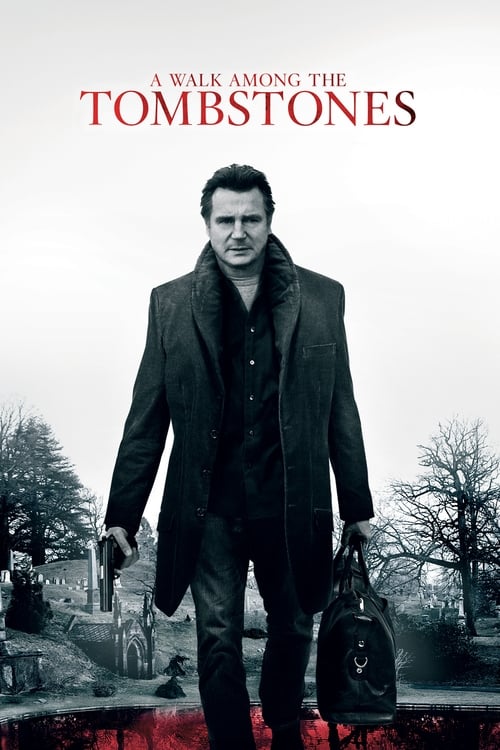
A Walk Among the Tombstones
Private investigator Matthew Scudder is hired by a drug kingpin to find out who kidnapped and murdered his wife.
Despite a respectable budget of $28.0M, A Walk Among the Tombstones became a commercial success, earning $58.8M worldwide—a 110% return.


Plot Structure
Story beats plotted across runtime


Narrative Arc
Emotional journey through the story's key moments
Story Circle
Blueprint 15-beat structure
Arcplot Score Breakdown
Weighted: Precision (70%) + Arc (15%) + Theme (15%)
A Walk Among the Tombstones (2014) demonstrates precise narrative design, characteristic of Scott Frank's storytelling approach. This structural analysis examines how the film's 15-point plot structure maps to proven narrative frameworks across 1 hour and 54 minutes. With an Arcplot score of 6.3, the film takes an unconventional approach to traditional narrative frameworks.
Characters
Cast & narrative archetypes

Matt Scudder
TJ
Kenny Kristo
Ray
Albert
Peter Kristo
Yuri Landau
Lucia
Main Cast & Characters
Matt Scudder
Played by Liam Neeson
A former NYPD detective turned unlicensed private investigator, haunted by a past shooting incident that killed a young girl. Now sober and attending AA meetings, he takes on a case hunting serial killers who target drug traffickers' wives.
TJ
Played by Brian 'Astro' Bradley
A streetwise homeless teenager with sickle cell disease who befriends Scudder and assists him with research. He becomes Scudder's unofficial partner and protégé.
Kenny Kristo
Played by Dan Stevens
A drug trafficker whose wife Carrie was kidnapped and murdered by the killers despite paying the ransom. He hires Scudder to find and stop the men responsible.
Ray
Played by David Harbour
One of two psychopathic serial killers who targets and brutalizes women connected to drug dealers. He is the more dominant and sadistic of the pair.
Albert
Played by Adam David Thompson
The second serial killer, a quieter but equally dangerous partner to Ray. He handles much of the technical aspects of their crimes.
Peter Kristo
Played by Boyd Holbrook
Kenny's brother, also involved in the drug trade. His stepdaughter Lucia becomes a target of the killers.
Yuri Landau
Played by Sebastian Roche
A Russian drug trafficker whose daughter was previously victimized by the same killers. He provides Scudder with crucial information about the kidnappers.
Lucia
Played by Danielle Rose Russell
Peter Kristo's stepdaughter who is kidnapped by Ray and Albert, becoming the catalyst for the film's climactic confrontation.
Structural Analysis
The Status Quo at 1 minutes (1% through the runtime) establishes 1991 flashback: Detective Matt Scudder drinks in a bar before a violent shootout erupts, establishing him as a damaged man who operates in moral gray zones and uses lethal force.. The analysis reveals that this early placement immediately immerses viewers in the story world.
The inciting incident occurs at 14 minutes when Peter Kristo, a fellow AA member, asks Scudder to meet his brother Kenny, a drug trafficker whose wife was kidnapped, ransomed, and brutally murdered despite payment. The horror of the crime disrupts Scudder's quiet existence.. At 12% through the film, this Disruption aligns precisely with traditional story structure. This beat shifts the emotional landscape, launching the protagonist into the central conflict.
The First Threshold at 29 minutes marks the transition into Act II, occurring at 25% of the runtime. This illustrates the protagonist's commitment to Scudder agrees to take the case after seeing photos of what the killers did to Carrie. He makes the active choice to pursue justice for a murdered woman, crossing into a world of serial predators., moving from reaction to action.
At 57 minutes, the Midpoint arrives at 50% of the runtime—precisely centered, creating perfect narrative symmetry. Significantly, this crucial beat Scudder discovers the killers have struck again - another woman has been kidnapped. The case transforms from investigating a past murder to a race against time to save a current victim, raising the stakes dramatically., fundamentally raising what's at risk. The emotional intensity shifts, dividing the narrative into clear before-and-after phases.
The Collapse moment at 86 minutes (75% through) represents the emotional nadir. Here, The killers capture TJ, using him as leverage. Scudder's surrogate son is now in mortal danger, representing his greatest failure and deepest fear - that his involvement has condemned an innocent child., reveals the protagonist at their lowest point. This beat's placement in the final quarter sets up the climactic reversal.
The Second Threshold at 91 minutes initiates the final act resolution at 80% of the runtime. Scudder coordinates with Kenny and organizes the ransom exchange at the cemetery. He synthesizes everything he's learned about the killers' methods to plan a counter-operation, choosing to confront evil directly., demonstrating the transformation achieved throughout the journey.
Emotional Journey
A Walk Among the Tombstones's emotional architecture traces a deliberate progression across 15 carefully calibrated beats.
Narrative Framework
This structural analysis employs structural analysis methodology used to understand storytelling architecture. By mapping A Walk Among the Tombstones against these established plot points, we can identify how Scott Frank utilizes or subverts traditional narrative conventions. The plot point approach reveals not only adherence to structural principles but also creative choices that distinguish A Walk Among the Tombstones within the crime genre.
Scott Frank's Structural Approach
Among the 2 Scott Frank films analyzed on Arcplot, the average structural score is 7.0, reflecting strong command of classical structure. A Walk Among the Tombstones takes a more unconventional approach compared to the director's typical style. For comparative analysis, explore the complete Scott Frank filmography.
Comparative Analysis
Additional crime films include The Bad Guys, Rustom and The Whole Ten Yards. For more Scott Frank analyses, see The Lookout.
Plot Points by Act
Act I
SetupStatus Quo
1991 flashback: Detective Matt Scudder drinks in a bar before a violent shootout erupts, establishing him as a damaged man who operates in moral gray zones and uses lethal force.
Theme
At an AA meeting, a speaker discusses making amends and confronting past sins. The theme of redemption and whether a broken man can find salvation through helping others is introduced.
Worldbuilding
We see Scudder's new life in 1999 as a sober, unlicensed PI who attends AA meetings. His world of quiet isolation is established alongside the dark underbelly of New York's criminal element.
Disruption
Peter Kristo, a fellow AA member, asks Scudder to meet his brother Kenny, a drug trafficker whose wife was kidnapped, ransomed, and brutally murdered despite payment. The horror of the crime disrupts Scudder's quiet existence.
Resistance
Scudder debates taking the case, initially refusing to help a drug dealer. He investigates the murder scene, learns the gruesome details of Carrie's death, and wrestles with whether to involve himself in this darkness.
Act II
ConfrontationFirst Threshold
Scudder agrees to take the case after seeing photos of what the killers did to Carrie. He makes the active choice to pursue justice for a murdered woman, crossing into a world of serial predators.
Mirror World
Scudder meets TJ, a homeless teenage street kid with sickle cell disease who frequents the library. TJ becomes Scudder's unlikely partner, representing the possibility of human connection and redemption.
Premise
Scudder investigates using old-school detective methods. He discovers this wasn't the killers' first victim, visits the DEA, tracks down previous cases, and uncovers a pattern of targeting criminals' loved ones.
Midpoint
Scudder discovers the killers have struck again - another woman has been kidnapped. The case transforms from investigating a past murder to a race against time to save a current victim, raising the stakes dramatically.
Opposition
The killers Ray and Albert begin targeting Scudder. The investigation becomes increasingly dangerous as Scudder gets closer. Another victim, Lucia, is taken, and Scudder must work against the clock.
Collapse
The killers capture TJ, using him as leverage. Scudder's surrogate son is now in mortal danger, representing his greatest failure and deepest fear - that his involvement has condemned an innocent child.
Crisis
Scudder faces the consequences of his choices. With TJ's life at stake, he must confront whether his methods and his past sins have led to this moment. He prepares for a final confrontation.
Act III
ResolutionSecond Threshold
Scudder coordinates with Kenny and organizes the ransom exchange at the cemetery. He synthesizes everything he's learned about the killers' methods to plan a counter-operation, choosing to confront evil directly.
Synthesis
The tense cemetery showdown unfolds during Y2K eve. Scudder and Kenny execute their plan, confronting the killers Ray and Albert in a violent climax among the tombstones as the world counts down to a new millennium.
Transformation
TJ survives and moves in with Scudder, who has found purpose through human connection. The final image shows Scudder at an AA meeting, now with eight years sober and someone to protect - a man transformed through service to others.