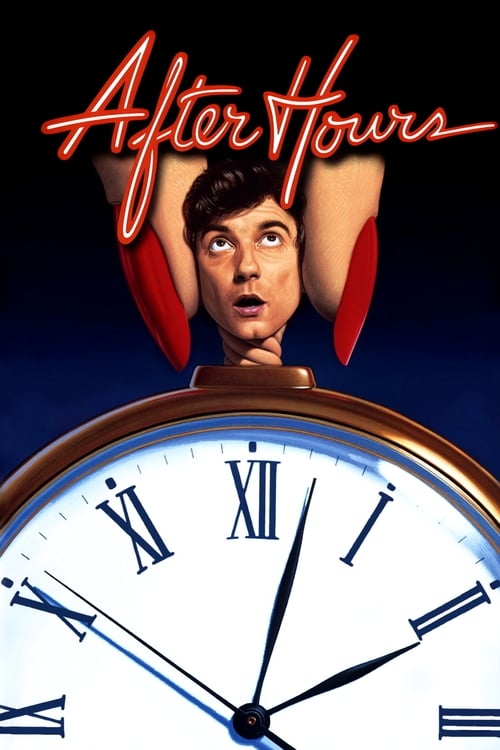
After Hours
Desperate to escape his mind-numbing routine, uptown Manhattan office worker Paul Hackett ventures downtown for a hookup with a mystery woman.
Despite its tight budget of $4.5M, After Hours became a financial success, earning $10.6M worldwide—a 136% return.
Nominated for 1 BAFTA Award3 wins & 10 nominations


Plot Structure
Story beats plotted across runtime


Narrative Arc
Emotional journey through the story's key moments
Story Circle
Blueprint 15-beat structure
Arcplot Score Breakdown
Weighted: Precision (70%) + Arc (15%) + Theme (15%)
After Hours (1985) demonstrates deliberately positioned story structure, characteristic of Martin Scorsese's storytelling approach. This structural analysis examines how the film's 15-point plot structure maps to proven narrative frameworks across 1 hour and 37 minutes. With an Arcplot score of 7.1, the film balances conventional beats with creative variation.
Characters
Cast & narrative archetypes

Paul Hackett
Marcy Franklin
Kiki Bridges
Julie
Gail
June
Tom the Bartender
Neil
Main Cast & Characters
Paul Hackett
Played by Griffin Dunne
A word processor who ventures into SoHo for a date and experiences a nightmarish series of misadventures trying to get home.
Marcy Franklin
Played by Rosanna Arquette
A mysterious woman Paul meets in a coffee shop who invites him to her SoHo loft, setting the night's chaos in motion.
Kiki Bridges
Played by Linda Fiorentino
Marcy's roommate, a sculptor working on papier-mâché figures who becomes one of Paul's encounters during his surreal night.
Julie
Played by Teri Garr
A waitress at a diner who offers Paul temporary refuge and romantic interest during his desperate night.
Gail
Played by Catherine O'Hara
An ice cream truck driver with a punk aesthetic who picks up Paul and becomes obsessed with him.
June
Played by Verna Bloom
A woman in a nightclub who Paul encounters, initially seeming to offer help but adding to his confusion.
Tom the Bartender
Played by John Heard
A bartender at Club Berlin who Paul turns to for help and advice during his ordeal.
Neil
Played by Cheech Marin
A Mohawked punk who initially seems threatening but ends up helping Paul.
Structural Analysis
The Status Quo at 1 minutes (1% through the runtime) establishes Paul Hackett works late at his boring data entry job in Midtown Manhattan, representing his mundane, controlled, predictable existence before the chaos.. Notably, this early placement immediately immerses viewers in the story world.
The inciting incident occurs at 11 minutes when Paul's $20 bill flies out of the cab window on his way to SoHo, leaving him stranded downtown with insufficient money to get home - the catalyst that traps him in the nightmare.. At 11% through the film, this Disruption aligns precisely with traditional story structure. This beat shifts the emotional landscape, launching the protagonist into the central conflict.
The First Threshold at 25 minutes marks the transition into Act II, occurring at 26% of the runtime. This illustrates the protagonist's commitment to Paul decides to leave Marcy's apartment and actively chooses to navigate SoHo alone to find a way home, committing himself to the nightmarish odyssey through downtown Manhattan., moving from reaction to action.
At 49 minutes, the Midpoint arrives at 50% of the runtime—precisely centered, creating perfect narrative symmetry. Notably, this crucial beat Paul discovers Marcy has committed suicide, raising the stakes from inconvenience to life and death, and he becomes a murder suspect - the night transforms from absurd to genuinely dangerous., fundamentally raising what's at risk. The emotional intensity shifts, dividing the narrative into clear before-and-after phases.
The Collapse moment at 72 minutes (74% through) represents the emotional nadir. Here, Paul is encased in papier-mâché by the artists, literally trapped and immobilized - a symbolic death as he becomes a lifeless art object, stripped of agency and identity., demonstrates the protagonist at their lowest point. This beat's placement in the final quarter sets up the climactic reversal.
The Second Threshold at 79 minutes initiates the final act resolution at 82% of the runtime. The sculpture falls from the burglar's van, breaking open and freeing Paul - rebirth from his symbolic death, giving him one final chance to escape the nightmare., demonstrating the transformation achieved throughout the journey.
Emotional Journey
After Hours's emotional architecture traces a deliberate progression across 15 carefully calibrated beats.
Narrative Framework
This structural analysis employs a 15-point narrative structure framework that maps key story moments. By mapping After Hours against these established plot points, we can identify how Martin Scorsese utilizes or subverts traditional narrative conventions. The plot point approach reveals not only adherence to structural principles but also creative choices that distinguish After Hours within the comedy genre.
Martin Scorsese's Structural Approach
Among the 18 Martin Scorsese films analyzed on Arcplot, the average structural score is 6.0, showcasing experimental approaches to narrative form. After Hours represents one of the director's most structurally precise works. For comparative analysis, explore the complete Martin Scorsese filmography.
Comparative Analysis
Additional comedy films include The Bad Guys, Ella Enchanted and The Evening Star. For more Martin Scorsese analyses, see Casino, Killers of the Flower Moon and Silence.
Plot Points by Act
Act I
SetupStatus Quo
Paul Hackett works late at his boring data entry job in Midtown Manhattan, representing his mundane, controlled, predictable existence before the chaos.
Theme
At the coffee shop, Marcy tells Paul about her chaotic downtown life and says "That sounds like you've had quite a night" - foreshadowing the theme of losing control and descending into absurdist nightmare.
Worldbuilding
Paul meets Marcy at the coffee shop, gets her number, and we establish his uptight personality, desire for connection, and the contrast between his sterile uptown world and the bohemian downtown SoHo.
Disruption
Paul's $20 bill flies out of the cab window on his way to SoHo, leaving him stranded downtown with insufficient money to get home - the catalyst that traps him in the nightmare.
Resistance
Paul arrives at Marcy's loft, meets her strange roommate Kiki, experiences increasingly bizarre interactions, and debates whether to stay or try to get home despite having no money.
Act II
ConfrontationFirst Threshold
Paul decides to leave Marcy's apartment and actively chooses to navigate SoHo alone to find a way home, committing himself to the nightmarish odyssey through downtown Manhattan.
Mirror World
Paul meets June, the waitress at the Club Berlin, who represents another potential connection and guide through this surreal world - she offers help but is equally caught in downtown's chaos.
Premise
Paul ricochets through SoHo encountering increasingly bizarre characters and situations - the punk club, the ice cream truck, bizarre art installations - experiencing the promise of surreal black comedy chaos.
Midpoint
Paul discovers Marcy has committed suicide, raising the stakes from inconvenience to life and death, and he becomes a murder suspect - the night transforms from absurd to genuinely dangerous.
Opposition
The neighborhood turns against Paul as he's mistaken for a burglar; vigilante mobs form, every escape route closes, every person he meets either threatens or abandons him - the city becomes actively hostile.
Collapse
Paul is encased in papier-mâché by the artists, literally trapped and immobilized - a symbolic death as he becomes a lifeless art object, stripped of agency and identity.
Crisis
Paul sits entombed in the sculpture, helpless as burglars steal him, experiencing total loss of control and contemplating his fate as a literal object rather than a person.
Act III
ResolutionSecond Threshold
The sculpture falls from the burglar's van, breaking open and freeing Paul - rebirth from his symbolic death, giving him one final chance to escape the nightmare.
Synthesis
Paul emerges from the broken sculpture at dawn and makes his way through the now-quiet streets back toward his normal world uptown.
Transformation
Paul arrives back at his office building at dawn, sitting at his desk exactly where he started - but he's been through hell, suggesting nothing has changed yet everything has changed. The cycle may begin again.