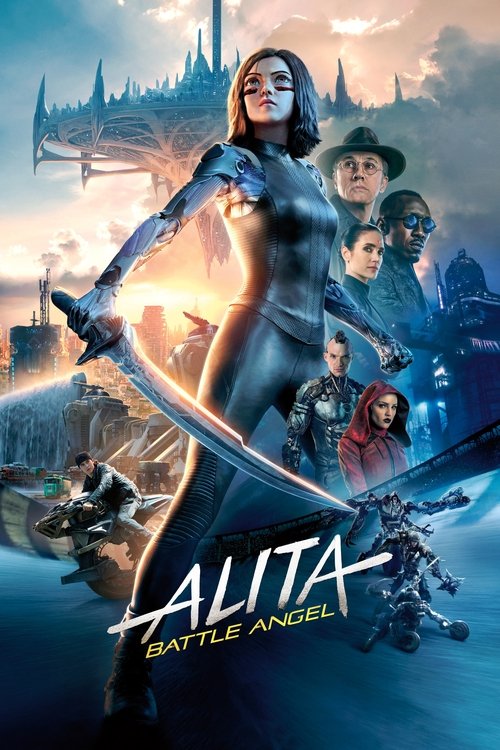
Alita: Battle Angel
A deactivated cyborg's revived, but can't remember anything of her past and goes on a quest to find out who she is.
Despite a major studio investment of $170.0M, Alita: Battle Angel became a financial success, earning $405.0M worldwide—a 138% return. This commercial performance validated the ambitious narrative scope, proving that audiences embrace unconventional structure even at blockbuster scale.
10 wins & 25 nominations


Plot Structure
Story beats plotted across runtime


Narrative Arc
Emotional journey through the story's key moments
Story Circle
Blueprint 15-beat structure
Characters
Cast & narrative archetypes

Alita
Dr. Dyson Ido
Hugo
Chiren
Vector
Zapan
Grewishka
Nova
Main Cast & Characters
Alita
Played by Rosa Salazar
A cyborg warrior who awakens with no memory of her past, discovering her extraordinary combat abilities and seeking her identity.
Dr. Dyson Ido
Played by Christoph Waltz
A compassionate cyber-surgeon who discovers and rebuilds Alita, becoming her surrogate father figure.
Hugo
Played by Keean Johnson
A young scavenger and street-smart dreamer who becomes Alita's romantic interest and guide to Iron City.
Chiren
Played by Jennifer Connelly
Dr. Ido's estranged ex-wife and a skilled cyber-surgeon working for Vector, conflicted between ambition and maternal instinct.
Vector
Played by Mahershala Ali
A powerful and manipulative businessman who controls Motorball and serves as a puppet for higher powers.
Zapan
Played by Ed Skrein
An arrogant and vain hunter-warrior who becomes Alita's rival after she humiliates him.
Grewishka
Played by Jackie Earle Haley
A massive cyborg enforcer loyal to Vector, seeking revenge against Alita for past defeats.
Nova
Played by Edward Norton
The mysterious scientist from Zalem who manipulates events in Iron City from above.
Structural Analysis
The Status Quo at 1 minutes (1% through the runtime) establishes Dr. Ido discovers Alita's core in the scrapyard - a cyborg body discarded and forgotten, establishing the broken world of Iron City beneath the floating Zalem.. Structural examination shows that this early placement immediately immerses viewers in the story world.
The inciting incident occurs at 14 minutes when Alita witnesses Ido fighting cyborg criminals as a Hunter-Warrior and discovers the brutal violence of Iron City, shattering her innocent view of the world.. At 12% through the film, this Disruption aligns precisely with traditional story structure. This beat shifts the emotional landscape, launching the protagonist into the central conflict.
The First Threshold at 30 minutes marks the transition into Act II, occurring at 25% of the runtime. This reveals the protagonist's commitment to Alita actively chooses to fight when she confronts Grewishka in the bar alley, declaring herself a warrior despite having no memory of her past - accepting her combat nature., moving from reaction to action.
At 62 minutes, the Midpoint arrives at 51% of the runtime—precisely centered, creating perfect narrative symmetry. Significantly, this crucial beat False victory: Alita dominates the Motorball tryouts with spectacular success, seemingly proving she can achieve anything. The stakes raise as Vector takes notice and sees her as a threat., fundamentally raising what's at risk. The emotional intensity shifts, dividing the narrative into clear before-and-after phases.
The Collapse moment at 91 minutes (75% through) represents the emotional nadir. Here, Hugo is killed - falling from the tube to Zalem, cut down by the ring defense system. Alita loses the person who represented hope and dreams, witnessing his literal death., demonstrates the protagonist at their lowest point. This beat's placement in the final quarter sets up the climactic reversal.
The Second Threshold at 99 minutes initiates the final act resolution at 81% of the runtime. Alita realizes she must fight the system itself, not just its symptoms. She decides to win the Motorball championship to reach Zalem and confront Nova directly - synthesizing warrior skills with purpose., demonstrating the transformation achieved throughout the journey.
Emotional Journey
Alita: Battle Angel's emotional architecture traces a deliberate progression across 15 carefully calibrated beats.
Narrative Framework
This structural analysis employs systematic plot point analysis that identifies crucial turning points. By mapping Alita: Battle Angel against these established plot points, we can identify how Robert Rodriguez utilizes or subverts traditional narrative conventions. The plot point approach reveals not only adherence to structural principles but also creative choices that distinguish Alita: Battle Angel within the action genre.
Robert Rodriguez's Structural Approach
Among the 14 Robert Rodriguez films analyzed on Arcplot, the average structural score is 7.3, reflecting strong command of classical structure. Alita: Battle Angel exemplifies the director's characteristic narrative technique. For comparative analysis, explore the complete Robert Rodriguez filmography.
Comparative Analysis
Additional action films include The Bad Guys, Puss in Boots and Venom: The Last Dance. For more Robert Rodriguez analyses, see Spy Kids: All the Time in the World, Spy Kids 3-D: Game Over and From Dusk Till Dawn.
Plot Points by Act
Act I
SetupStatus Quo
Dr. Ido discovers Alita's core in the scrapyard - a cyborg body discarded and forgotten, establishing the broken world of Iron City beneath the floating Zalem.
Theme
Ido tells newly awakened Alita: "You don't need to remember your past to know who you are" - stating the film's central theme about identity and self-determination.
Worldbuilding
Alita awakens with no memories and explores Iron City with childlike wonder, learning about the dystopian class system, Motorball, Hunter-Warriors, and the unreachable paradise of Zalem above.
Disruption
Alita witnesses Ido fighting cyborg criminals as a Hunter-Warrior and discovers the brutal violence of Iron City, shattering her innocent view of the world.
Resistance
Alita wants to become a Hunter-Warrior but Ido refuses. She meets Hugo who shows her Motorball and dreams of Zalem. She discovers combat abilities within herself but struggles with her identity.
Act II
ConfrontationFirst Threshold
Alita actively chooses to fight when she confronts Grewishka in the bar alley, declaring herself a warrior despite having no memory of her past - accepting her combat nature.
Mirror World
Alita and Hugo's romance deepens as he takes her to his secret spot - the crashed ship. He represents the thematic mirror: someone also trying to transcend their circumstances and reach for something greater.
Premise
Alita embraces her warrior identity: training in Panzer Kunst, receiving her Berserker body, becoming a Hunter-Warrior, and entering the Motorball tryouts - the "fun and games" of watching her kick ass.
Midpoint
False victory: Alita dominates the Motorball tryouts with spectacular success, seemingly proving she can achieve anything. The stakes raise as Vector takes notice and sees her as a threat.
Opposition
Forces close in: Alita discovers Hugo is a "jacker" stealing cyborg parts for Vector. Vector sends assassins after her. Alita learns the truth about Zalem's exploitation and Vector's control through Nova.
Collapse
Hugo is killed - falling from the tube to Zalem, cut down by the ring defense system. Alita loses the person who represented hope and dreams, witnessing his literal death.
Crisis
Alita grieves Hugo's death and processes her loss. She confronts the darkness of the world and her inability to save everyone she loves despite all her power.
Act III
ResolutionSecond Threshold
Alita realizes she must fight the system itself, not just its symptoms. She decides to win the Motorball championship to reach Zalem and confront Nova directly - synthesizing warrior skills with purpose.
Synthesis
The Final Championship: Alita dominates the Motorball game, defeating all opponents with a combination of combat skill and strategic thinking, earning her spot as champion and the right to face the true enemy.
Transformation
Alita stands in the Motorball arena, points her sword at Zalem/Nova above, declaring war - transformed from an innocent girl with no memory into a warrior who has chosen her own identity and purpose.