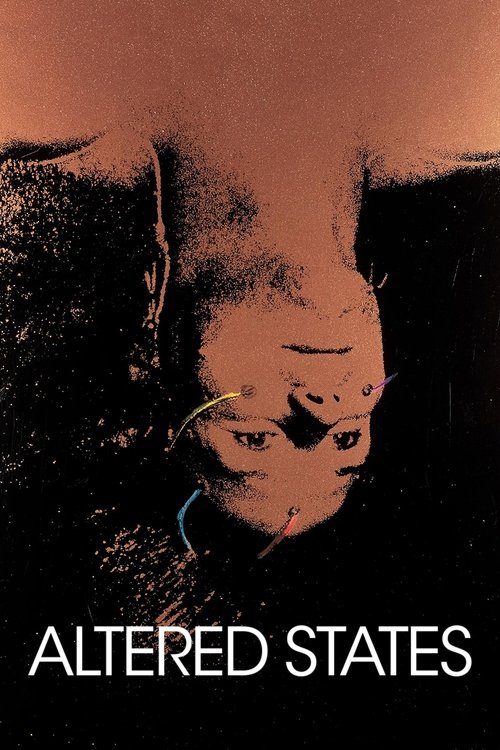
Altered States
A research scientist explores the boundaries and frontiers of consciousness. Using sensory deprivation and hallucinogenic mixtures from native American shamans, he explores these altered states of consciousness and finds that memory, time, and perhaps reality itself are states of mind.
Working with a moderate budget of $15.0M, the film achieved a steady performer with $19.9M in global revenue (+32% profit margin).
Nominated for 2 Oscars. 1 win & 7 nominations


Plot Structure
Story beats plotted across runtime


Narrative Arc
Emotional journey through the story's key moments
Story Circle
Blueprint 15-beat structure
Arcplot Score Breakdown
Weighted: Precision (70%) + Arc (15%) + Theme (15%)
Altered States (1980) demonstrates deliberately positioned narrative design, characteristic of Ken Russell's storytelling approach. This structural analysis examines how the film's 15-point plot structure maps to proven narrative frameworks across 1 hour and 42 minutes. With an Arcplot score of 7.0, the film balances conventional beats with creative variation.
Characters
Cast & narrative archetypes

Eddie Jessup

Emily Jessup

Arthur Rosenberg
Mason Parrish
Main Cast & Characters
Eddie Jessup
Played by William Hurt
A brilliant but obsessive scientist who uses sensory deprivation and hallucinogenic drugs to explore human consciousness, pushing experimentation to dangerous extremes.
Emily Jessup
Played by Blair Brown
Eddie's wife, a physical anthropologist torn between her love for Eddie and her concern for his increasingly reckless experiments.
Arthur Rosenberg
Played by Bob Balaban
Eddie's colleague and friend, a more cautious scientist who assists with the experiments while growing increasingly alarmed by their direction.
Mason Parrish
Played by Charles Haid
Eddie's research partner and friend who participates in the isolation tank experiments and tries to ground Eddie in reality.
Structural Analysis
The Status Quo at 1 minutes (1% through the runtime) establishes Eddie Jessup in isolation tank experiment, obsessively seeking truth through altered consciousness. His status quo is one of intellectual obsession and emotional detachment.. The analysis reveals that this early placement immediately immerses viewers in the story world.
The inciting incident occurs at 13 minutes when Eddie experiences profound visions in the isolation tank that convince him there are deeper states of consciousness to access. This validates his theories and drives him to go further.. At 13% through the film, this Disruption is delayed, allowing extended setup of the story world. This beat shifts the emotional landscape, launching the protagonist into the central conflict.
The First Threshold at 25 minutes marks the transition into Act II, occurring at 25% of the runtime. This illustrates the protagonist's commitment to Eddie actively chooses to travel to Mexico to obtain sacred mushroom compound from indigenous shaman, deliberately crossing into more dangerous experimentation territory despite having a family., moving from reaction to action.
At 50 minutes, the Midpoint arrives at 50% of the runtime—precisely centered, creating perfect narrative symmetry. Of particular interest, this crucial beat Eddie physically transforms into a primitive proto-human state during experiment, escaping the lab and killing a security guard at the zoo. False victory becomes real danger: he's actually changing, not just hallucinating., fundamentally raising what's at risk. The emotional intensity shifts, dividing the narrative into clear before-and-after phases.
The Collapse moment at 76 minutes (74% through) represents the emotional nadir. Here, Eddie regresses to primordial pre-human consciousness and begins dissolving into pure energy/nothingness. He's losing his physical form and identity entirely—the ultimate "death" of self in pursuit of absolute truth., demonstrates the protagonist at their lowest point. This beat's placement in the final quarter sets up the climactic reversal.
The Second Threshold at 81 minutes initiates the final act resolution at 80% of the runtime. Emily's voice calling him back provides the realization: human love and connection are the truth that matters. Eddie chooses to return from the void, synthesizing his quest for truth with acceptance of love., demonstrating the transformation achieved throughout the journey.
Emotional Journey
Altered States's emotional architecture traces a deliberate progression across 15 carefully calibrated beats.
Narrative Framework
This structural analysis employs proven narrative structure principles that track dramatic progression. By mapping Altered States against these established plot points, we can identify how Ken Russell utilizes or subverts traditional narrative conventions. The plot point approach reveals not only adherence to structural principles but also creative choices that distinguish Altered States within the horror genre.
Ken Russell's Structural Approach
Among the 2 Ken Russell films analyzed on Arcplot, the average structural score is 7.3, reflecting strong command of classical structure. Altered States takes a more unconventional approach compared to the director's typical style. For comparative analysis, explore the complete Ken Russell filmography.
Comparative Analysis
Additional horror films include Thinner, A Nightmare on Elm Street and Mary Reilly. For more Ken Russell analyses, see The Devils.
Plot Points by Act
Act I
SetupStatus Quo
Eddie Jessup in isolation tank experiment, obsessively seeking truth through altered consciousness. His status quo is one of intellectual obsession and emotional detachment.
Theme
Arthur Rosenberg warns Eddie: "You're a terrifyingly serious man, Eddie. The implications of that are staggering." Theme of dangerous obsession with truth at the cost of human connection.
Worldbuilding
Establishment of Eddie's research world, his relationships with colleagues Arthur and Mason, meeting Emily, and his philosophy about consciousness and religious experience through sensory deprivation.
Disruption
Eddie experiences profound visions in the isolation tank that convince him there are deeper states of consciousness to access. This validates his theories and drives him to go further.
Resistance
Eddie pursues Emily romantically while continuing experiments. Time jump shows marriage, children, but Eddie remains emotionally distant. Emily serves as the human connection he resists, debating whether he should continue his dangerous path.
Act II
ConfrontationFirst Threshold
Eddie actively chooses to travel to Mexico to obtain sacred mushroom compound from indigenous shaman, deliberately crossing into more dangerous experimentation territory despite having a family.
Mirror World
Emily confronts Eddie about his obsession, representing the thematic counterpoint: love, human connection, and acceptance of life's mysteries versus his need to conquer and dissect truth.
Premise
Eddie combines isolation tank with hallucinogenic compounds, experiencing increasingly intense visions of primitive consciousness and evolutionary memories. The promise: witnessing the birth of human consciousness itself.
Midpoint
Eddie physically transforms into a primitive proto-human state during experiment, escaping the lab and killing a security guard at the zoo. False victory becomes real danger: he's actually changing, not just hallucinating.
Opposition
Eddie's transformations become more extreme and harder to reverse. His colleagues try to stop him, Emily leaves with the children, and reality itself begins to destabilize around his experiments. His obsession intensifies despite mounting danger.
Collapse
Eddie regresses to primordial pre-human consciousness and begins dissolving into pure energy/nothingness. He's losing his physical form and identity entirely—the ultimate "death" of self in pursuit of absolute truth.
Crisis
Eddie exists in formless void state while Emily and colleagues desperately try to bring him back. The dark night: confronting that ultimate truth means ultimate annihilation of the self.
Act III
ResolutionSecond Threshold
Emily's voice calling him back provides the realization: human love and connection are the truth that matters. Eddie chooses to return from the void, synthesizing his quest for truth with acceptance of love.
Synthesis
Eddie struggles to reconstitute his physical form and hold onto his humanity. Emily physically anchors him to reality, embracing him as he threatens to dissolve again, their love literally holding him together.
Transformation
Eddie, stabilized, tells Emily "I love you" with full presence and meaning. The obsessed, detached scientist has transformed into a man who accepts love and human connection as the ultimate truth.