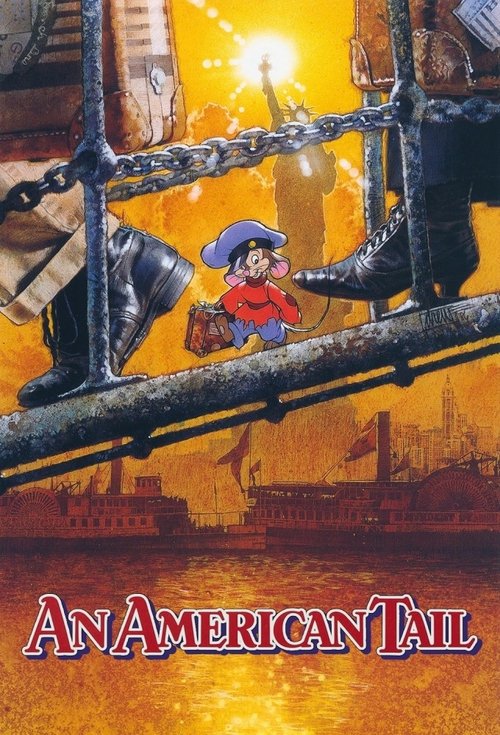
An American Tail
A young mouse named Fievel and his family decide to migrate to America, a "land without cats," at the turn of the 20th century. But somehow, Fievel ends up in the New World alone and must fend off not only the felines he never thought he'd have to deal with again but also the loneliness of being away from home.
Despite its tight budget of $9.0M, An American Tail became a massive hit, earning $84.5M worldwide—a remarkable 839% return. The film's innovative storytelling connected with viewers, illustrating how strong storytelling can transcend budget limitations.
Nominated for 1 Oscar. 6 wins & 7 nominations


Plot Structure
Story beats plotted across runtime


Narrative Arc
Emotional journey through the story's key moments
Story Circle
Blueprint 15-beat structure
Arcplot Score Breakdown
Weighted: Precision (70%) + Arc (15%) + Theme (15%)
An American Tail (1986) reveals carefully calibrated story structure, characteristic of Don Bluth's storytelling approach. This structural analysis examines how the film's 15-point plot structure maps to proven narrative frameworks across 1 hour and 20 minutes. With an Arcplot score of 6.6, the film balances conventional beats with creative variation.
Structural Analysis
The Status Quo at 1 minutes (1% through the runtime) establishes Fievel and his family celebrate Hanukkah in their home in Shostka, Russia. The Mousekewitz family is poor but close-knit, with Papa telling stories of America where there are no cats.. Structural examination shows that this early placement immediately immerses viewers in the story world.
The inciting incident occurs at 9 minutes when Cossack cats attack their village, burning homes and forcing the mice to flee. The Mousekewitz family must leave Russia, setting the immigrant journey in motion.. At 12% through the film, this Disruption aligns precisely with traditional story structure. This beat shifts the emotional landscape, launching the protagonist into the central conflict.
The First Threshold at 16 minutes marks the transition into Act II, occurring at 19% of the runtime. This shows the protagonist's commitment to During a violent storm at sea, Fievel is washed overboard trying to save Papa's hat. He is separated from his family and presumed dead. Fievel enters the new world alone and lost., moving from reaction to action.
At 38 minutes, the Midpoint arrives at 48% of the runtime—precisely centered, creating perfect narrative symmetry. Of particular interest, this crucial beat False victory: Fievel thinks he's found Papa when he hears him playing violin in the street. He chases the music with renewed hope, believing reunion is near., fundamentally raising what's at risk. The emotional intensity shifts, dividing the narrative into clear before-and-after phases.
The Collapse moment at 56 minutes (70% through) represents the emotional nadir. Here, Fievel is trapped in a cage, about to be eaten by cats. He has lost Papa's hat (again), feels completely defeated, and despairs that he'll never see his family. Lowest emotional point - he gives up hope., demonstrates the protagonist at their lowest point. This beat's placement in the final quarter sets up the climactic reversal.
The Second Threshold at 62 minutes initiates the final act resolution at 78% of the runtime. The mice unite to build the mechanical mouse. Fievel realizes he must be brave like Papa taught him - synthesizing his Russian heritage with his new American reality to save everyone., demonstrating the transformation achieved throughout the journey.
Emotional Journey
An American Tail's emotional architecture traces a deliberate progression across 15 carefully calibrated beats.
Narrative Framework
This structural analysis employs a 15-point narrative structure framework that maps key story moments. By mapping An American Tail against these established plot points, we can identify how Don Bluth utilizes or subverts traditional narrative conventions. The plot point approach reveals not only adherence to structural principles but also creative choices that distinguish An American Tail within the animation genre.
Don Bluth's Structural Approach
Among the 8 Don Bluth films analyzed on Arcplot, the average structural score is 7.1, reflecting strong command of classical structure. An American Tail takes a more unconventional approach compared to the director's typical style. For comparative analysis, explore the complete Don Bluth filmography.
Comparative Analysis
Additional animation films include The Bad Guys, Puss in Boots and Violet Evergarden: Eternity and the Auto Memory Doll. For more Don Bluth analyses, see The Land Before Time, Thumbelina and The Secret of NIMH.
Plot Points by Act
Act I
SetupStatus Quo
Fievel and his family celebrate Hanukkah in their home in Shostka, Russia. The Mousekewitz family is poor but close-knit, with Papa telling stories of America where there are no cats.
Theme
Papa sings "There Are No Cats in America" - establishing the theme of hope, dreams vs. reality, and the immigrant experience. The promise of a better life motivates their journey.
Worldbuilding
Introduction to the Mousekewitz family in Russia: Papa, Mama, Tanya, and young Fievel. Their shtetl life, the threat of Cossack cats, Fievel's innocence and Papa's hat symbolizing their bond.
Disruption
Cossack cats attack their village, burning homes and forcing the mice to flee. The Mousekewitz family must leave Russia, setting the immigrant journey in motion.
Resistance
The family boards a ship to America. Fievel explores the ship despite warnings, dreams of the new world, and Papa continues to reassure him. Journey across the Atlantic with hope and uncertainty.
Act II
ConfrontationFirst Threshold
During a violent storm at sea, Fievel is washed overboard trying to save Papa's hat. He is separated from his family and presumed dead. Fievel enters the new world alone and lost.
Mirror World
Fievel meets Henri the pigeon, a French bird building a statue. Henri represents the idealistic hope of America and encourages Fievel to believe he'll find his family.
Premise
Fievel explores New York: arriving in a bottle, discovering there ARE cats in America, meeting Tony Toponi and Bridget, encountering Warren T. Rat's sweatshop, learning the harsh reality versus the dream.
Midpoint
False victory: Fievel thinks he's found Papa when he hears him playing violin in the street. He chases the music with renewed hope, believing reunion is near.
Opposition
Fievel is repeatedly separated from finding his family - caught by Warren T. Rat, forced to work, escapes but keeps missing his family. Meanwhile, his family grieves him. The cats' threats intensify.
Collapse
Fievel is trapped in a cage, about to be eaten by cats. He has lost Papa's hat (again), feels completely defeated, and despairs that he'll never see his family. Lowest emotional point - he gives up hope.
Crisis
Fievel and Tony escape. The mice realize they must fight back against the cats. Fievel finds his courage and contributes the idea to use the Giant Mouse of Minsk - combining Papa's stories with American ingenuity.
Act III
ResolutionSecond Threshold
The mice unite to build the mechanical mouse. Fievel realizes he must be brave like Papa taught him - synthesizing his Russian heritage with his new American reality to save everyone.
Synthesis
The finale: The Giant Mouse of Minsk chases the cats away. Warren T. Rat is exposed as a cat. The mice celebrate victory. Fievel and his family are finally reunited at the statue.
Transformation
Fievel reunites with his family beneath the Statue of Liberty. He has grown from naive child to brave hero. Papa gives him the hat. The family is together in America - dream achieved, but with realistic understanding.