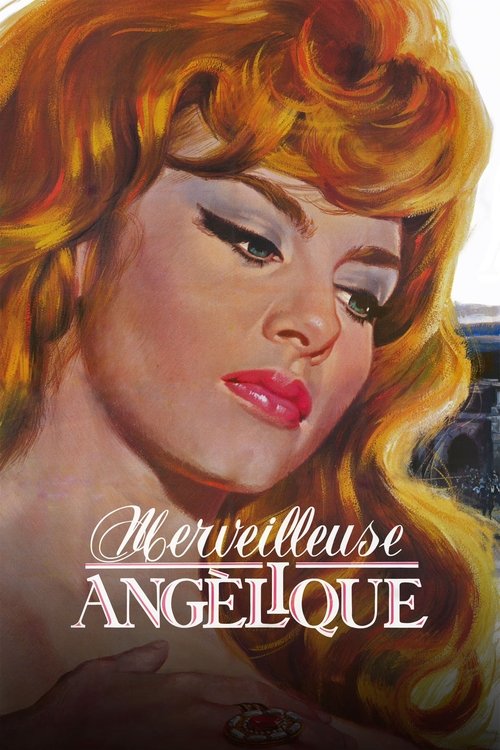
Angelique: The Road To Versailles
Angelique is saved by the king of the cutthroats when she is endangered in the streets of Paris. After her hero is killed, she has many amorous affairs and becomes a successful businesswoman.
The film earned $10.4M at the global box office.
Plot Structure
Story beats plotted across runtime


Narrative Arc
Emotional journey through the story's key moments
Story Circle
Blueprint 15-beat structure
Arcplot Score Breakdown
Weighted: Precision (70%) + Arc (15%) + Theme (15%)
Angelique: The Road To Versailles (1965) reveals meticulously timed plot construction, characteristic of Bernard Borderie's storytelling approach. This structural analysis examines how the film's 15-point plot structure maps to proven narrative frameworks across 1 hour and 45 minutes. With an Arcplot score of 6.7, the film balances conventional beats with creative variation.
Characters
Cast & narrative archetypes

Angélique de Peyrac
Philippe de Plessis-Bellière
King Louis XIV
Marquis du Plessis-Bellière
Madame de Montespan
François Desgrez
Main Cast & Characters
Angélique de Peyrac
Played by Michèle Mercier
A beautiful and resourceful noblewoman navigating the treacherous court politics of Louis XIV's Versailles while searching for her presumed-dead husband.
Philippe de Plessis-Bellière
Played by Claude Giraud
A charming nobleman and childhood friend of Angélique who becomes deeply devoted to her and aids her at court.
King Louis XIV
Played by Jacques Toja
The Sun King himself, a powerful and vain monarch who becomes infatuated with Angélique and pursues her relentlessly.
Marquis du Plessis-Bellière
Played by Jean Rochefort
Philippe's father, a politically astute nobleman who helps Angélique navigate the dangerous waters of Versailles.
Madame de Montespan
Played by Estella Blain
The King's ambitious and jealous mistress who sees Angélique as a threat to her position at court.
François Desgrez
Played by Sami Frey
A loyal police officer and ally to Angélique who helps protect her from various dangers.
Structural Analysis
The Status Quo at 1 minutes (1% through the runtime) establishes Angélique is now widowed and destitute, living in the Court of Miracles among beggars and thieves after the execution of her husband Joffrey de Peyrac.. Of particular interest, this early placement immediately immerses viewers in the story world.
The inciting incident occurs at 13 minutes when Angélique discovers an opportunity to reclaim her status when she learns that her beauty and noble background could grant her access to the court, potentially allowing her to clear her husband's name and restore her fortune.. At 13% through the film, this Disruption is delayed, allowing extended setup of the story world. This beat shifts the emotional landscape, launching the protagonist into the central conflict.
The First Threshold at 26 minutes marks the transition into Act II, occurring at 25% of the runtime. This illustrates the protagonist's commitment to Angélique makes the decisive choice to shed her beggar's rags and reinvent herself, actively choosing to enter Versailles and the dangerous game of court politics., moving from reaction to action.
At 53 minutes, the Midpoint arrives at 50% of the runtime—precisely centered, creating perfect narrative symmetry. Structural examination shows that this crucial beat Angélique achieves a false victory when she gains the King's favorable attention and secures a position of influence at court, but this success makes her a target for envious rivals and draws her deeper into dangerous politics., fundamentally raising what's at risk. The emotional intensity shifts, dividing the narrative into clear before-and-after phases.
The Collapse moment at 79 minutes (75% through) represents the emotional nadir. Here, Angélique faces complete ruin when a conspiracy threatens her life and position, bringing her to the brink of losing everything she has rebuilt, with the specter of her husband's execution haunting her potential fate., reveals the protagonist at their lowest point. This beat's placement in the final quarter sets up the climactic reversal.
The Second Threshold at 84 minutes initiates the final act resolution at 80% of the runtime. Angélique synthesizes her experience from both the underworld and the court, realizing she can be both strategic and true to herself, using her intelligence rather than just manipulation to forge her own path., demonstrating the transformation achieved throughout the journey.
Emotional Journey
Angelique: The Road To Versailles's emotional architecture traces a deliberate progression across 15 carefully calibrated beats.
Narrative Framework
This structural analysis employs proven narrative structure principles that track dramatic progression. By mapping Angelique: The Road To Versailles against these established plot points, we can identify how Bernard Borderie utilizes or subverts traditional narrative conventions. The plot point approach reveals not only adherence to structural principles but also creative choices that distinguish Angelique: The Road To Versailles within the adventure genre.
Bernard Borderie's Structural Approach
Among the 4 Bernard Borderie films analyzed on Arcplot, the average structural score is 6.9, demonstrating varied approaches to story architecture. Angelique: The Road To Versailles takes a more unconventional approach compared to the director's typical style. For comparative analysis, explore the complete Bernard Borderie filmography.
Comparative Analysis
Additional adventure films include The Black Stallion, The Bad Guys and Puss in Boots. For more Bernard Borderie analyses, see Untamable Angelique, Angelique and the King and Angelique.
Plot Points by Act
Act I
SetupStatus Quo
Angélique is now widowed and destitute, living in the Court of Miracles among beggars and thieves after the execution of her husband Joffrey de Peyrac.
Theme
A character tells Angélique that survival requires more than beauty—it demands cunning and the willingness to use whatever power one has, foreshadowing her journey from victim to strategist.
Worldbuilding
Establishment of Angélique's desperate circumstances in the criminal underworld of Paris, her relationships with the outcasts, and the dangerous political landscape of Louis XIV's court where her fate was sealed.
Disruption
Angélique discovers an opportunity to reclaim her status when she learns that her beauty and noble background could grant her access to the court, potentially allowing her to clear her husband's name and restore her fortune.
Resistance
Angélique debates whether to enter the treacherous world of the royal court, receives guidance from allies in the underworld, and prepares herself for the transformation from outcast to courtier.
Act II
ConfrontationFirst Threshold
Angélique makes the decisive choice to shed her beggar's rags and reinvent herself, actively choosing to enter Versailles and the dangerous game of court politics.
Mirror World
Angélique encounters Philippe de Plessis-Bellières, a nobleman who becomes her romantic interest and thematic mirror, representing the possibility of love without the political machinations that destroyed her first marriage.
Premise
Angélique navigates the opulent but treacherous world of Versailles, using her wit and beauty to gain influence, participating in court intrigue, and experiencing the glamour and danger the audience expects from a period romance.
Midpoint
Angélique achieves a false victory when she gains the King's favorable attention and secures a position of influence at court, but this success makes her a target for envious rivals and draws her deeper into dangerous politics.
Opposition
Court enemies conspire against Angélique, her romantic relationship becomes complicated by political pressures, and she realizes that the same system that elevated her could destroy her as it did her first husband.
Collapse
Angélique faces complete ruin when a conspiracy threatens her life and position, bringing her to the brink of losing everything she has rebuilt, with the specter of her husband's execution haunting her potential fate.
Crisis
In her darkest moment, Angélique must confront whether survival in this world requires sacrificing her integrity and love, processing the trauma of her losses and the cost of power.
Act III
ResolutionSecond Threshold
Angélique synthesizes her experience from both the underworld and the court, realizing she can be both strategic and true to herself, using her intelligence rather than just manipulation to forge her own path.
Synthesis
Angélique executes her plan to outmaneuver her enemies, resolves the conspiracy against her, and determines her romantic and political future on her own terms, demonstrating her complete transformation.
Transformation
Angélique stands confidently in her power, no longer the victim or the desperate widow, but a woman who has mastered her destiny, mirroring her opening destitution with newfound agency and self-determination.