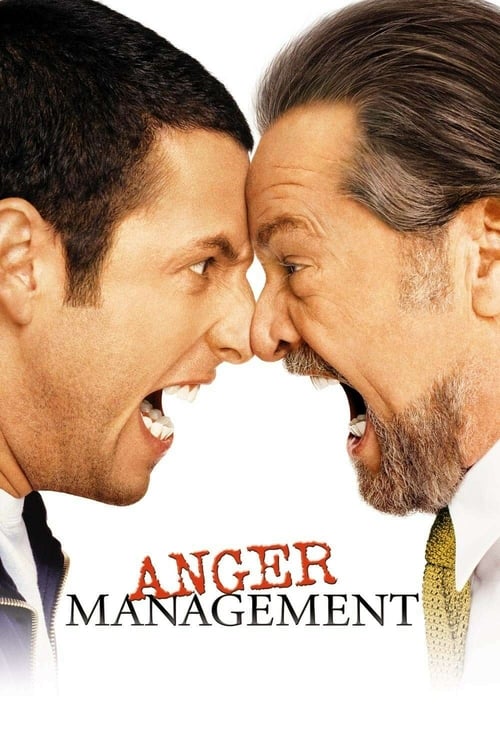
Anger Management
Dave Buznik is a businessman who is wrongly sentenced to an anger management program, where he meets an aggressive instructor.
Despite a significant budget of $75.0M, Anger Management became a solid performer, earning $195.7M worldwide—a 161% return.
2 wins & 4 nominations


Plot Structure
Story beats plotted across runtime


Narrative Arc
Emotional journey through the story's key moments
Story Circle
Blueprint 15-beat structure
Characters
Cast & narrative archetypes

Dave Buznik
Dr. Buddy Rydell
Linda
Andrew
Chuck
Main Cast & Characters
Dave Buznik
Played by Adam Sandler
A mild-mannered, passive businessman who is court-ordered to attend anger management therapy after a misunderstanding on an airplane.
Dr. Buddy Rydell
Played by Jack Nicholson
An unconventional anger management therapist who uses extreme and invasive methods to help his patients confront their issues.
Linda
Played by Marisa Tomei
Dave's girlfriend who becomes caught in the chaos of his anger management treatment and questions their relationship.
Andrew
Played by Allen Covert
Dave's arrogant coworker who takes credit for his work and competes for his position at the company.
Chuck
Played by John Turturro
A member of Dr. Rydell's anger management group who struggles with violent outbursts and rage issues.
Structural Analysis
The Status Quo at 2 minutes (2% through the runtime) establishes Dave Buznik as a timid child, bullied on the schoolyard, unable to defend himself or express his feelings, establishing his lifelong pattern of passive behavior and repressed emotions.. Significantly, this early placement immediately immerses viewers in the story world.
The inciting incident occurs at 13 minutes when On an airplane, Dave's polite request for headphones escalates when the flight attendant overreacts; he's tasered, arrested, and charged with assault, disrupting his orderly life.. At 13% through the film, this Disruption is delayed, allowing extended setup of the story world. This beat shifts the emotional landscape, launching the protagonist into the central conflict.
The First Threshold at 26 minutes marks the transition into Act II, occurring at 24% of the runtime. This demonstrates the protagonist's commitment to After Dave loses his temper at Buddy during a session, the judge orders Buddy to move into Dave's apartment for intensive 24/7 therapy - Dave must now fully commit to this new reality., moving from reaction to action.
At 54 minutes, the Midpoint arrives at 50% of the runtime—precisely centered, creating perfect narrative symmetry. The analysis reveals that this crucial beat Dave loses control and attacks Buddy with a baseball bat after extreme provocation, leading to arrest and jail time - a false defeat where Dave's situation hits a new low., fundamentally raising what's at risk. The emotional intensity shifts, dividing the narrative into clear before-and-after phases.
The Collapse moment at 79 minutes (75% through) represents the emotional nadir. Here, Dave sees Buddy kissing Linda and believes he's lost everything - his girlfriend, his dignity, his career - the death of his old passive self and his hope for a normal life., reveals the protagonist at their lowest point. This beat's placement in the final quarter sets up the climactic reversal.
The Second Threshold at 84 minutes initiates the final act resolution at 80% of the runtime. Dave realizes he must publicly declare his love for Linda and stand up for himself regardless of consequences - choosing authentic emotional expression over passive acceptance., demonstrating the transformation achieved throughout the journey.
Emotional Journey
Anger Management's emotional architecture traces a deliberate progression across 15 carefully calibrated beats.
Narrative Framework
This structural analysis employs systematic plot point analysis that identifies crucial turning points. By mapping Anger Management against these established plot points, we can identify how Peter Segal utilizes or subverts traditional narrative conventions. The plot point approach reveals not only adherence to structural principles but also creative choices that distinguish Anger Management within the comedy genre.
Peter Segal's Structural Approach
Among the 8 Peter Segal films analyzed on Arcplot, the average structural score is 7.2, reflecting strong command of classical structure. Anger Management exemplifies the director's characteristic narrative technique. For comparative analysis, explore the complete Peter Segal filmography.
Comparative Analysis
Additional comedy films include The Bad Guys, Ella Enchanted and The Evening Star. For more Peter Segal analyses, see 50 First Dates, Second Act and Grudge Match.
Plot Points by Act
Act I
SetupStatus Quo
Dave Buznik as a timid child, bullied on the schoolyard, unable to defend himself or express his feelings, establishing his lifelong pattern of passive behavior and repressed emotions.
Theme
Dave's coworker discusses standing up for yourself and not letting people walk over you - foreshadowing the lesson Dave needs to learn about expressing anger appropriately.
Worldbuilding
Establishing Dave's passive adult life: his relationship with girlfriend Linda, his dead-end job where Andrew takes credit for his work, and his inability to assert himself in any situation.
Disruption
On an airplane, Dave's polite request for headphones escalates when the flight attendant overreacts; he's tasered, arrested, and charged with assault, disrupting his orderly life.
Resistance
Dave attends court-ordered anger management with Dr. Buddy Rydell, resisting the idea that he has an anger problem, attending group sessions, and debating whether this therapy is necessary.
Act II
ConfrontationFirst Threshold
After Dave loses his temper at Buddy during a session, the judge orders Buddy to move into Dave's apartment for intensive 24/7 therapy - Dave must now fully commit to this new reality.
Mirror World
Buddy's relationship with Dave (and later revelation about Linda) represents the thematic mirror - someone who pushes Dave to confront his emotions rather than repress them.
Premise
The "fun and games" of Buddy's outrageous therapy methods: provoking Dave in public, confronting the bully from childhood, bizarre anger exercises, and escalating chaos in Dave's life.
Midpoint
Dave loses control and attacks Buddy with a baseball bat after extreme provocation, leading to arrest and jail time - a false defeat where Dave's situation hits a new low.
Opposition
Dave faces escalating consequences: jail time, losing Linda to Buddy's apparent romantic advances, professional humiliation, and feeling like his entire life is falling apart despite trying to stay calm.
Collapse
Dave sees Buddy kissing Linda and believes he's lost everything - his girlfriend, his dignity, his career - the death of his old passive self and his hope for a normal life.
Crisis
Dave processes his darkest moment, contemplating whether to retreat further into passivity or finally express his true feelings, struggling with the pain of apparent betrayal.
Act III
ResolutionSecond Threshold
Dave realizes he must publicly declare his love for Linda and stand up for himself regardless of consequences - choosing authentic emotional expression over passive acceptance.
Synthesis
Dave storms Yankee Stadium, confronts his fears publicly, confesses his love for Linda, and discovers the entire therapy was an elaborate setup orchestrated by Linda and Buddy to help him grow.
Transformation
Dave confidently proposes to Linda in front of thousands, transformed from the passive boy who couldn't speak up into a man who can express his emotions openly and authentically.